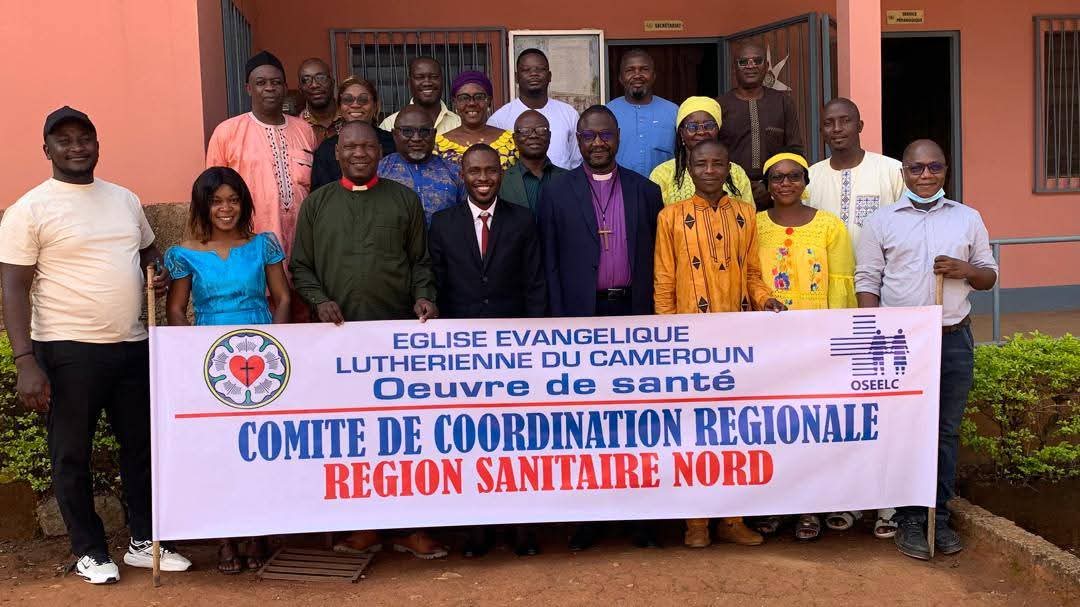
Leaders of the Evangelical Lutheran Church of Cameroon – EELC health network in the North region have convened in Ngaoundéré to finalize 2026 performance contracts, prioritizing a shift toward the “humanization of care” in alignment with national Ministry of Public Health standards.
The North Health Region of the EELC recently held its regional committee coordination meeting in Ngaoundéré to chart a strategic path for its eight health facilities. Chaired by Dr. Ndong Ibong Willy, Director of the North Health Region and the Ngaoundéré Protestant Hospital, and attended by Bishop Rev. Mathieu Djidere, the session focused on refining performance contracts for the year 2026.
A central theme of the deliberations was the formal alignment with the Ministry of Public Health (Minsanté) standards, ensuring that faith-based medical services remain at the forefront of quality healthcare delivery in Cameroon.
A major takeaway from the two-day summit is the renewed emphasis on the “humanization of care,” a philosophy that moves beyond mere technical proficiency to prioritize the patient’s emotional and social well-being.
Dr. Ndong Ibong Willy reaffirmed that under these new guidelines, every patient across the network must be guaranteed a warm reception, absolute confidentiality, and respect for their inherent dignity. The current challenge for the committee remains the effective “vulgarization” or widespread adoption of these best practices among all medical and administrative staff to ensure consistent service quality.
The EELC North Health Region operates a robust network that provides critical medical coverage across several key localities. This network includes the flagship Ngaoundéré Protestant Hospital, the medical center in Touboro, and various health centers located in Dang, Mbé, Lagdo, Poli, Tcholliré, and Balkossa.
By streamlining these diverse facilities under a unified 2026 performance contract, the EELC aims to strengthen its regional healthcare maillage (network), providing integrated and compassionate medical services to the populations of Northern Cameroon.