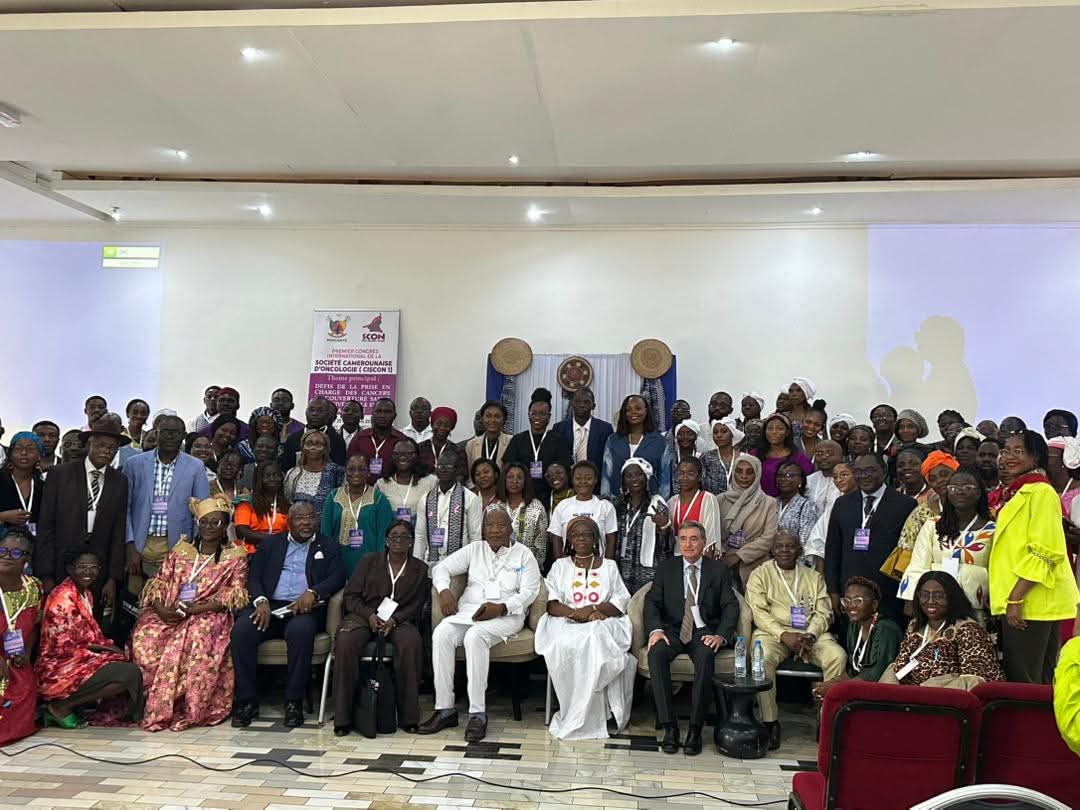
The management of cancer has taken center stage in Douala as over 200 multidisciplinary specialists from around the globe gather for the inaugural International Congress of the Cameroonian Society of Oncology – CISCON I.
Opened on March 25, 2026, the event marks a historic shift in how the continent addresses oncological challenges. By bringing together clinicians, researchers, and policymakers, the congress seeks to answer a pivotal question: how to sustainably improve cancer care while Universal Health Coverage – UHC systems across Africa are still in their foundational stages.
The proceedings, inaugurated by the representative of the Governor of the Littoral Region, are focused on the theme: “Challenges of cancer management and Universal Health Coverage in Africa.” This initiative serves as a strategic platform to unite stakeholders and foster vital synergies across medical disciplines.
The primary goal is to move beyond fragmented efforts and lay the groundwork for a more coordinated, effective, and robust national response to the growing cancer burden, ensuring that oncology becomes a prioritized pillar of public health.
Professor Paul Ndom, President of the Congress, emphasized that the momentum surrounding the event reflects a “collective awakening” to the reality of cancer in Cameroon. To support this, the National Committee for the Fight Against Cancer – CNLCa has provided extensive data and research findings at the congress, highlighting the government’s ongoing efforts and the collaborative work of its partners.
This transparency is crucial for understanding the current landscape of the disease and for identifying the most urgent gaps in the existing healthcare infrastructure.
A major focus of the three-day summit is the development of actionable recommendations to improve access to care and reduce the staggering costs of treatment. Experts are tasked with identifying priority investment areas and establishing reliable mechanisms for the procurement and management of essential anti-cancer drugs.
By addressing these economic barriers, the congress aims to reduce the deep-seated inequalities that currently prevent many patients from receiving life-saving therapies, ultimately making oncological care more equitable.
As CISCON I draws to a close on March 27, the ultimate objective is the creation of a national and regional roadmap for cancer control that aligns with UHC goals. Beyond medical treatment, the congress is also tackling prevention strategies, early diagnosis protocols, and the management of treatment side effects.
This inaugural gathering is more than a simple academic meeting; it is a transformative lever intended to shift the conversation from theoretical reflection to immediate, decisive action to save more lives across the continent.