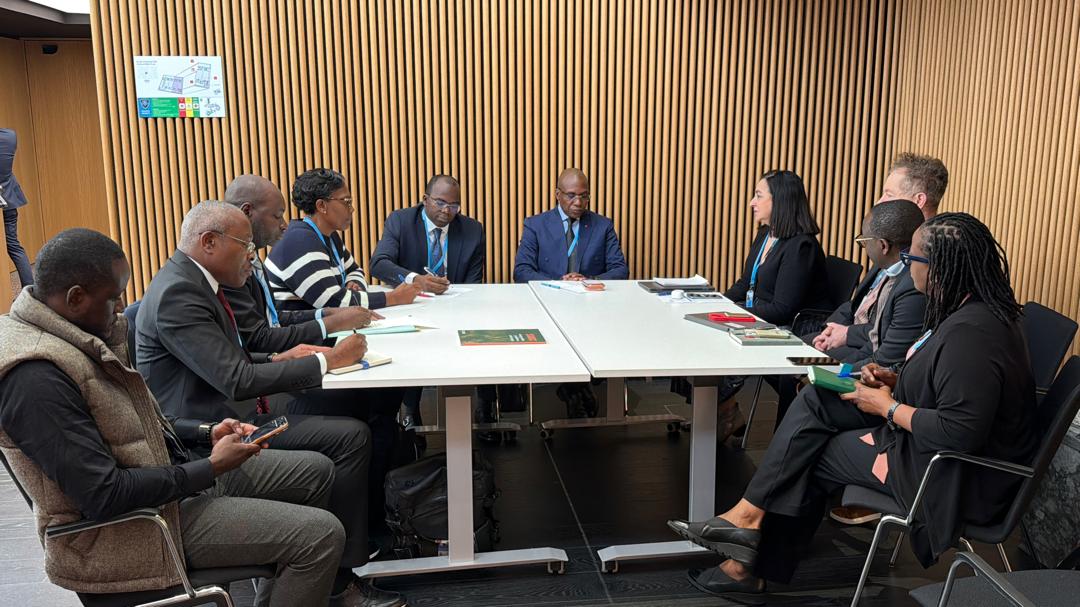
During the just ended 158th session of the World Health Organization (WHO) Executive Board, that held from February 2 to 7, 2026 in Geneva, Switzerland, Cameroon’s Minister of Public Health, Dr Manaouda Malachie, led a series of strategic parallel meetings. These exchanges done on the sidelines of the WHO Executive Board, highlight an active and pragmatic health diplomacy aimed at delivering tangible results for the population.
Spanning political, technical, and media circles, the discussions strengthened Cameroon’s strategic partnerships, mobilizing the international community around key health priorities, and reaffirming the vision of a WHO that is more responsive to the realities on the ground.
Throughout his discussions with various officials and partners, the Minister delivered a consistent message: the WHO must move closer to its Member States to provide tailored, rapid, and equitable responses to national health challenges. This approach, focused on listening and technical support, was a recurring theme in bilateral talks.
The Meeting with Dr. Tom Frieden, President and CEO of Resolve to Save Lives Recognizing Progress was a major highlight. The CEO commended Cameroon’s significant public health advancements, specifically the implementation of front-of-pack nutrition labeling on food products, targeted trade restrictions and the elimination of trans fats and taxes levied on harmful foods and beverages.
Dr. Frieden reaffirmed his organization’s commitment to supporting Cameroon in the long-term implementation of these policies.
It is worth mentioning that Dr. Frieden is a world-renowned specialist who led the U.S. CDC from 2009 to 2017. He is equally credited with overseeing the end of the Ebola epidemic in West Africa and implementing landmark anti-smoking policies in New York City.
By demonstrating a proactive approach combining diplomatic action with technical expertise, Cameroon is positioning itself as a leader within the African region. The Minister’s mission underscores a commitment to a global health system that is more equitable, solidary, and focused on the needs of the people.