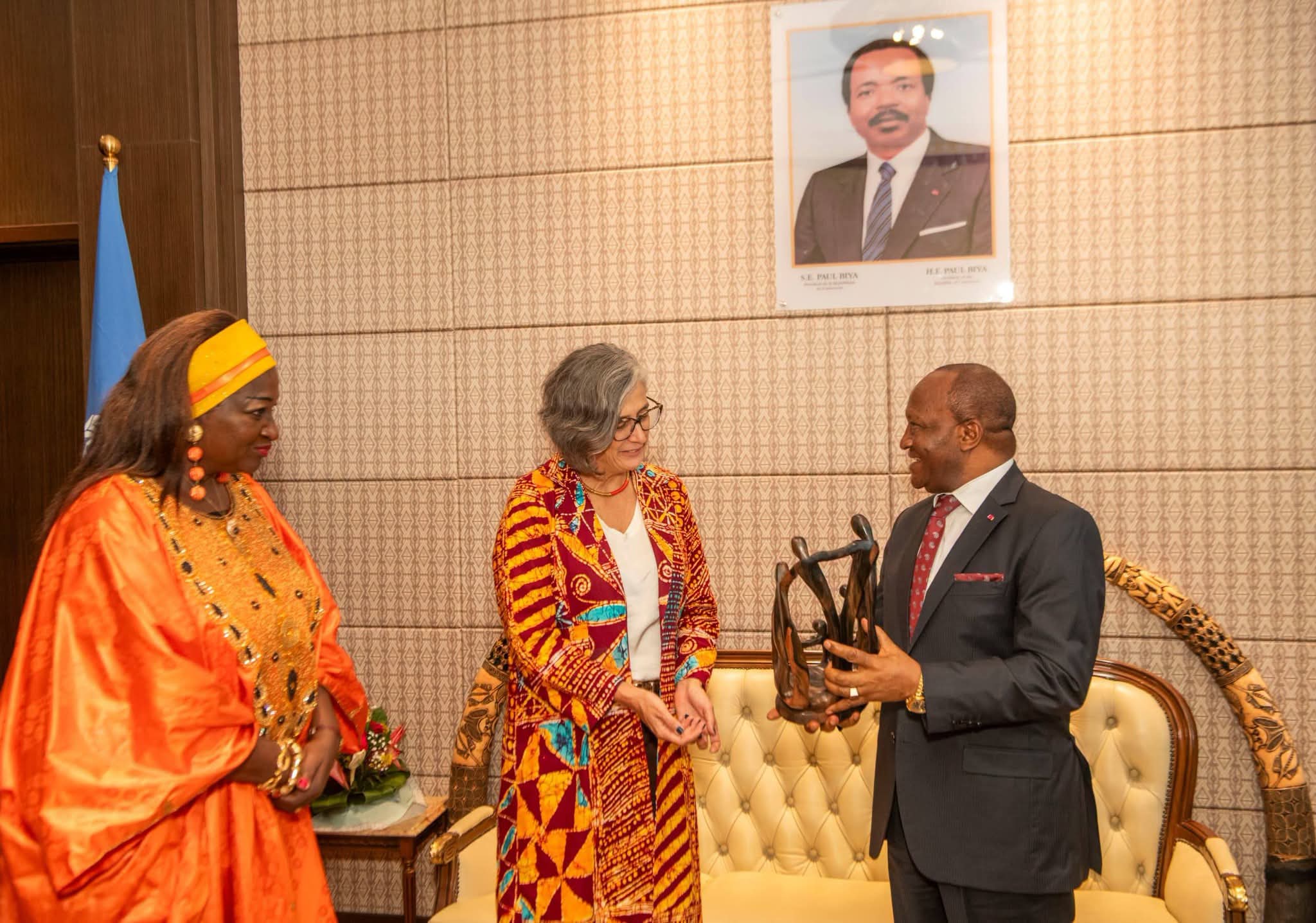
The speaker of the National Assembly, the Right Honourable Théodore Datouo, on September 9, 2026 hosted a landmark audience with Ms. Anacláudia Rossbach, UN Under-Secretary-General and Executive Director of UN-Habitat.
Attended alongside Minister of Housing and Urban Development Célestine Ketcha Courtès, the strategic session established a unified roadmap to address the pressures of rapid expansion across Cameroon’s metropolitan areas. The high-level meeting marked a significant leap forward in aligning national legislative priorities with international development targets.
Central to the bilateral dialogue was the immediate necessity of mitigating unchecked urban sprawl, particularly within major hubs like Yaounde. Ms. Rossbach highlighted how rapid, uncoordinated growth degrades local ecosystems, strains infrastructure, and escalates economic costs for urban dwellers. To counter these vulnerabilities, UN-Habitat urged the adoption of sound land-use and territorial planning frameworks, alongside localized implementation of the Sustainable Development Goals – SDGs and the widespread integration of locally produced construction materials.
Achieving these transformative goals requires robust institutional synergy between Cameroon’s legislative and executive branches. Discussions underscored the importance of leveraging the country’s ongoing decentralisation process to grant local authorities higher autonomy and resources. By modernizing regulatory frameworks, parliamentarians aim to empower municipal governments to enforce sustainable zoning laws, protect delicate ecosystems, and manage city growth efficiently.
A standout priority outlined by Speaker Théodore Datouo focused on social inclusion, specifically advocating for legal reforms that guarantee women equal access to housing and land ownership. Highlighting property rights as a vital catalyst for socio-economic empowerment, Datouo committed the National Assembly to enacting progressive legislation. This gender-responsive approach serves as a cornerstone for building resilient communities where vulnerable populations are fully integrated into urban growth.
The alliance reinforces Cameroon’s dedication to sustainable, well-planned development backed by international expertise. By combining executive policy, legislative action, and UN-Habitat guidance, the nation is positioning its cities to withstand climate and demographic pressures. This renewed cooperation offers a actionable model for inclusive urban governance across the Central African region.