Cameroon has taken a significant stride toward converting diaspora financial flows into long-term development assets.
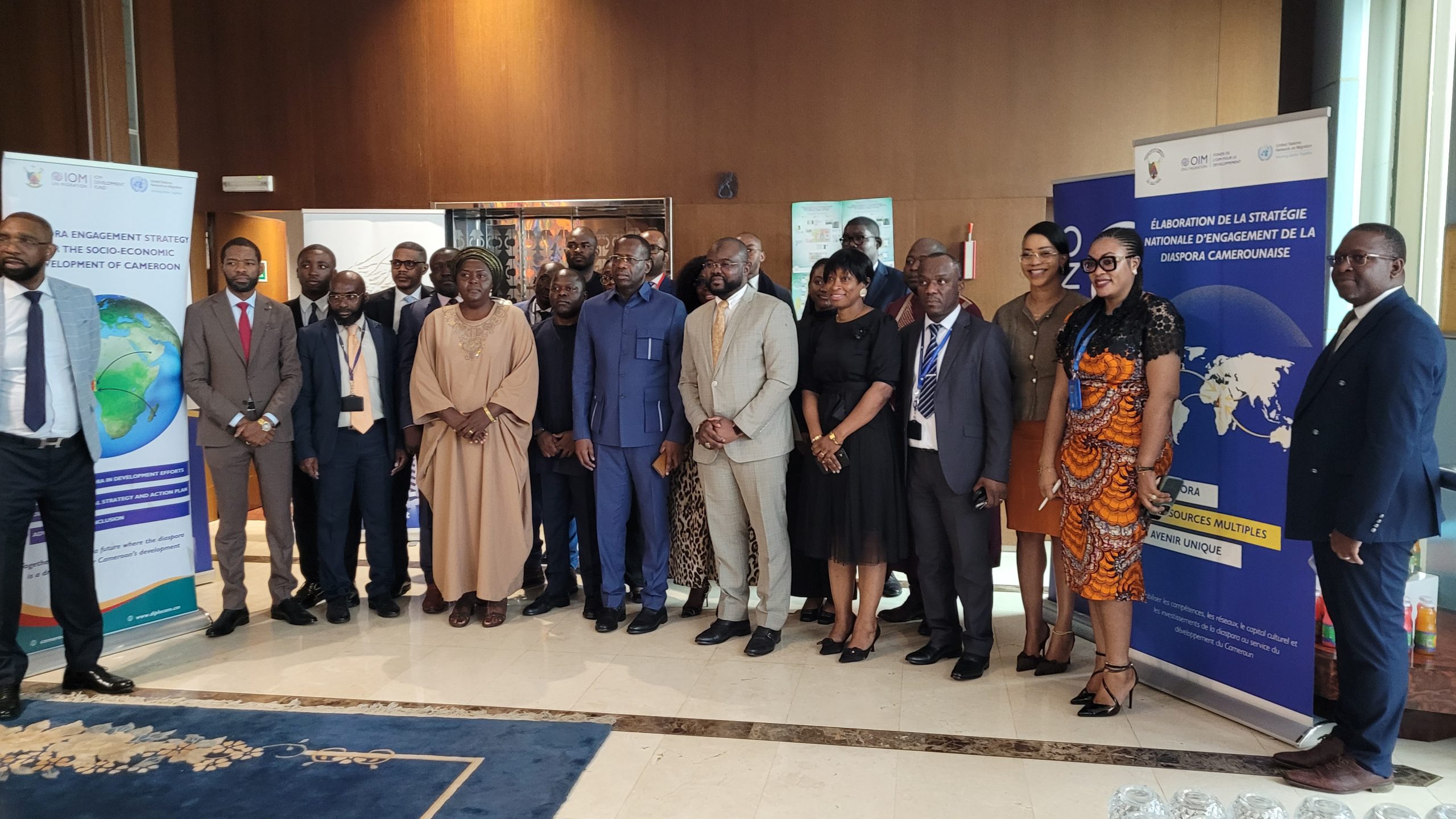
On September 29, 2026, the International Organization for Migration – IOM, in collaboration with the Bank of Central African States best known as BEAC and under the supervision of the Ministry of External Relations – MINREX, convened the National Strategic Consultation of Banking and Financial Sector Stakeholders.
Held at the BEAC headquarters in Yaoundé, the gathering served as a crucial platform to design the National Strategy for the Mobilization of the Cameroonian Diaspora alongside its targeted action plan.

The high-level session brought together prominent leaders and key institutions shaping the sub-region’s economic landscape. Present at the conference room were the Governor of BEAC, Yvan Dana Bangui; the Chief of Mission for IOM Cameroon, Abdel Rahmane Diop; and the representative of the Ministry of External Relations, Gwedji Doris Wainwel, alongside delegates from various credit institutions, FinTechs, and diaspora organizations.
The meeting addressed the broader National Policy for the Management of the Cameroonian Diaspora, prioritizing institutional levers, structural bottlenecks, and actionable frameworks to drive national development.
Delivering the opening address, BEAC Governor Yvan Dana Bangui emphasized that structural economic transformation cannot rely solely on public aid or traditional foreign direct investment. Instead, it requires unlocking domestic potential and channeling diaspora savings toward real, productive investments.
Highlighting BEAC’s strategic Horizon 2026–2030 roadmap, the Governor outlined key financial ecosystem reforms, including payment system modernization, financial digitization, ISO 20022 migration, and sub-regional interoperability designed to build a secure environment capable of supporting innovative products like remote diaspora accounts, participative financing, and diaspora bonds.
The IOM Chief of Mission, Abdel Rahmane Diop, stressed the transition of the diaspora from a purely migratory topic to a core driver of competitiveness and public policy. Diop noted that while remittances remain a vital lifeline for millions of households, the overarching goal is moving from consumption support to sustainable value creation.
To establish an empirical baseline for future policies, IOM and BEAC announced plans for a comprehensive regional study on fund transfers, labor mobility, and diaspora financial behavior across the Central African Economic and Monetary Community – CEMAC.
Representing MINREX, Doris Nguedji underscored that the success of Cameroon’s National Migration Policy relies directly on strong partnerships with the financial sector. She urged financial institutions to propose practical solutions for expanding financial inclusion to migrants and returnees, lowering cross-border remittance costs, and balancing regulatory compliance with accessibility. Nguedji reiterated the government’s commitment to creating a transparent, practical framework that protects rights while strengthening national economic resilience.
The consultation featured active participation from financial sector operators, who provided critical insights on operational proposals, risk management, and tailored financial instruments. Discussions centered on overcoming key barriers to diaspora investment, particularly high transfer charges and the need to establish structural trust between overseas investors and local financial markets. Stakeholders identified digital solutions, mobile channels, and regulatory safeguards as essential tools to bridge the gap between financial institutions and the diaspora.
A central theme throughout the deliberations was the necessity of extending these initiatives across the entire CEMAC sub-region. Given the shared currency and interconnected economies of Central Africa, speakers agreed that macroeconomic stability and financial inclusion in Cameroon set a valuable baseline for neighboring states.
The Central Bank reaffirmed its role as a guarantor of monetary stability, reassuring diaspora investors that their capital will be supported by reliable sub-regional banking frameworks. The strategic meeting concluded with a commitment to translate stakeholder recommendations into a concrete, actionable roadmap.
By aligning government policy, international organization expertise, central bank oversight, and private sector innovation, Cameroon aims to build an inclusive financial ecosystem. Ultimately, this collaborative effort seeks to transform diaspora remittances into a reliable engine for sustainable growth, job creation, and economic emergence across Central Africa.