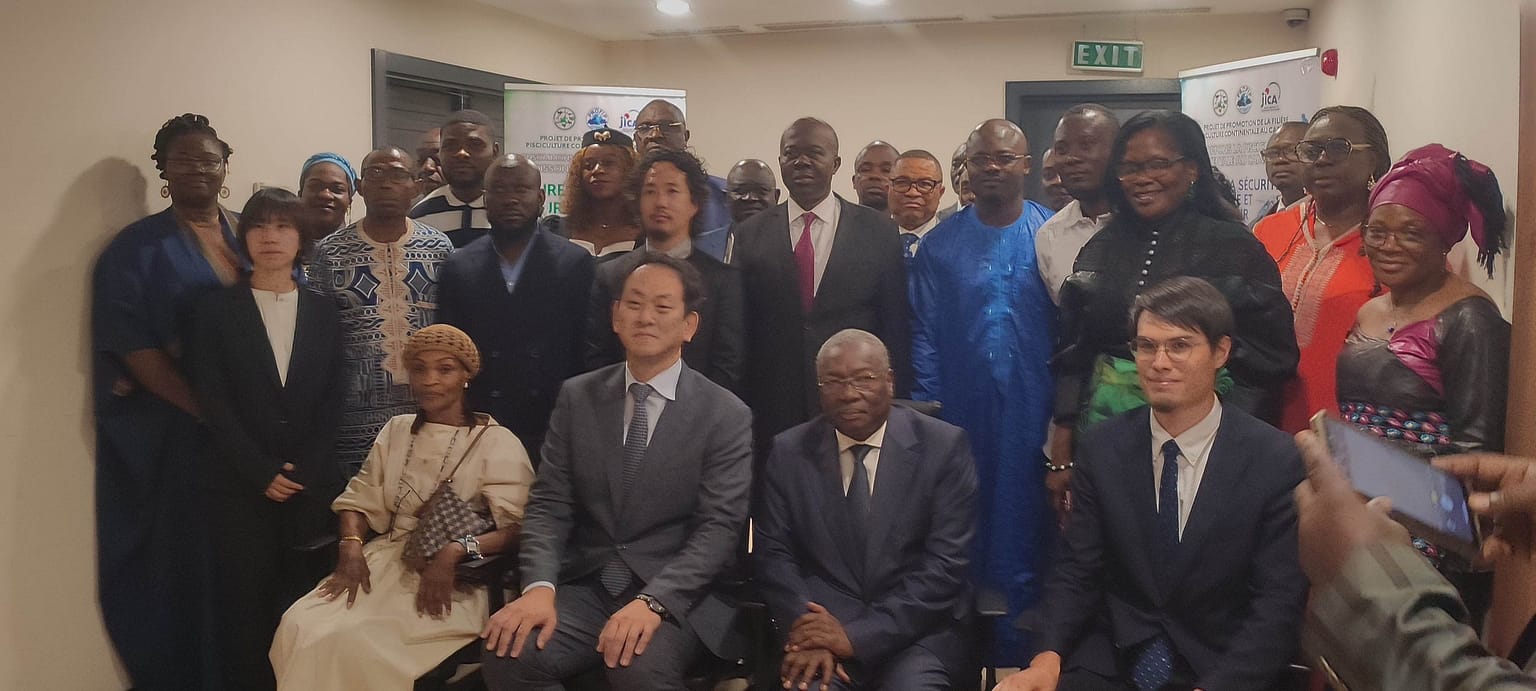
The Minister of Livestock, Fisheries and Animal Industries – MINEPIA, Dr. Taïga, chaired the second session of the Steering Committee for the Project to Promote the Inland Fish Farming Sector in Cameroon – PROFIP on September 15, 2026, in Yaounde.
Convened nine months after its inaugural session in December 2025, the strategic meeting reviewed progress made during the first half of 2026 and validated the operational and budgetary guidelines for the 2027 fiscal year. With a reported work plan completion rate of 98%, stakeholders commended the rapid execution and tangible impact achieved across target regions.
PROFIP represents a joint technical cooperation project between the Cameroonian government and the Japan International Cooperation Agency – JICA. Officially launched in July 2025 with 1.2 billion FCFA in funding from Japanese cooperation, the initiative mobilizes seven Japanese experts working alongside local counterparts. The project operates across the Centre, Littoral, West, and South regions to establish a modern, sustainable, and income-generating aquaculture industry driven by private sector engagement.
Minister Taïga praised the Project Management Unit for adhering to strategic directives aimed at strengthening national food sovereignty. Key milestones achieved include the completion of verification trials across thirteen pilot farms to form the basis for standardized good-practice guides. Furthermore, practical training sessions were organized for fish farmers and restaurateurs focusing on catfish rearing and culinary techniques, alongside promotional campaigns at major national exhibitions such as SIAC 2026 and PROMOTE.
Project Coordinator Divine Ngala Tombuh presented notable progress data, highlighting that national aquaculture output has expanded from roughly 12,000 tonnes to nearly 20,000 tonnes under the current phase. The project targets an output milestone of 25,000 tonnes by 2029, with a long-term goal of reaching 50,000 tonnes by 2030.
Policy measures such as the PIZA plan, new fisheries regulations, and tax exemptions on imported aquaculture production equipment since 2021 continue to support the sector’s industrial growth.
Fully aligned with Cameroon’s National Development Strategy – SND30 and the import-substitution policy – PIISAH, PROFIP seeks to reduce reliance on imported fish products by boosting annual domestic production by 10%.
Additional core targets include structuring over 700 fish farming units and directly training 320 sector operators. The initiative actively advances the national vision of domestic production and food self-reliance articulated at the Ebolowa agro-pastoral show.
Looking ahead, the Steering Committee approved the 2027 Annual Work Plan to consolidate current progress. Priority action items for the upcoming phase include scaling up verified technical practices, finalizing a dedicated digital platform to connect value-chain actors, expanding public awareness campaigns on farmed fish consumption, and delivering targeted capacity-building programs to local producers.