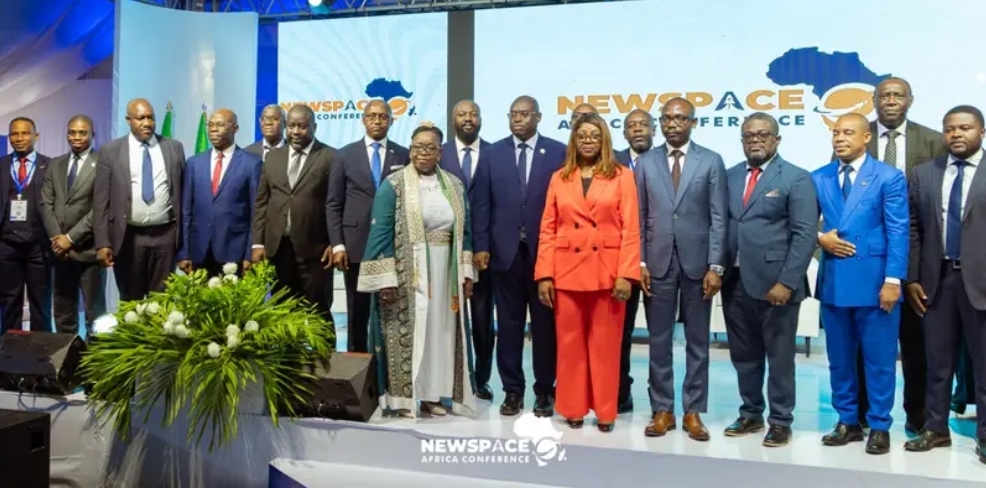
Senegal’s vibrant capital city, Dakar, has been officially selected to host the sixth NewSpace Africa Conference from April 19 to 23, 2027.
Organisers announced that the gathering will serve as a premier platform for high-level dialogue, international collaboration, and strategic business development across the continent’s rapidly expanding space ecosystem.
The event is jointly organised by space analytics firm Space in Africa and the African Space Agency – AfSA, in collaboration with Senegal’s Ministry of Higher Education, Research and Innovation – MESRI.
Under the overarching theme “Building, Financing and Delivering Africa’s Space Infrastructure,” the four-day event will gather key decision-makers, national space agencies, regulatory bodies, and industry leaders. Commercial space companies, academic researchers, investors, and emerging technological innovators will also convene to outline actionable policies and investment opportunities.
The focus underscores a critical transition within the continent’s space community, moving beyond high-level ambitions to the physical implementation and delivery of concrete space assets.
Emphasising the strategic importance of the summit, Dr. Tidiane Ouattara, President of the Council of the African Space Agency, highlighted how Dakar 2027 will build upon past progress to unite the global and regional space community. He noted that connecting governments, commercial players, and financial institutions remains essential to turning Africa’s technological vision into sustainable outcomes that directly serve the continent’s socioeconomic priorities.
Senegal’s host selection reflects its ascending stature in both regional and global space initiatives. The nation successfully launched its first nanosatellite, Gaindesat-1A, in 2024 and subsequently signed the Artemis Accords in July 2025, becoming the fourth African country to join the international agreement for transparent space exploration. Furthermore, Dakar previously hosted the inaugural AU–EU Space Dialogue in 2023, showcasing its ongoing commitment to multilateral space governance.
The conference agenda is structured to include keynote addresses, interactive panels, start-up pitches, and networking sessions across B2B, B2C, and B2G channels. By facilitating targeted matchmaking alongside exhibitions, the event aims to catalyse long-term investments, highlight indigenous African technological innovations, and create sustainable pathways for commercial growth.
Building on the foundation of previous editions which collectively attracted over 2,300 delegates from 792 organisations spanning 98 countries, the 2027 conference is expected to draw record attendance.
As African governments seek to leverage satellite solutions for climate monitoring, telecommunications, and agriculture, the gathering in Dakar will mark a pivotal moment in financing and scaling the continent’s orbital infrastructure.