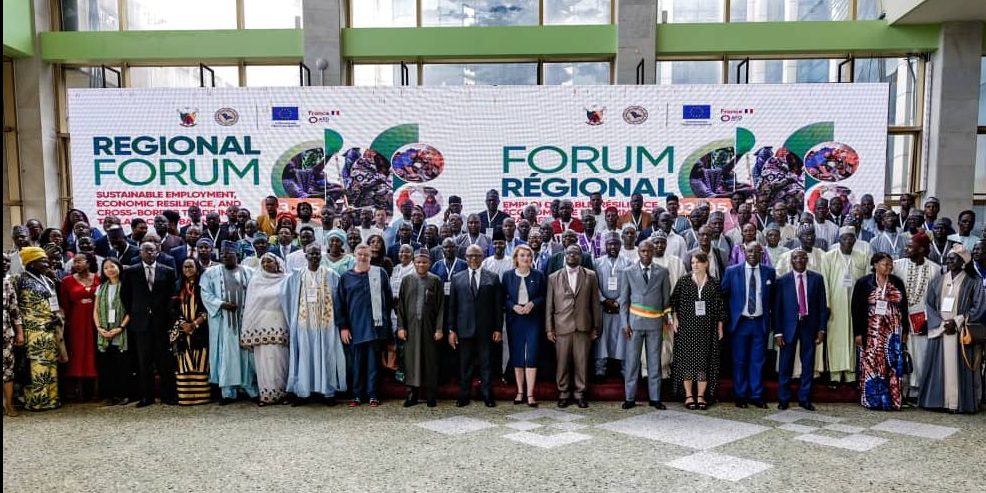
Cameroon is taking significant steps toward addressing the growing impact of climate change on human mobility.
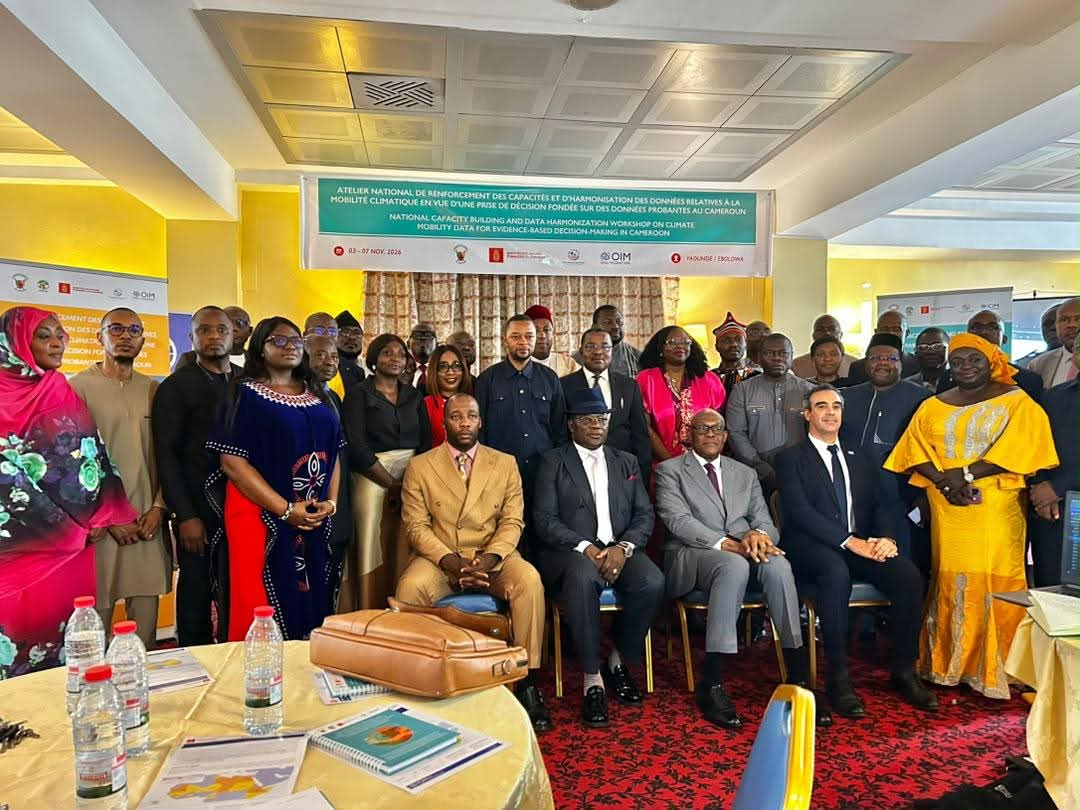
On November 3, 2026, the International Organization for Migration – IOM, in collaboration with the Government of Cameroon, kicked off a National Capacity Building and Data harmonization workshop at the Djeuga Palace Hotel in Yaounde.
The multi-day technical gathering, which continues in Ebolowa at Bengo Hotel through November 7, aims to strengthen the country’s collective capacity to collect, analyze, integrate, and utilize climate mobility data for evidence-based decision-making.
The initiative emerges against a backdrop of increasing environmental pressures across Cameroon, particularly in the Far North region. There, recurrent floods, prolonged droughts, and progressive environmental degradation interact with pre-existing socio-economic vulnerabilities and insecurity to drive population movements.
While key national bodies such as the Ministry of Environment, Nature Protection and Sustainable Development – MINEPDED, the National Observatory on Climate Change – ONACC, and the National Institute of Statistics – INS regularly generate environmental and demographic datasets, the information has historically remained fragmented across ministries, hindering unified policy formulation.
Through its Climate Change, Migration and Displacement – CCMD programme supported by the Government of Denmark across 17 African nations, IOM is introducing its revised Flow Monitoring methodology to help bridge these institutional gaps.
Utilizing a route-based approach, the framework tracks cross-border mobility along key corridors, gathering real-time data on migrant profiles, routes, protection needs, and specific environmental triggers. This methodology offers a standardized mechanism that keeps regional data comparable across West and Central Africa while establishing a foundation for Cameroon’s National Permanent Migration Data Collection Mechanism.
Speaking at the opening ceremony, Prof. Tchawa Paul, Secretary-General of MINEPDED, emphasized that effective climate adaptation relies fundamentally on data mastery. He highlighted that while climate action sits at the core of the government’s agenda which is demonstrated through national climate plans, updated Nationally Determined Contributions – NDCs, and dedicated observatories, forced displacement due to environmental hazards remains a complex challenge.
Decision-makers require high-quality, actionable evidence to map places of origin, assess environmental impacts along migratory routes, and understand the scale and permanence of climate-induced flows.
Echoing these priorities, Torrhina Joachim Diogo, Head of Programmes at IOM Cameroon, underscored the technical complexity of separating climate-driven displacement from underlying socio-economic migration drivers. He noted that IOM’s technical assistance focuses on equipping national stakeholders with tools to aggregate diverse datasets into a single, regularly updated system. By improving institutional communication and interoperability, the initiative ensures that research outputs are effectively translated into the practical formats needed by policymakers to safeguard vulnerable populations.
The workshop brings together a broad coalition of stakeholders, including sectoral government ministries, environmental agencies, statistical bureaus, universities, research centers, UN entities, civil society groups, and local authorities.
Participants are actively engaged in mapping existing institutional datasets, identifying operational gaps, validating indicators for the upcoming National Migration Meta-Report, and refining coordination frameworks under the government’s Migration Research and Data Working Group.
The workshop aims to establish a clear national roadmap for climate mobility data governance in Cameroon. By aligning technical methodology, fostering inter-institutional collaboration, and laying the groundwork for strategic resource mobilization, Cameroon and its international partners are building a resilient, evidence-driven model to address the human dimensions of climate change across the region.