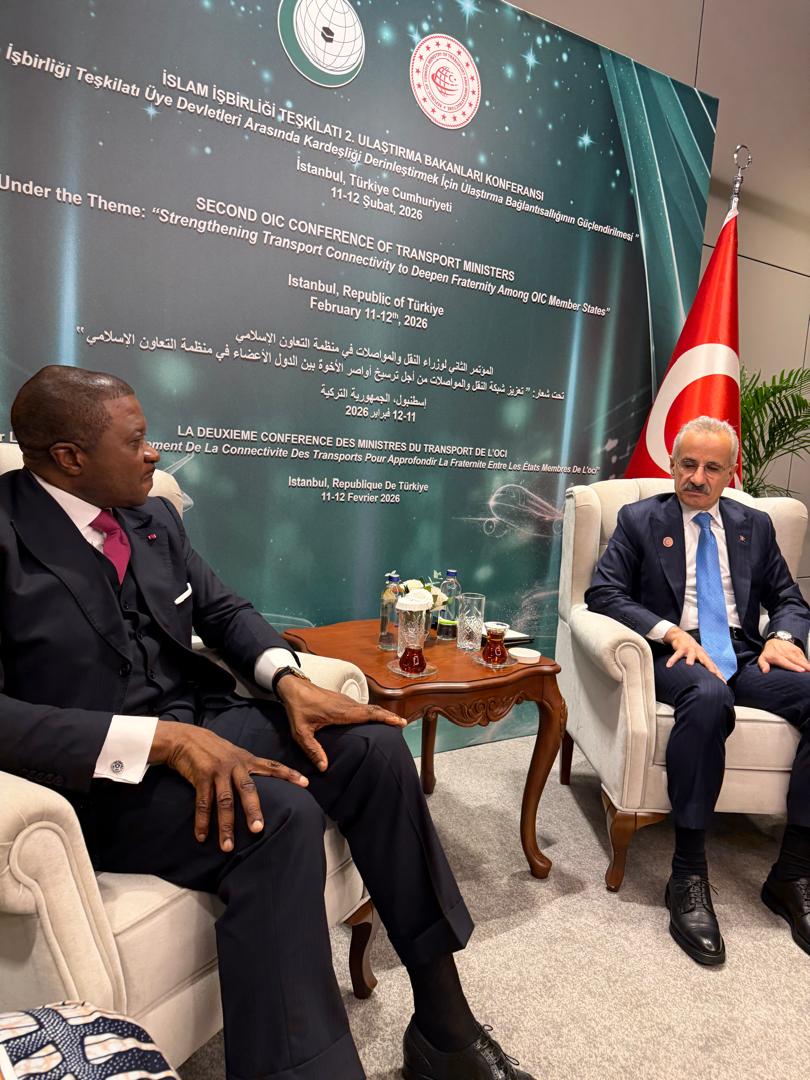
Cameroon’s Minister of Transport, Jean Ernest Masséna Ngallè Bibehe, played a crucial role at the 2nd Conference of OIC Ministers of Transport, that held in Istanbul on February 11 and 12, 2026. Under the theme “Strengthening Transport Connectivity to Deepen Fraternity Among OIC Member States,” the Minister really took the theme to heart. He engaged in high-level diplomacy to position Cameroon as a strategic hub for African-Turkish trade.
Welcomed by the Turkish Minister Delegate for Infrastructure and Transport, Minister Ngallè Bibehe leveraged the summit to advocate for more integrated and resilient transport networks across the Organization of Islamic Cooperation (OIC) space.
A key highlight of the visit was a productive working session with the President of the Turkish Shippers’ Chamber. The two parties navigated through collaborative opportunities that exist in maritime transport, logistics, and shipbuilding, aimed at harnessing the economic potential of both nations.
Further bilateral talks held with his Turkish counterpart, attended by heads of the maritime, rail, and aviation sectors, focused on Turkey’s expanding partnerships with Atlantic coast African nations. The Turkish delegation expressed a firm commitment to supporting Cameroon’s 2035 Vision and its National Development Strategy (SND30), particularly in infrastructure modernization.
During the plenary sessions, which featured a virtual address from Turkish President Recep Tayyip Erdoğan, Minister Ngallè Bibehe presented Cameroon’s master plan for national connectivity. He detailed ongoing and future projects in rail, air, and road infrastructure, emphasizing the need for coordinated corridor planning across the continent.
His presentation highlighted the strategic importance of Cameroon as a gateway to the Central African hinterland, inviting Turkish investors to participate in the structuring projects defined under the SND30 framework.
The Minister also advocated for a modernized approach to regional transport, calling for the harmonization of regulatory frameworks and the adoption of digital technologies to streamline logistics. He proposed the establishment of innovative financing mechanisms to bridge the infrastructure gap within the OIC region. By promoting the digitalization of transport services, Cameroon aims to reduce transit times and enhance the transparency of cross-border trade, aligning with broader continental goals for economic integration.
The conference concluded with the adoption of several resolutions aimed at developing a comprehensive transport connectivity strategy for the OIC region. These resolutions will guide member states in creating more efficient and interconnected networks over the coming years. As the delegates look toward the next gathering in 2028, Cameroon has successfully reinforced its diplomatic ties with Turkey, setting the stage for a new era of infrastructure development and maritime cooperation that will support its path toward emergence.