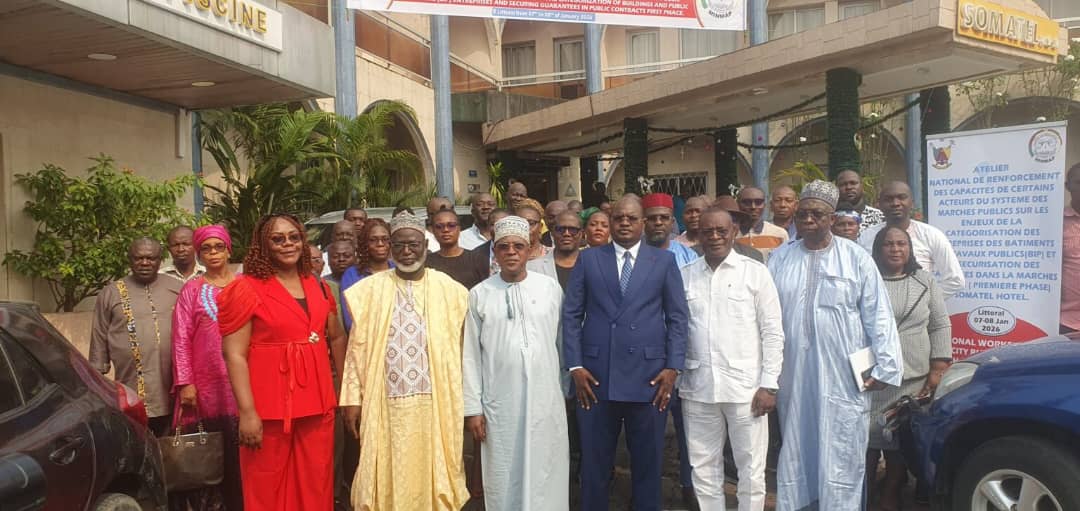
Yesterday Thursday, January 8, 2026, Douala hosted a pivotal national workshop aimed at transforming Cameroon’s infrastructure landscape. The capacity-building session focused on two major reforms: the categorization of construction companies and the securing of financial guarantees, both seen as essential levers for national competitiveness and the protection of public investment.
As Cameroon increases its investment in large-scale infrastructure, the government is introducing a formal categorization system for the Building and Public Works (BWP) sector. This mechanism acts as a regulatory filter, ensuring that a company’s technical, financial, and managerial resources are strictly aligned with the complexity of the projects they bid for.
The primary objectives of this categorization are to ensure risk reduction by vetting companies beforehand, which aims to significantly lower the rate of bidder defaults, ensuring quality between project scale and company capacity by minimizing poor workmanship and optimize costs.
The workshop equally emphasized the importance of securing guarantees to foster a more “bankable” environment for public projects. A central part of this reform is the operationalization of the Caisse des Dépôts et Consignations (CDEC).
By updating the surety bond system—particularly regarding start-up advances—the reform seeks to provide companies with much-needed cash flow flexibility. This shift not only protects State interests but also builds trust between the government, contractors, and financial institutions, leading to more streamlined contract executions.

Aboubakary Haman Tchiouto, Secretary General of the Littoral Governor’s services, representing the Minister Delegate to the Presidency in charge of Public Procurement, highlighted the human impact of these technical changes.
”The Ministry of Public Procurement is working to make our companies more competitive and professional so that public projects can be executed efficiently, for the benefit of the people.”
These reforms, which build upon the 2018 Public Procurement Code, represent a significant step toward better governance. By clarifying categorization and guarantee mechanisms, the State is not only securing its investments but also structuring the national entrepreneurial fabric to be more resilient and competitive on an international scale.
Ultimately, these measures are expected to deliver higher-quality public works, ensuring that every franc spent contributes meaningfully to the nation’s sustainable development.