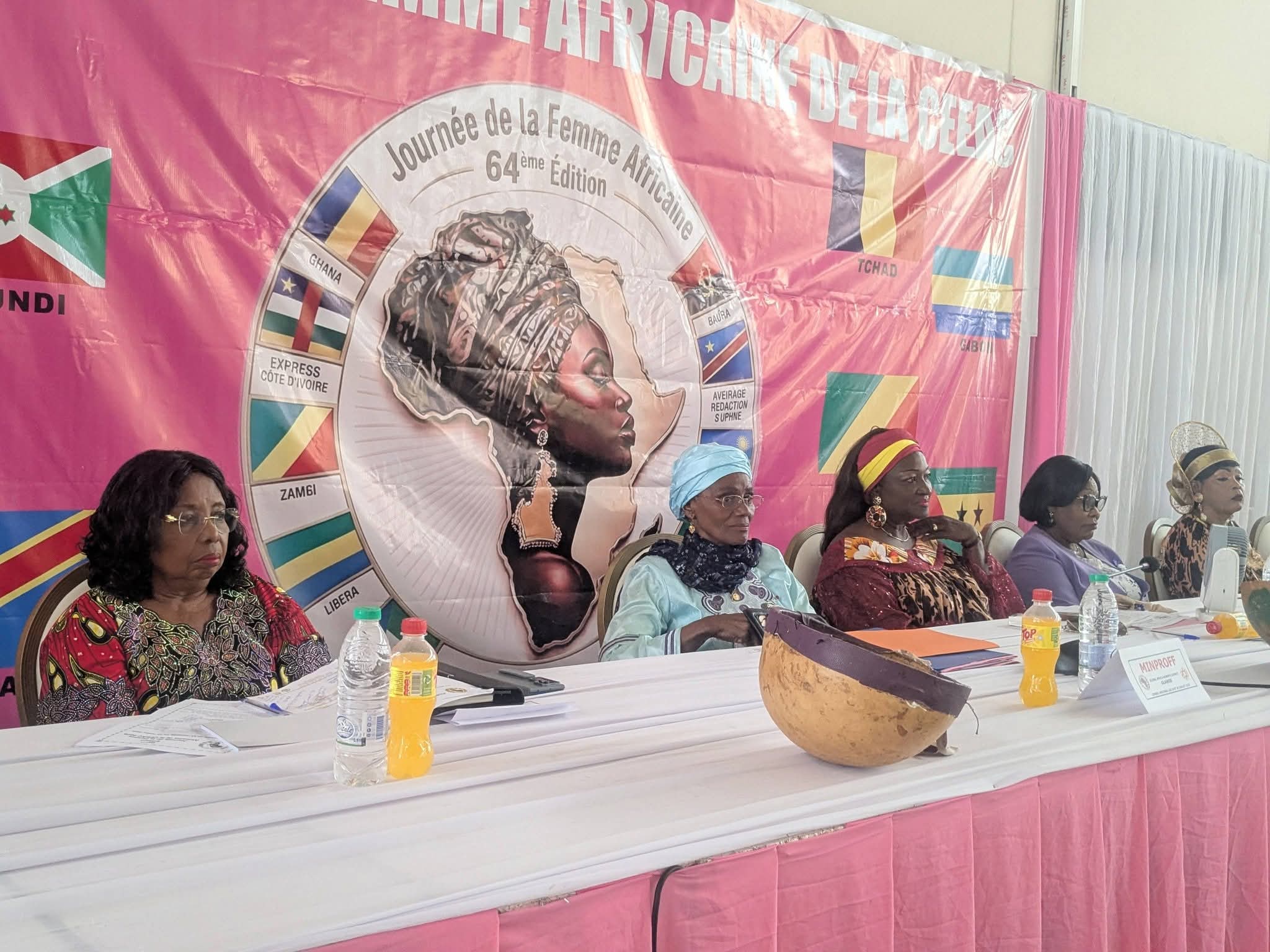
The 64th edition of the African Woman’s Day for the Economic Community of Central African States – ECCAS officially opened on July 28, 2026, at the Ongola A Samba hall of the Centre Regional Council in Yaounde.
The solemn ceremony was presided over by Marie-Thérèse Abena Ondoa, Cameroon’s Minister of Women’s Empowerment and the Family. Held under the theme “ECCAS African Women, Peace, and Social Cohesion: Building resilient and inclusive Communities,” the event highlighted the crucial role women play in fostering stability and unity across the region.
The opening gathering brought together institutional leaders, international partners, and civil society actors committed to advancing gender equality and female leadership within the ECCAS zone. Against a backdrop of shared responsibility, participants underscored that sustainable economic development cannot occur without the full participation of women in peacebuilding efforts.
The event reaffirmed the central position of women in strengthening social cohesion, maintaining community dialogue, and constructing fairer, more equitable societies across Central Africa.
In her opening address, Minister Abena Ondoa reiterated the Cameroonian government’s firm commitment to promoting female leadership and integrating women into core decision-making processes. She emphasized that the chosen theme reflects a deliberate push to elevate women’s contributions to conflict prevention, community mediation, and social resilience. By focusing on these pillars, the government and its regional partners aim to transform grassroots female initiatives into high-impact strategies for regional stability.
This 64th commemorative edition serves as a vital platform for policy reflection, strategic advocacy, and resource mobilization around the contemporary challenges facing African families. Beyond formal deliberations, the gathering provides a unique space to showcase successful local projects driven by women. In a climate where regional security and social unity remain top strategic priorities, highlighting these concrete achievements offers actionable models for other member states to replicate.
Ultimately, the Yaounde conference aims to serve as a catalyst for collective action, enabling women across the ECCAS region to exchange best practices and align their advocacy efforts. The week’s activities demonstrate a shared determination among regional institutions and civil society to build resilient, inclusive, and forward-looking communities. Through unity and solidarity, the women of Central Africa continue to position themselves not as passive observers, but as active architects of regional peace and prosperity.