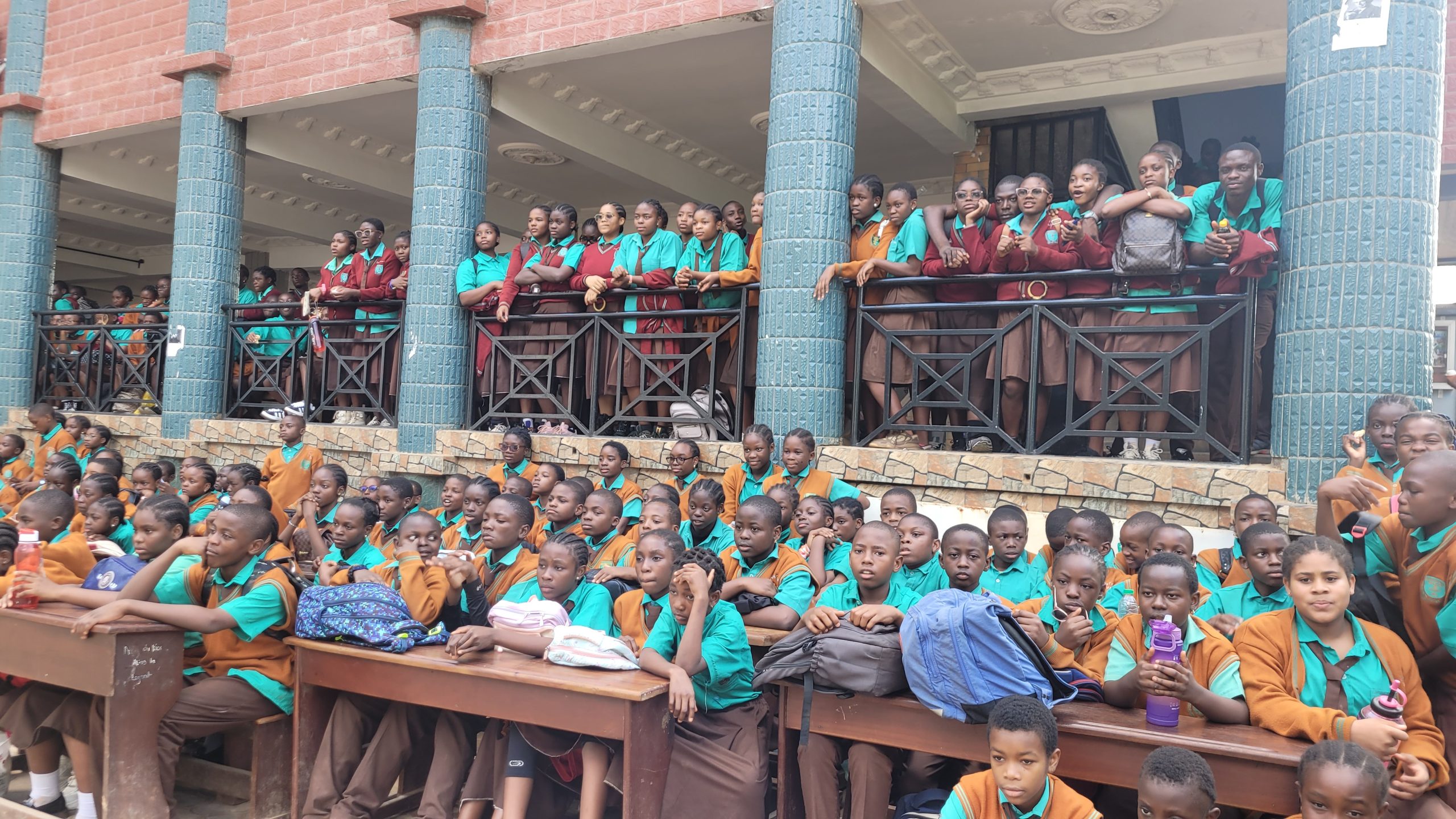
On October 16, 2026, educational institutions across Cameroon observed the 24th Edition of National School Guidance Day – JNOS 2026.
At the Wagué Bilingual Comprehensive Institute of Yaounde, the atmosphere was charged with enthusiasm as administrators, educators, counselors, students, and parents gathered to commemorate this pivotal national event.
Organised under the auspices of the Ministry of Secondary Education – MINESEC through the Department of Guidance, School Life, and Assistance – DOVAS, the celebration highlighted the crucial synergy between academic choices and community progress under the official theme, “School and professional guidance in secondary education, a lever for local development,” paired with the inspiring slogan, “A well-guided student, guaranteed local development.”
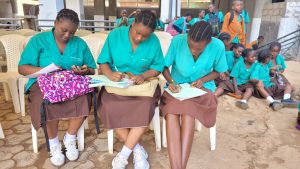
The day’s activities centered around a comprehensive roundtable discussion titled “The Student as a future actor in local development.” The session was structured into three distinct segments: an introduction to definition, background, and state initiatives; an in-depth analysis of the role of school guidance in driving local development; and an open exchange panel.
A focal point of the presentation detailed Cameroon’s four major cultural areas and their respective economic niches, ranging from agropastoralism and solar energy in the Sudano-Sahelian zone to agroforestry and mineral resources in the Fang-Beti forest region.
This framework illustrated to learners how recognizing regional economic potential allows them to tailor their educational pursuits to meet local community needs.
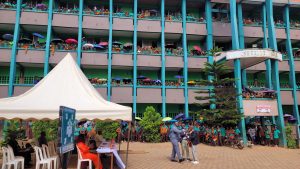
Emphasizing the strategic vision behind the celebration, Blaise Dami, Principal of Wagué Bilingual Comprehensive Institute, underscored the necessity of grounding education in local realities. He noted that true national progress begins at the grassroots level, within sub-prefectures, municipalities, and villages.
According to him, guidance counseling plays a critical role in equipping young learners to identify local challenges and develop targeted solutions. He highlighted that the school’s guidance initiatives aim to afford every student equal opportunities, encouraging them to set purposeful academic goals rather than making arbitrary decisions about their futures.
Contributing a historical and practical perspective, one of the panelist Dr. Ngandjou Komolo Gerard, a history teacher at the institute, urged students not to defer active citizenship until after graduation.
Citing notable Cameroonian innovators such as Arthur Zang, creator of the Cardiopad, Dr. Ngandjou illustrated how young minds can leverage entrepreneurship, micro-projects, and technology to address immediate social issues. He emphasized that guidance counselors must identify students’ aptitudes as early as the 6th grade, utilizing post- and peri-school activities to foster professionalism and civic responsibility directly from the classroom.
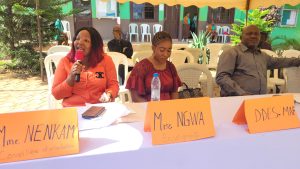
Further clarifying the practical implementation of academic orientation, Madam Yougan Sandrine Epouse Menkam, Principal Guidance Counselor at the institute, detailed the establishment’s long-standing commitment to student accompaniment.
Building on recent professional capacity-building workshops, she explained that the counseling department relies on individual assistance interviews, classroom orientation sessions, and psychometric testing.
Madam Yougan emphasized that guidance helps students look beyond conventional job seeking, inspiring them to identify economic gaps within their immediate surroundings, such as local trade or service provisions, and turn those opportunities into viable enterprises.
The instructional staff also reinforced the daily impact of effective counseling on student discipline and focus. Madame Ngwa Benezet Mankah, an English and Literature teacher, noted that guidance counseling serves as an essential compass preventing career frustration and misalignment in the job market.
She highlighted that this year’s edition specifically drilled both teachers and learners on how to actively collaborate with government initiatives to improve local infrastructure, healthcare, and social amenities, thereby preparing disciplined and community-minded citizens.
The practical value of these guidance frameworks was strongly echoed by the students themselves. Mbene Ange Michelle, a Lower Sixth Science student, shared a candid perspective on how orientation sessions resolve common student dilemmas. She pointed out that many peers make subject choices based on peer pressure or short-term difficulty rather than long-term career goals, such as distinguishing between engineering (S1) and medical tracks (S2). Michelle emphasized that early guidance prevents costly academic missteps and future regrets, giving learners clarity and confidence as they select their specialized series.
The broader community impact of the event was perhaps best summarized by participating parents, who expressed deep appreciation for the insight gained during the proceedings. Nga Ngono Achille, a parent attending the event, remarked that without systematic school guidance, a child wanders blindly in society like a prisoner without direction.
He affirmed that dedicated academic counseling is an indispensable investment that protects youth from future unemployment and illuminates their path toward meaningful societal contributions, making the 2026 celebration at Wagué Bilingual Comprehensive Institute a resounding success.