In response to the rapid evolution of crime and the growing adaptability of criminal networks, security actors across Central Africa are rethinking traditional law enforcement approaches to better anticipate future threats.
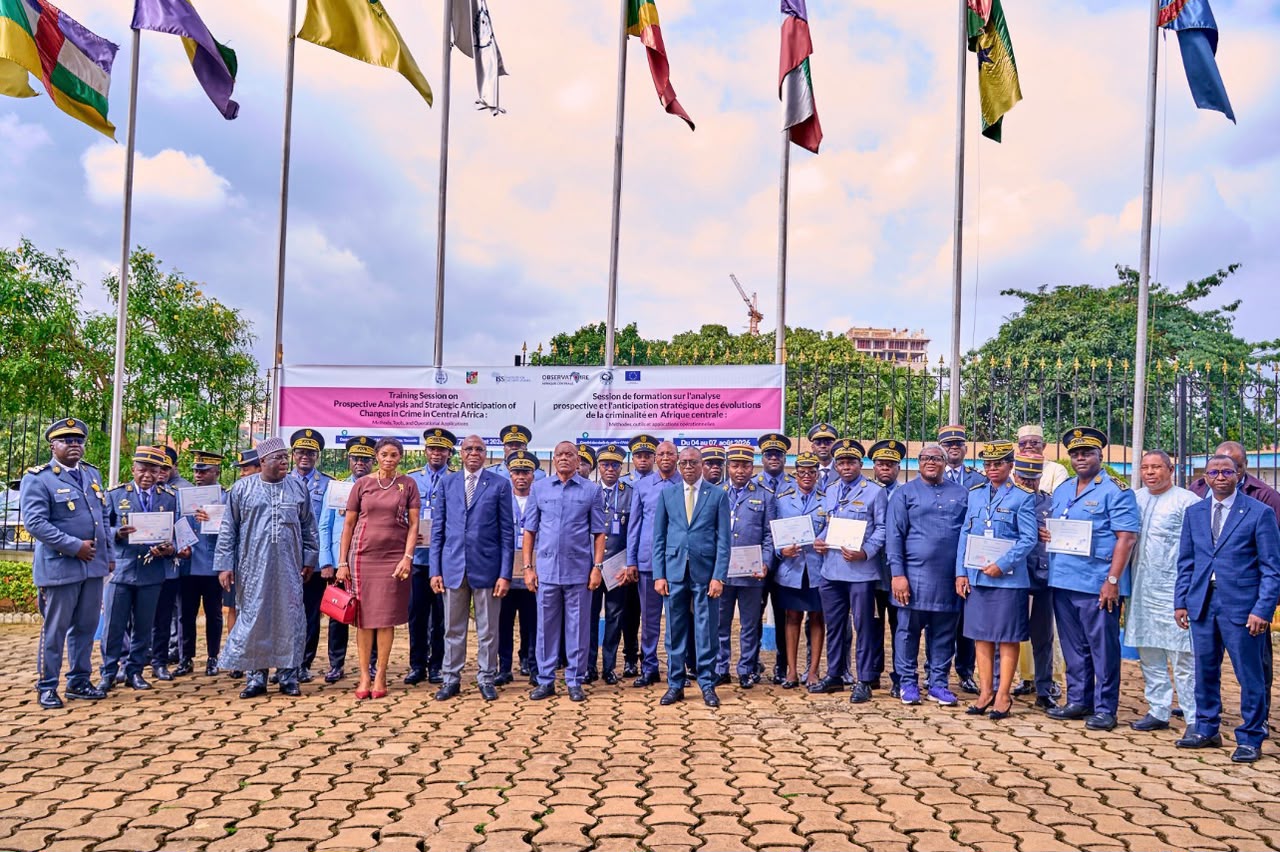
To drive this shift, a high-level training session on prospective analysis and strategic anticipation of crime developments took place in Yaounde from August 4 to 7, 2026. Organized by the Permanent Secretariat of the Central African Police Chiefs Committee – CCPAC/CAPCCO alongside the Observatory on Organized Crime and Violence in Central Africa, the four-day initiative brought together 30 senior Cameroonian officials spanning the security forces, judiciary, customs, and prison administration.
The initiative directly aligns with the findings of the Organized Crime Threat and Resilience Assessment – OCTRA report and recent studies by the Observatory. These analyses emphasize that public security institutions must transition from reactive crisis management to an institutional culture grounded in strategic analysis, monitoring, and proactive prevention. By integrating foresight tools into public policy planning, the organizers aim to equip decision-makers with the methodologies required to spot weak signals, deconstruct organizational blind spots, and craft sustainable, coordinated security strategies.
Delivered through a participatory approach combining case studies, collaborative workshops, and simulation exercises, the training provided participants with concrete tools to model future security scenarios looking toward 2035 and 2050.
Led by expert instructors including Professor Saïbou Issa and Dr. Raoul Tayo amongst others, the curriculum focused on preemption, strategic monitoring, and meta-methods. Trainees were challenged to question established certainties and build future-oriented response frameworks rather than passively enduring complex sub-regional security shocks.
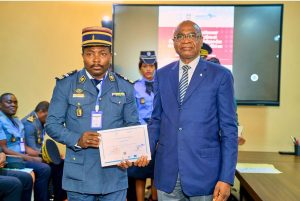
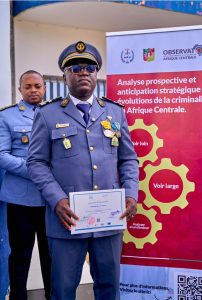
Expressing gratitude on behalf of the participants, Lieutenant Colonel Boum Mbadi Louis Charles highlighted the transformative impact of the seminar, noting that attendees left equipped to bridge the gap between daily operational emergencies and long-term anticipation. Emphasizing that strategic foresight is a practical necessity for every public security official, he committed on behalf of the cohort to step into the role of “ambassadors of foresight” by disseminating these prospective methods across their respective administrations, units, and national security corps.
The strategic rationale for hosting the session in Cameroon lies in the country’s position as a central point of origin and transit for cross-border criminal flows that directly impact neighboring states. Professor Saïbou Issa, Director of the Observatory, noted that understanding organized crime across Central Africa requires a thorough grasp of dynamics within Cameroon and along its borders. He emphasized that over the past four decades, regional security has been heavily shaped by “spillover” effects from neighboring nations like Chad, Nigeria, and the Central African Republic.
To address these interconnected challenges, the Institute for Security Studies – ISS and its Observatory continue to monitor both renewed and emerging threats, mapping out illicit economies and regional security drivers. Recent and upcoming ISS research spans critical vulnerabilities, including maritime piracy in the Gulf of Guinea, cross-border pastoral mobility, cybercrime in Cameroon and Chad, non-traditional terrorist financing, human trafficking, and urban youth gang dynamics (“microbes”). These studies provide the empirical baseline needed to inform long-range scenario modeling for member states of the Economic Community of Central African States – ECCAS.
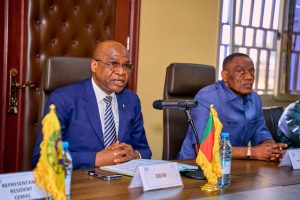
Ultimately, the Yaounde training marks a milestone in establishing a lasting, prospective security architecture across Central Africa. By linking academic research, regional police cooperation mechanisms, and national security leadership, CCPAC and the Observatory are working to close identified knowledge gaps and strengthen institutional resilience.
Citing philosopher Felwine Sarr’s call to uncover “vast spaces of possibility” within African reality, the newly trained officials return to their posts dedicated to embedding strategic foresight into daily practice to better protect local populations.
It is worth noting that this training is the first of several others to be organized in the sub-region. The next one is scheduled to take place in Gabon.