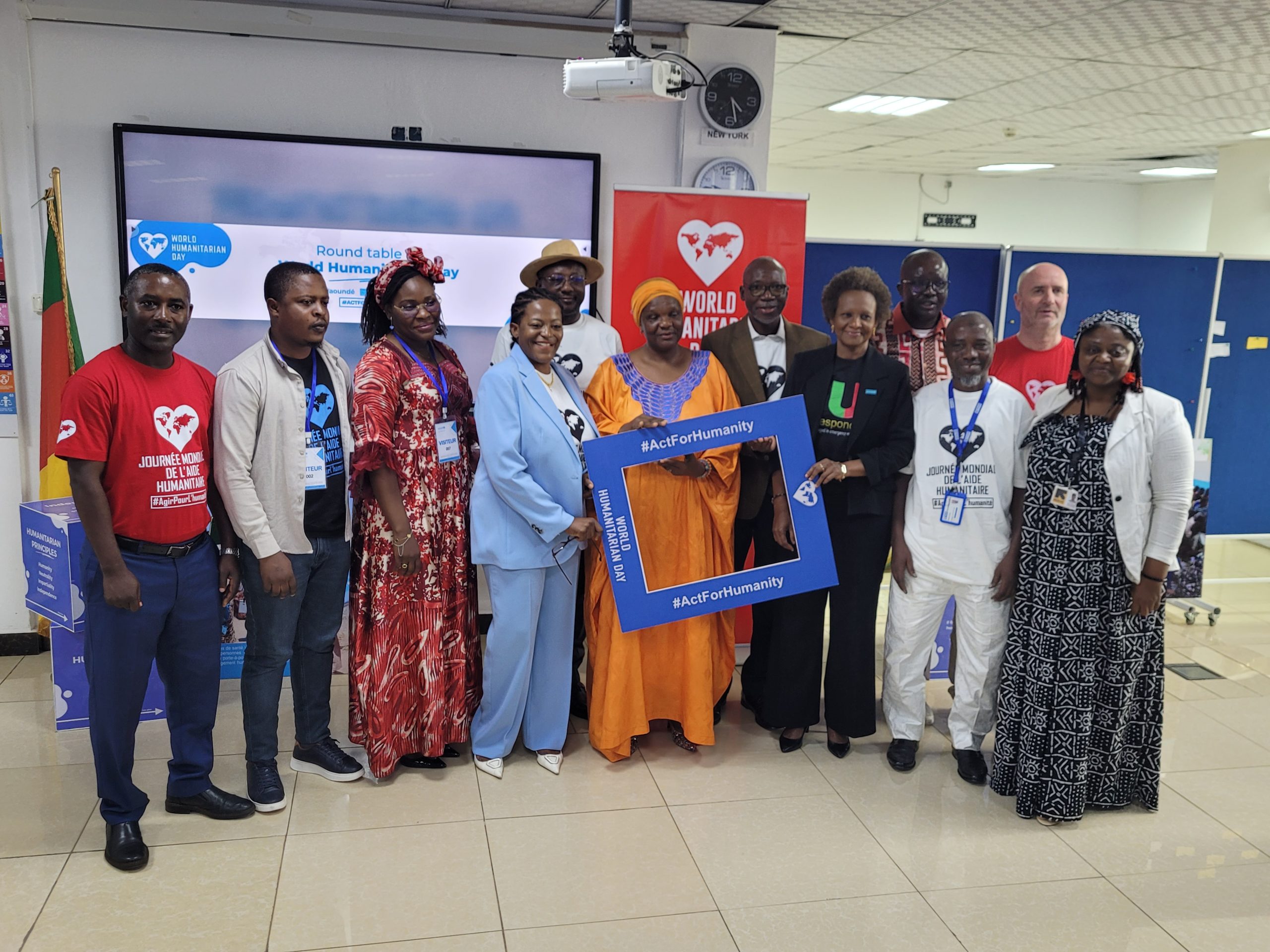
Cameroonians joined the global community on August 19, 2026, to commemorate World Humanitarian Day under the theme “Act for Humanity.” To mark the occasion, a roundtable conference was hosted at the UNICEF headquarters in Yaounde, drawing high-level representation from United Nations agencies, international and national non-governmental organizations, and key government departments.
Stakeholders including Plan International, WHO, the Ministry of Territorial Administration – MINAT, and the Ministry of Public Health gathered to brainstorm solutions for localizing aid, securing principled humanitarian access, and protecting aid personnel on the ground.
Opening the proceedings, Issa Sanogo, UN Resident and Humanitarian Coordinator for Cameroon, emphasized the urgent need to protect aid workers and civilians operating in high-risk zones, reminding attendees that international humanitarian law strictly prohibits targeting those on the front lines. Sanogo underscored the severity of Cameroon’s current crisis, revealing that while 2.9 million people require life-saving assistance, the national humanitarian response plan remains underfunded at only 26%. He stressed that the future of humanitarian action lies in localization, empowering national and community actors to manage and execute responses so that limited resources directly reach those most in need.
Building on the localization message, Kiye Dendi, Country Emergency Response Manager for Plan International, highlighted practical steps already underway through regional platforms operating in Buia and Bamenda. These platforms coordinate monthly engagements between 40 to 50 local and international organizations, providing shared governance, information management, and rapid deployment after alerts.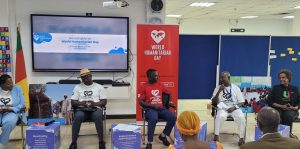
Dendi cited recent joint response assessments during floods in Limbe and Akumba as evidence of successful local operational coordination, outlining ambitions to scale these coordination nodes down to all divisional levels in close partnership with traditional clusters and UN-OCHA.
Government representatives reaffirmed their commitment to supporting non-governmental partners throughout the country. Ndzie Ntsama, Director of Civil Protection at MINAT, delivered a message of solidarity and gratitude on behalf of the Cameroonian government. He expressed appreciation for the persistent efforts of humanitarian organizations operating under difficult circumstances, promising ongoing administrative and field support while encouraging continued transparency, mutual respect, and compliance with national laws and international conventions.
Highlighting the vital role of young people in dynamic crisis environments, Nadine Perrault, UNICEF Representative to Cameroon, showcased how youth-driven initiatives are transforming localization. Through platforms like U-Report and the “Youth Responders” initiative, launched during the 2024 Far North floods, young people are acting as primary responders, mitigating health risks, counteracting misinformation, and assisting with infrastructure like flood-resilient latrines. Perrault emphasized that in a country where more than half the population consists of youth, young people must be viewed not as vulnerable populations, but as innovative, energetic partners in humanitarian action.
Addressing the severe operational constraints on the ground, Laurent Dufour, Chief of Coordination at UN-OCHA, drew attention to the growing access challenges facing vulnerable populations, particularly children. With over one million children lacking access to regular formal education in the Northwest, Southwest, and Far North regions, field operations face compound threats from insecurity, seasonal rains, and reduced financial footprints.
Dufour called for unified, principled approaches among all actors, warning against compromise such as paying taxes at illegal checkpoints, and stressing the importance of established civil-military coordination channels in Bamenda, Buea, and Maroua to preserve safe staff movement.
Concluding the discussions, Kami Firmin Adjahossou, Country Director of INSO Cameroon, reiterated the necessity of robust security coordination as a fundamental component of life-saving aid. As funding cuts force international partners to shift resources toward high-altitude, hard-to-reach areas, frontline exposure and risks increase for remaining field teams.
Adjahossou urged donors and international agencies to embrace true localization by transferring resources and decision-making power alongside operational risk, ensuring that national actors are fully equipped to maintain continuous dialogue with local authorities and communities.