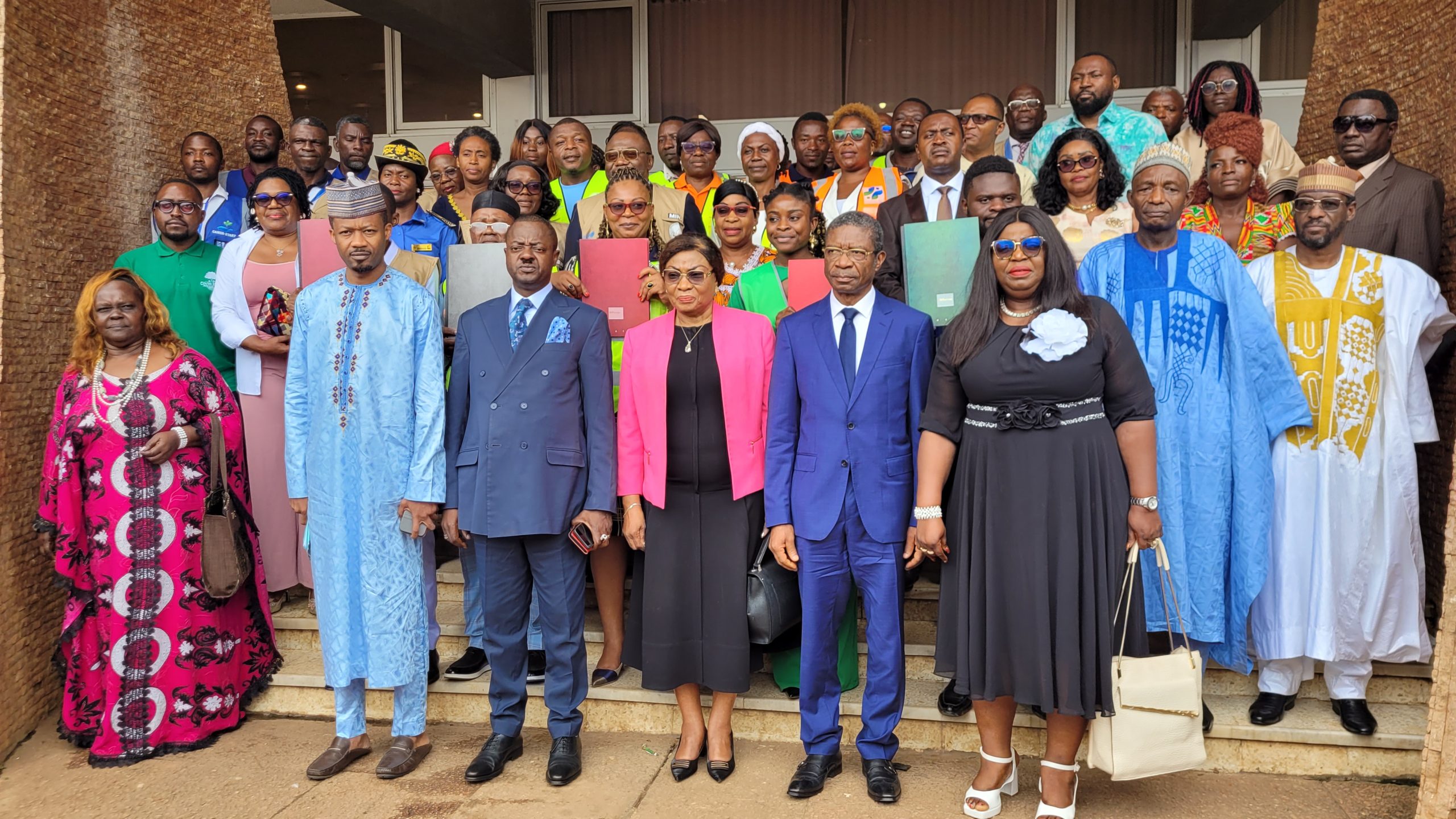
The Cameroon government in a major national drive to extract and resocialize street children and vulnerable youth officially got launched a campaign chaired by the Minister of Social Affairs, Pauline Irène Nguène.
Convened in the deliberations room of the Yaounde City Council Hall on September 30, 2026, the event marked a decisive shift toward structured co-intervention by bringing together key actors, including the Mayor of Yaoundé, Luc Messi Atangana, the representative of the Governor of the Centre Region, the Secretary-General of MINAS, sectoral ministries, and international partners.
The gathering culminated in the signing of formal partnership agreements with five civil society organizations and specialized associations, establishing a unified coalition dedicated to identifying, registering, mentoring, and sustainably reintegrating street youth into economic and social life.
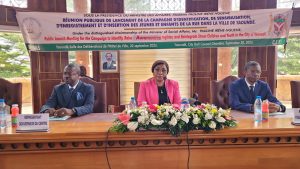
In her opening address, Minister Pauline Irène Nguène expressed profound satisfaction with the launch, emphasizing that the initiative directly aligns with the Head of State’s determination to guarantee social inclusion for vulnerable populations.
Setting an immediate target to extract and resocialize at least 300 street youth and children in Yaounde by December 2026, the Minister highlighted that while government efforts have been ongoing since the COVID-19 pandemic pilot operations, the current strategy centers on an all-inclusive dynamic. By pooling resources across sectoral administrations, local councils, civil society, and international technical partners like UNICEF, the campaign transitions from isolated interventions to a unified, multi-stakeholder coalition that addresses the root causes of urban social wandering.
Addressing the changing dynamics of street life, technical presentations delivered during the launch clarified why intervention frameworks have evolved from focusing solely on “street children” to Youths and street children.
According to historical mapping data from Yaoundé, individuals under 15 years old account for only 7.63% of the street population, while youth aged 15 to 35 represent the vast majority. Minister Nguène noted that these young people are often victims of family dysfunction, community rejection, and extreme poverty, driven to the streets to survive.
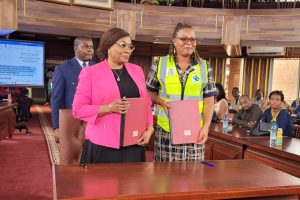



Reframing them not as social outcasts, but as innocent youth possessing vital human potential, she stressed the importance of pairing psychological recovery and social support with concrete vocational training in collaboration with the Ministry of Employment and Vocational Training.
A pivotal aspect of the campaign’s design is the implementation of Social and Behavior Change – SBC strategies alongside direct peer involvement. Highlighting a landmark agreement signed with the Cameroonian Organization for the Fight Against Street Children Phenomena – OCALUCOPER, the Ministry is empowering former street youth who have successfully reintegrated into society to serve as field relays and role models.
Yannick Ondoa, President of OCALUCOPER, expressed deep gratitude for the initiative, noting that former street children possess first-hand knowledge of the environment and are best positioned to mentor their younger peers, guide them toward host facilities, and build trust across mapped urban hotspots.
The operational roadmap presented by Technical Adviser No. 1 of MINAS, Henri Nyambi III Dikosso, outlines a multi-tiered plan built upon lessons learned from previous paradigms, such as the PIJEDAR project and cash-for-work initiatives. Utilizing the Ministry’s Unified Social Registry – RSU to maintain a dynamic database, the campaign combines direct social aid, mental health support, civic registration, and economic insertion.
The primary field phase that encompasses mapping, registration, observation, and skill development will run through December 2026, followed by a transition phase from January to March 2027 to embed these social reintegration frameworks permanently into sectoral government budget lines.
Local governance and civil society representatives echoed strong commitments to ensure the campaign yields lasting results. Host and partner Mayor Luc Messi Atangana reaffirmed the Yaoundé City Council’s readiness to support the program by offering socio-professional insertion opportunities within municipal labor-intensive projects, such as urban sanitation, mobility, and public space maintenance.
Simultaneously, mental health professionals from organizations like the Cameroonian Association of Mental Health Professionals – ACP-SM committed to offering critical psychological care, underscoring that healing invisible emotional wounds and offering continuous accompaniment are indispensable steps to preventing youth from returning to life on the streets.