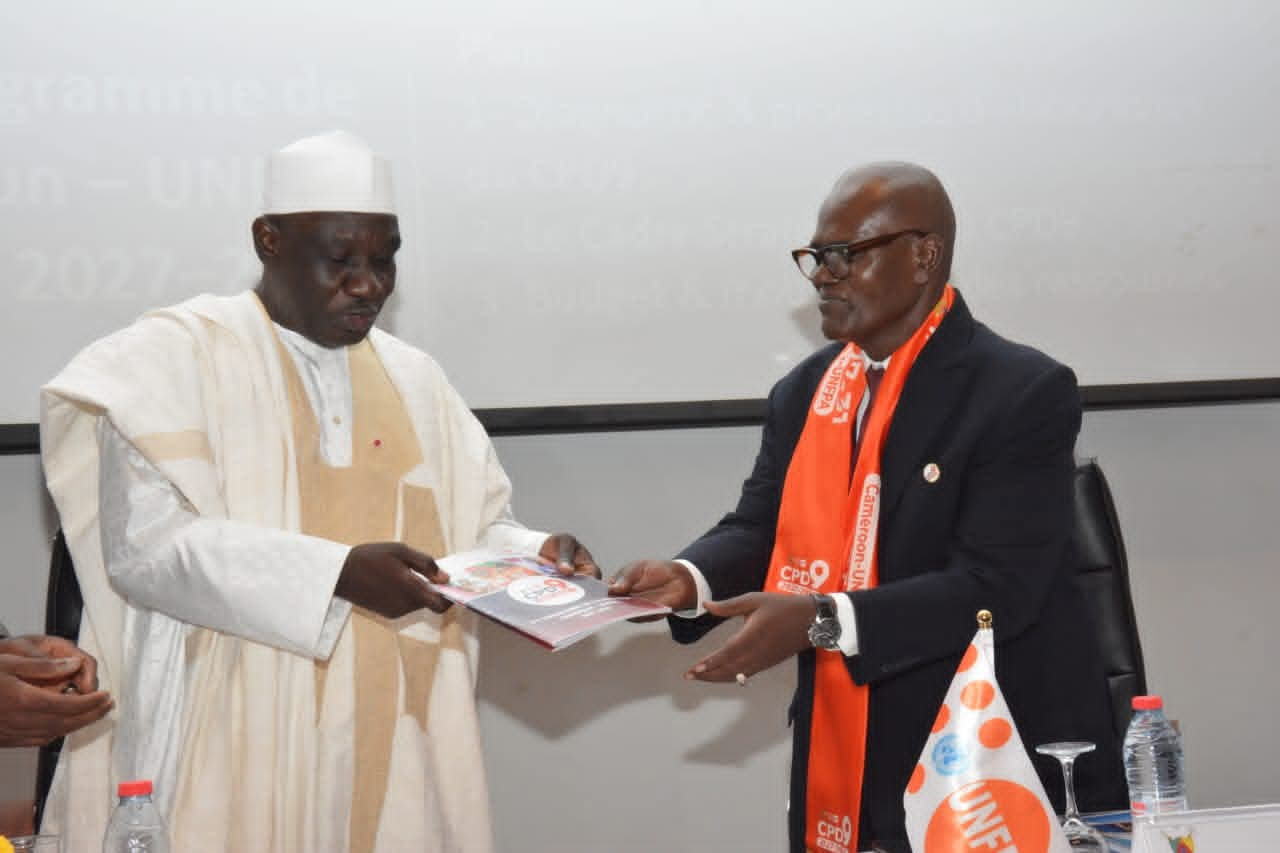
Cameroon and the United Nations Population Fund – UNFPA officially launched a new cycle of cooperation on November 11, 2026, in Yaounde, aiming to boost human development and social inclusion.
The launching ceremony for the 9th Country Programme Document – CPD9, covering the 2027–2031 period, was co-chaired by the Minister of the Economy, Planning and Regional Development, Alamine Ousmane Mey, and the United Nations Resident Coordinator in Cameroon, Issa Sanogo.
The event served as a platform to outline the strategic directions and resource framework of the initiative while strengthening the mobilization of government administrations, technical and financial partners, civil society, and the media.
Aligned with Cameroon’s National Development Strategy – SND30, the UN Agenda 2030, and the African Union’s Agenda 2063, CPD9 sets out to achieve three transformative goals. These core objectives are zero preventable maternal deaths, zero unmet need for family planning, and zero gender-based violence and harmful practices.

By anchoring the program in national and international development frameworks, stakeholders aim to create a cohesive and impactful approach to reproductive health and gender equality across the country.
The new five-year cycle builds directly upon the substantial achievements of the previous cooperation program, CPD8 (2022–2026). During that period, the number of health facilities providing emergency obstetric and neonatal care across Cameroon more than doubled, increasing from 100 to 273.
Furthermore, 337 women suffering from obstetric fistulas received vital medical care and social reintegration support, while 122 safe spaces were established to assist over 210,000 survivors of gender-based violence.
To bring these ambitious goals to fruition by 2031, the CPD9 requires a total budget of $69 million, of which nearly $30 million has already been mobilized by the UNFPA.
Moving forward, the primary challenge for Cameroon and its partners will be to bridge the remaining funding gap and translate these high-level commitments into concrete, measurable, and sustainable improvements in the daily lives of the population.