At least 76 women have been killed in Cameroon since the start of 2026, according to alarming figures released by civil society organizations.
In response to this tragic wave of violence, women’s rights advocacy groups are escalating their efforts by calling for a specific, stringent legislative framework dedicated to combating gender-based violence – GBV.
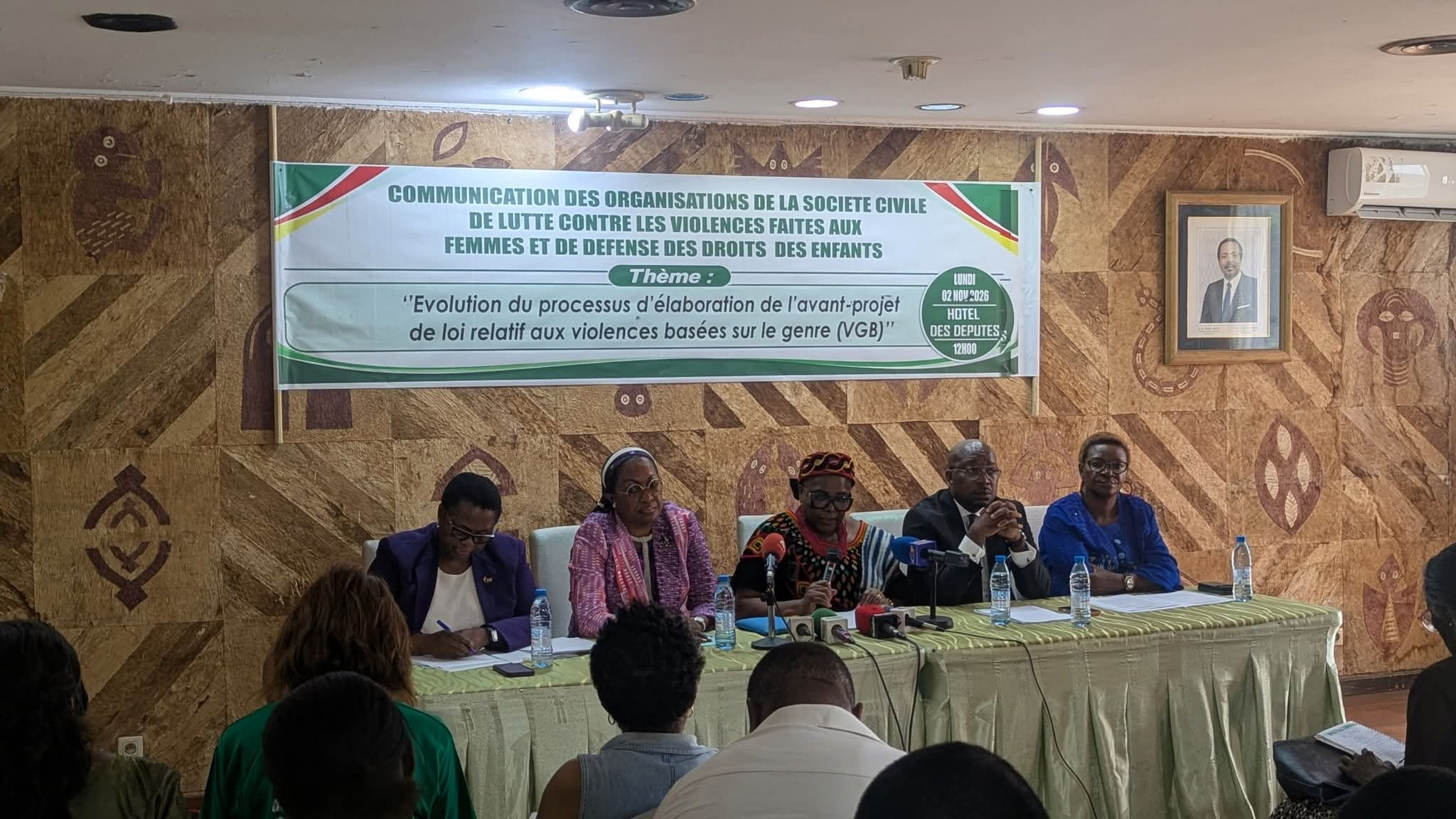
During a press conference held on November 2, 2026, in Yaoundé, these groups placed the issue at the center of national debate just days before the opening of the November parliamentary session, urging public authorities to translate civic advocacy into concrete law.
Beyond condemning the rising toll of femicides, advocacy groups emphasize the limitations of Cameroon’s current legal framework, which struggles to offer a comprehensive solution to diverse forms of violence. Civil society aims to pass legislation that goes beyond post-facto punishment by proactively anticipating aggression, sheltering victims, and ensuring full reparation.
This initiative is built upon a draft bill developed in 2026 through a broad participatory process involving roughly 2,500 individuals, 50 non-governmental organizations, and key ministerial departments, following consultations refined in Ebolowa last February.
According to Yvonne Akoa, President of the Cameroonian Association of Women Lawyers, the draft law aims to establish a robust protective system. The proposed text establishes precise definitions for gender-based violence, sets tailored penalties, and introduces civil protection orders alongside formal compensation mechanisms for victims.
Complementing this protective focus, magistrate Ulrich Ovono highlights that the project prioritizes prevention by curbing violent behaviors and sexual harassment within schools, universities, and workplaces before situations turn fatal.
The urgency of these legislative reforms is further underscored by international human rights observers. In a note published on October 26, 2026, Human Rights Watch pointed out that Cameroonian courts currently lack the authority to issue civil protection orders, a critical mechanism needed to immediately separate victims from dangerous abusers.
Élise Pierrette Mpoung Meno, President of the Association for the Fight Against Violence Against Women – ALVF, stressed that contributions from civil society must be fully integrated into the legislative process so that months of collective effort are not ignored.
The responsibility now rests squarely on the shoulders of the Cameroonian government and lawmakers. For active civil society organizations, the upcoming parliamentary session represents a crucial opportunity to transform months of multi-stakeholder consultations into institutional safeguards.
Beyond passing a single law, this moment challenges Cameroon’s overall capacity to effectively prevent gender-based violence, protect vulnerable women, and bring an end to impunity.