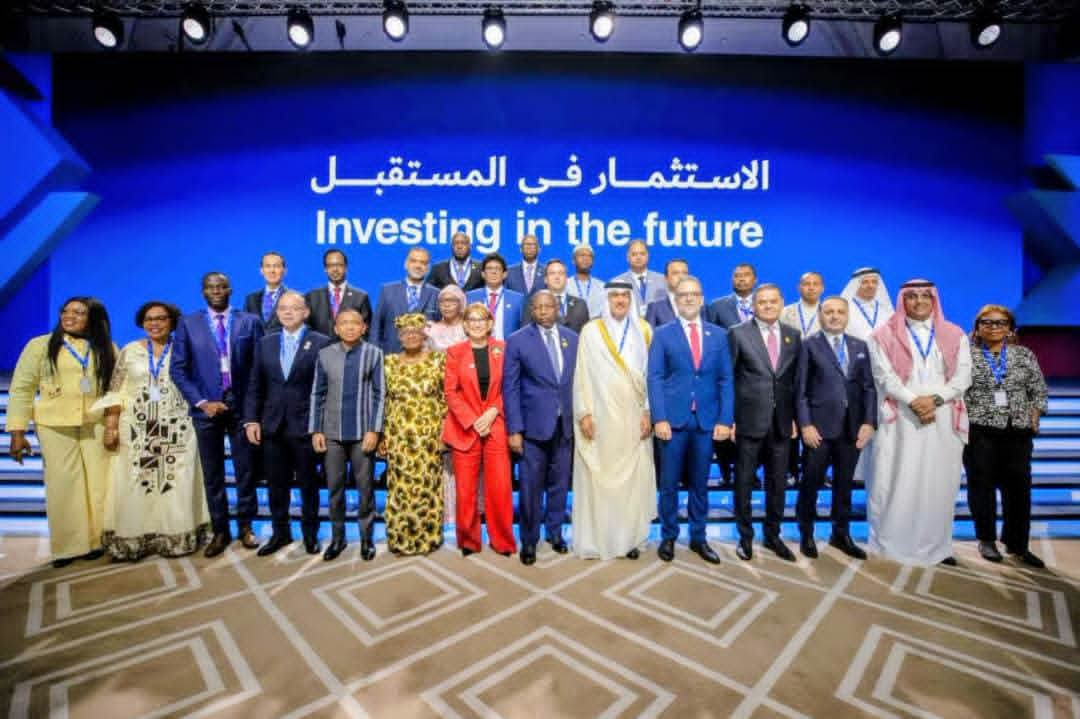
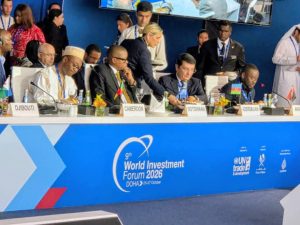
Cameroon delivered a compelling vision for small and medium-sized enterprise (SME) development at the Ministerial Session on Entrepreneurship during the World Investment Forum – WIF 2026 in Doha, Qatar.
Representing the nation, Achille Bassilekin III, Minister of Small and Medium-sized Enterprises, Social Economy and Handicrafts, outlined pivotal strategies to transform the domestic business landscape into a robust powerhouse for economic transition, job creation, and sustainable growth.
Highlighting the scale of Cameroon’s entrepreneurial footprint, the Minister shared key statistics demonstrating the sector’s central role in the national economy. SMEs and registered artisans represent over 99% of the country’s economic base, generating more than 74% of decent jobs with over 580,000 formal entities established. Furthermore, the ecosystem encompasses upwards of 3 million informal production units, making their gradual transition into the formal economy a top priority under President Paul Biya’s National Development Strategy 2020–2030 (SND30).
To accelerate this growth trajectory, the Cameroonian government is mobilizing multiple operational levers aimed at removing systemic bottlenecks. Focus areas include streamlining corporate creation through Business Formalities Centres – CFCEs, enhancing credit accessibility via the Cameroon SME Bank – BC-PME, and facilitating technology transfers within local value chains.
Additionally, state efforts are prioritizing digital entrepreneurship, artificial intelligence integration, and market access expansion through the African Continental Free Trade Area – AfCFTA.
Addressing global stakeholders, Minister Bassilekin III submitted three strategic proposals to tackle structural financing gaps and the digital divide. First, he advocated for deeper collaboration with UNCTAD to update capacity-building frameworks and scale the Empretec program across all ten regions of Cameroon, aligning with the nation’s 2025 National AI Strategy.
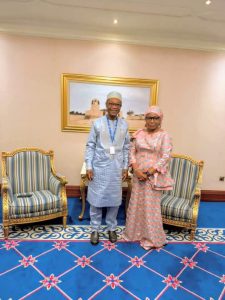
Second, he called for linking native entrepreneurs with international mentoring networks such as the Global Empretec Fellowship to boost cross-border scalability.
The third proposal underscored the need to mobilize specialized guarantee, refinancing, and co-financing mechanisms tailored for high-impact sectors. These instruments are designated to propel SMEs in agribusiness, emerging technologies, artificial intelligence, and green sustainability.
The Minister stressed that global financial architecture must adapt to support emerging market innovators who are building resilient businesses despite continuous structural shifts.
Concluding his presentation, Minister Bassilekin III reiterated that lasting business success extends beyond capital injection to encompass skill acquisition, international certifications, and enduring international partnerships.
By presenting its roadmap in Doha, Cameroon reaffirmed its ambition to forge a globally competitive entrepreneurial ecosystem that positions local SMEs as the primary champions of sustainable economic transformation.