The Cameroonian government and German cooperation achieved a significant milestone in modernizing the rural sector through a high-level signing ceremony in Yaounde.
Two major legal instruments were officially signed to establish a seamless alignment between vocational training programs and the evolving needs of the agropastoral market. This strategic initiative directly addresses structural employment gaps by modernizing agricultural skill sets across the country.
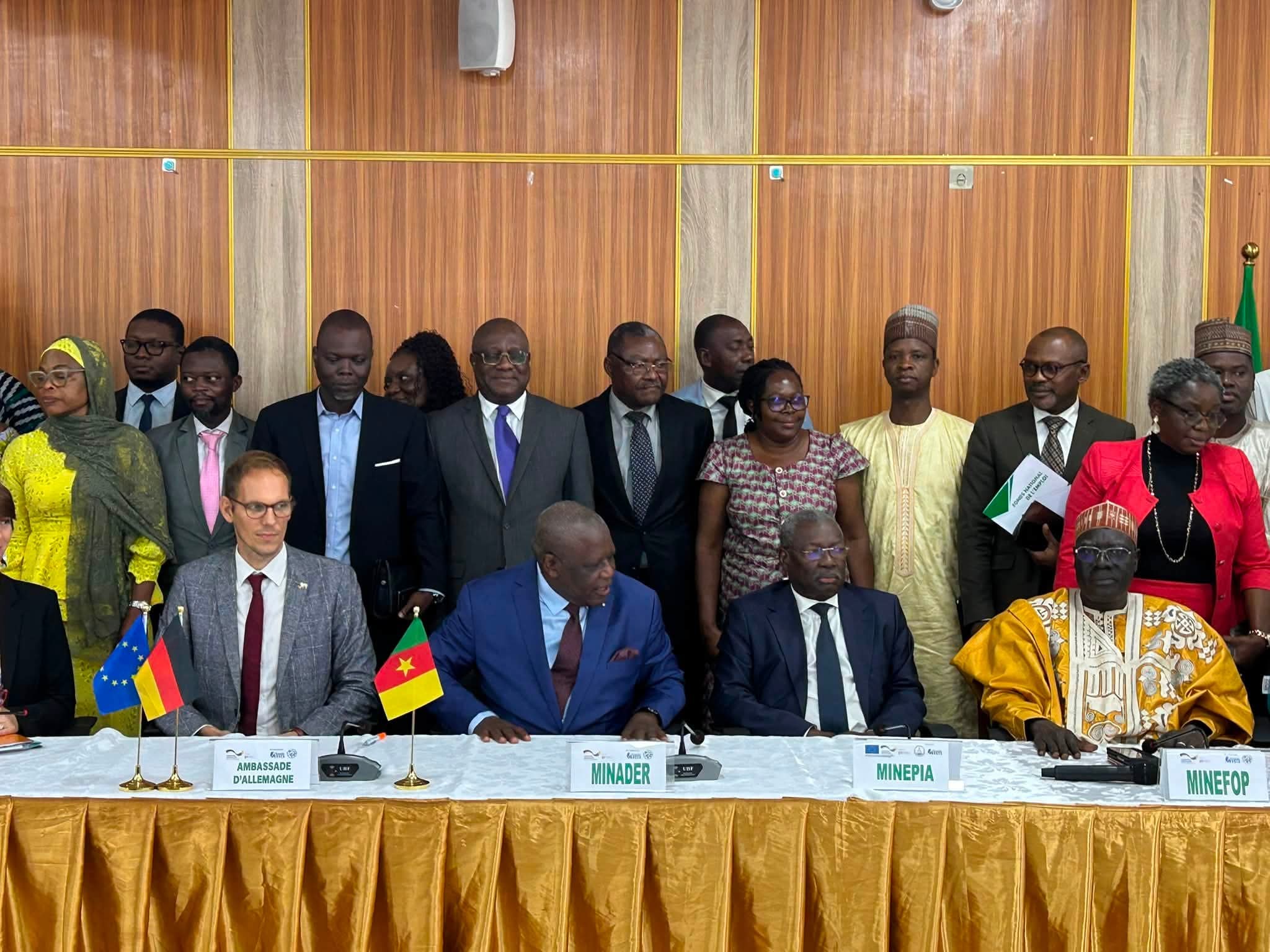
To ensure long-term impact, a landmark tripartite agreement was established between the Ministry of Agriculture and Rural Development – MINADER, the Ministry of Livestock, Fisheries and Animal Industries – MINEPIA, and the Ministry of Employment and Vocational Training – MINEFOP.
This unprecedented inter-ministerial synergy breaks down institutional silos by combining the specialized technical expertise of sector-specific ministries with MINEFOP’s pedagogical frameworks. As a result, the government guarantees qualification pathways that directly reflect real-world labor market demands.
Operationalizing this vision, a Memorandum of Understanding – MoU was signed between MINEFOP and the Deutsche Gesellschaft für Internationale Zusammenarbeit – GIZ, supported by the European Union. This agreement provides the necessary technical and financial resources to translate policy frameworks into concrete field applications. The partnership focuses heavily on practical execution to ensure that training initiatives deliver tangible, measurable outcomes for rural communities.
Key operational objectives under the MoU include the deployment of 29 approved standards developed via the Competency-Based Approach – CBA. Furthermore, the agreement prioritizes technical and material support for the National Center for Trainer Training and Program Development – CNFFDP to cultivate top-tier instructors. The initiative also focuses on official learner certification to provide credible qualifications that significantly enhance employment and self-employment prospects.
Fully aligned with Cameroon’s National Development Strategy – SND30 and its import-substitution policy, this strategic alliance offers tangible economic opportunities to rural women and youth. By upgrading vocational standards and empowering local workers, the partnership aims to transform Cameroon’s vast agropastoral potential into a primary engine for sustainable economic growth.