Cameroon is taking a decisive step toward environmental sustainability as the December 1, 2026 deadline approaches for a joint ministerial decree mandating the use of recycled plastic.
Signed by the Ministry of Mines, Industry and Technological Development alongside the Ministry of the Environment, the regulation requires all local manufacturers and importers of plastic granules, preforms, and packaging to incorporate at least 30% locally recycled PET – R-PET into their food and non-food products.
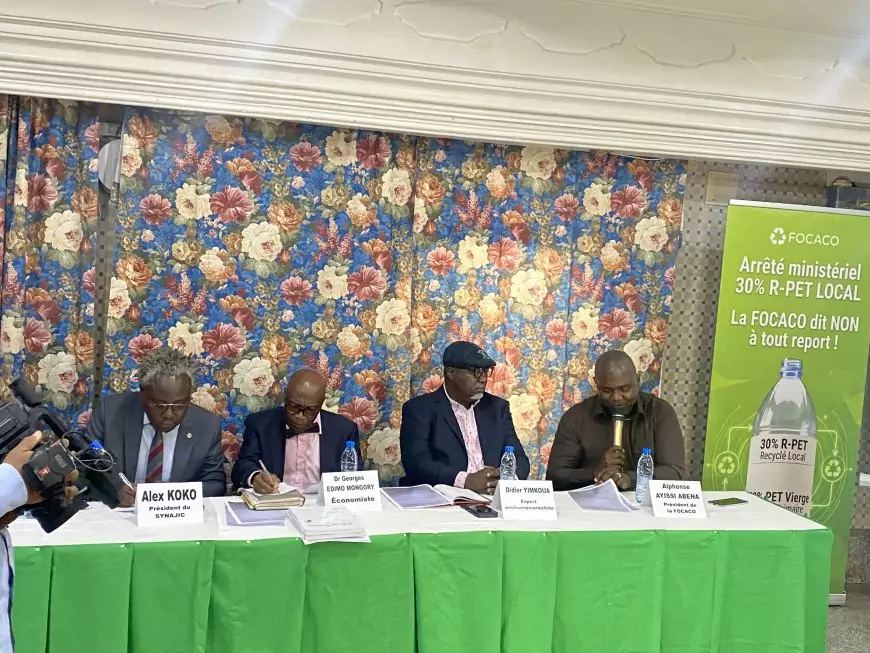
To raise awareness ahead of enforcement, the Cameroonian Consumers Foundation – Focaco convened environmental experts, economists, and journalists in Douala to discuss the policy’s public health and economic ramifications.
The reform addresses an urgent ecological crisis in Cameroon, where approximately 600 tons of plastic waste are generated annually, overwhelming public landfills and drainage systems.
Environmental expert Didier Yimkoua highlighted the severe health hazards associated with plastic pollution, pointing out that over 150 toxic substances in plastics can leach into food and beverages when exposed to sunlight, causing reproductive and cardiovascular harm. By enforcing the incorporation of R-PET, the government aims to curb plastic waste accumulation, clean up urban areas, and significantly reduce national carbon emissions associated with virgin plastic production.
From an economic perspective, shifting from a linear “extract-use-discard” system to a circular economy offers major opportunities for domestic growth. Economist Dr. Georges Édimo Mongory emphasized that local recycling creates non-relocatable green jobs, stimulates biodiversity renewal, and protects national foreign exchange reserves by reducing reliance on imported raw materials. Focaco and media leaders, including the National Union of Independent Journalists of Cameroon (Synajic), stressed that clear public communication will be essential over the remaining compliance period to ensure businesses adhere to the new standards monitored by the Standards and Quality Agency – ANOR.
Cameroon’s pioneer policy is helping set a precedent for sustainable waste management across Central and West Africa. Nearby nations are pursuing similar environmental benchmarks, with Nigeria recently announcing targets to mandate 25% R-PET usage by 2028 and 50% by 2030 under its national environmental regulations.
By establishing mandatory recycling quotas ahead of regional peers, Cameroon positions itself as a leader in sub-Saharan Africa’s transition toward a sustainable, circular economy.