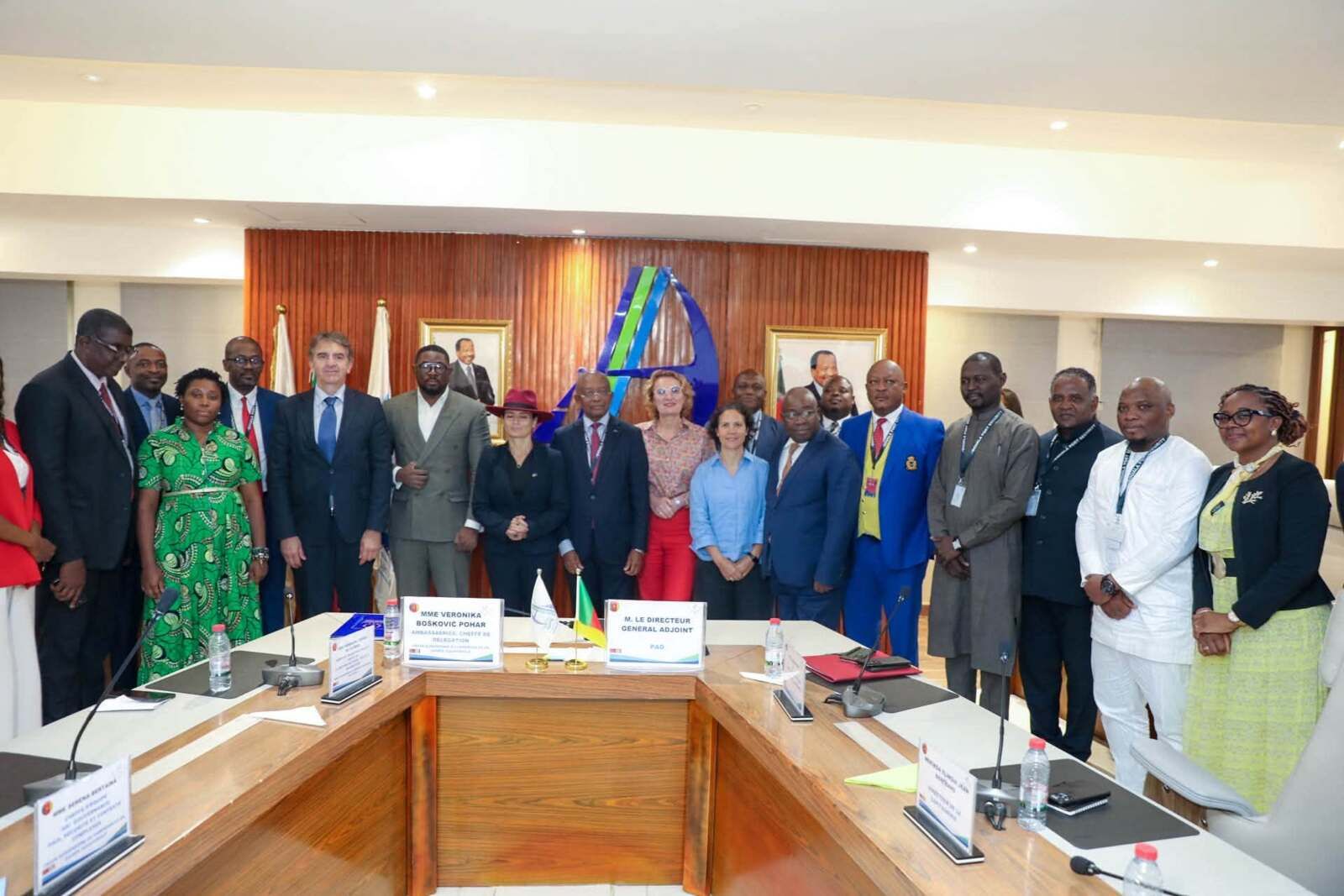
Cameroon’s Minister of Transport, Jean Ernest Masséna Ngallé Bibèhé, presided over the annual session of the National Committee for the Prevention of Bird and Wildlife Risks at Yaounde-Nsimalen International Airport.
The meeting brought together key government ministries, aviation stakeholders, and industry experts to address wildlife hazards on runways. Supported by Minister Delegate Njoya Zakariaou and CCAA Director General Paule Assoumou Koki, who led the technical secretariat, the committee focused on establishing sustainable strategies to drastically reduce animal strikes and protect flight operations across national airports.
The urgency of these measures is driven by alarming statistical trends recorded over the past seven years. Between January 2019 and June 2026, Cameroon logged 656 wildlife-related incidents, with Douala International Airport accounting for over half of the cases and Yaoundé-Nsimalen recording 45 percent.
Crucially, eighteen of these encounters resulted in severe structural damage to aircraft and significant flight disruptions. Data indicates that 95 percent of these collisions occur beyond immediate airport boundaries during critical approach and takeoff phases, highlighting the external nature of the threat.
To counter these risks, the Cameroon Civil Aviation Authority – CCAA conducted comprehensive wildlife studies across major international hubs, including Douala, Yaounde-Nsimalen, and Garoua. These assessments provided detailed mapping of high-risk local bird species, specifically pinpointing the Black Kite, Cattle Egret, Long-crested Eagle, and African Palm Nut Vulture. By analyzing the behavioral patterns and habitat preferences of these dangerous species, authorities can now identify specific risk zones and deploy targeted, data-driven scaring and management techniques.
Addressing the assembly, Minister Ngallé Bibèhé emphasized that wildlife risk mitigation is a vital public safety imperative tied directly to human lives, operational continuity, and airport competitiveness. He called for strong inter-institutional synergy among local councils, administrative authorities, and sector-specific ministries to eliminate attractants around aviation grounds.
Key agenda items centered on evaluating current airfield wildlife situations, analyzing the economic impact on airline carriers, and reviewing ongoing preventive countermeasures deployed across national air transport hubs.
The session concluded with actionable recommendations aimed at establishing cross-sector cooperation to eliminate animal attractants near flight paths, such as illegal waste dumps and unmanaged vegetation.
By synchronizing municipal urban planning with civil aviation safety protocols, Cameroon aims to secure its airspace and align its airport infrastructure with international safety standards.