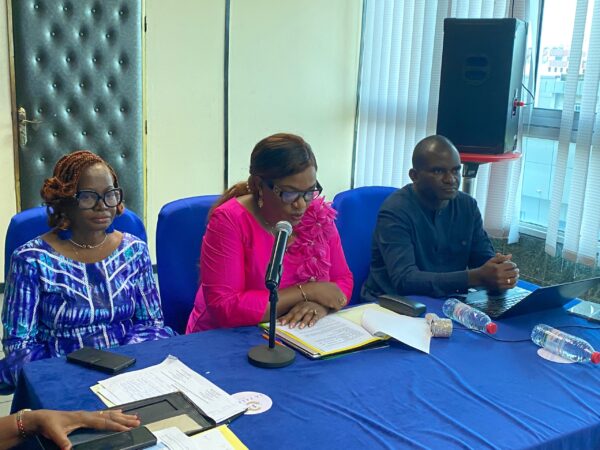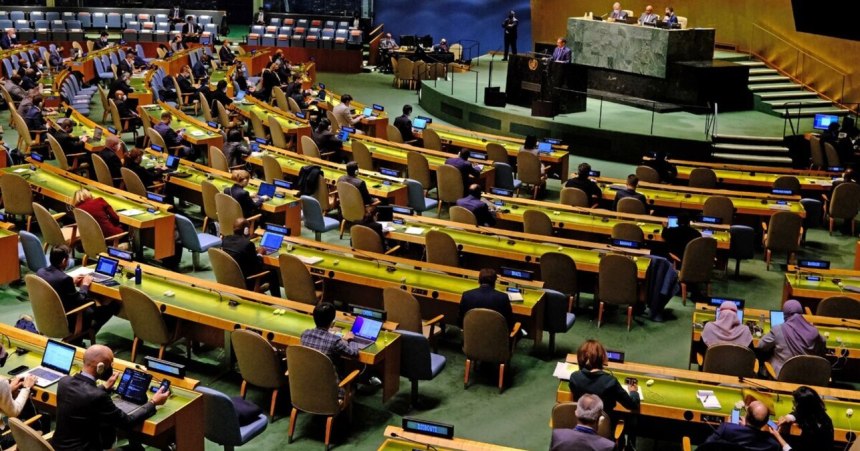
The United Nations Committee on Civil and Political Rights initiated a formal review of Cameroon on Thursday, October 22, 2026, during its 146th session in Geneva, evaluating the nation’s compliance with the International Covenant on Civil and Political Rights.
Led by Cameroon’s Ambassador and Permanent Representative to the UN, the official delegation presented its defense regarding press freedom, civilian trials in military courts, arbitrary detentions, anti-corruption efforts, and the high-profile investigation into the murder of journalist Martinez Zogo.
The proceedings highlight growing international pressure over the country’s governance and security practices in its Anglophone regions and post-election management.
Addressing concerns raised by committee members, the Cameroonian delegation emphasized that the country possesses a robust domestic legal framework designed to safeguard human rights, while acknowledging that implementation gaps occasionally occur.
Regarding the prosecution of civilians in military courts, a practice heavily criticized by international observers, representatives argued that such jurisdiction is legally authorized under domestic law whenever security forces are implicated or firearms are used in the alleged offenses.
Defending its stance on minority rights, the delegation stated that while samesex relations remain illegal under the penal code, individuals are not systematically targeted unless caught in flagrante delicto or in violation of public decency laws.
The UN panel’s line of questioning aligns closely with a comprehensive shadow report submitted in September 2026 by a coalition of Cameroonian civil society organizations. The report provides a stark statistical overview of the human rights landscape, documenting 540 electoral process violations and 312 arrests compiled by legal defense teams following the October 2025 period.
An independent registry cited in the civil society dossier tracks 3,310 overall cases, with 2,782 individuals currently remaining in detention under conditions monitored by local rights organizations.
The coalition’s findings heavily focus on the ongoing instability in the North-West and South-West regions, noting 136 documented security incidents in 2025 that directly affected 278 victims. Additionally, the report identifies 1,339 detainees categorized under the “Anglophone crisis,” with 1,298 currently held in pre-trial detention without formal resolution.
Beyond systemic delays, civil society groups highlighted severe humanitarian concerns within the penitentiary system, including the documented detention of two infants alongside their mothers at the Bamenda Central Prison as of September 20, 2026.
Accountability for state actors remains a central point of contention between independent monitors and the government. The report indicates that out of 256 formal complaints filed against security agents for alleged torture or excessive use of force since 2017, nearly none have resulted in judicial trials.
Discrepancies also persist regarding casualties from the 2025 post-election period, where official government figures report 16 fatalities compared to 48 deaths estimated by United Nations sources and non-governmental observers.
As the review session concludes, the UN Human Rights Committee will issue concluding observations and actionable recommendations for the Cameroonian government.
The outcome of this audit is expected to shape future diplomatic engagement and civil society advocacy, pressing national authorities to align judicial practices with international human rights standards, address pre-trial detention backlogs, and ensure accountability for security forces across all regions.