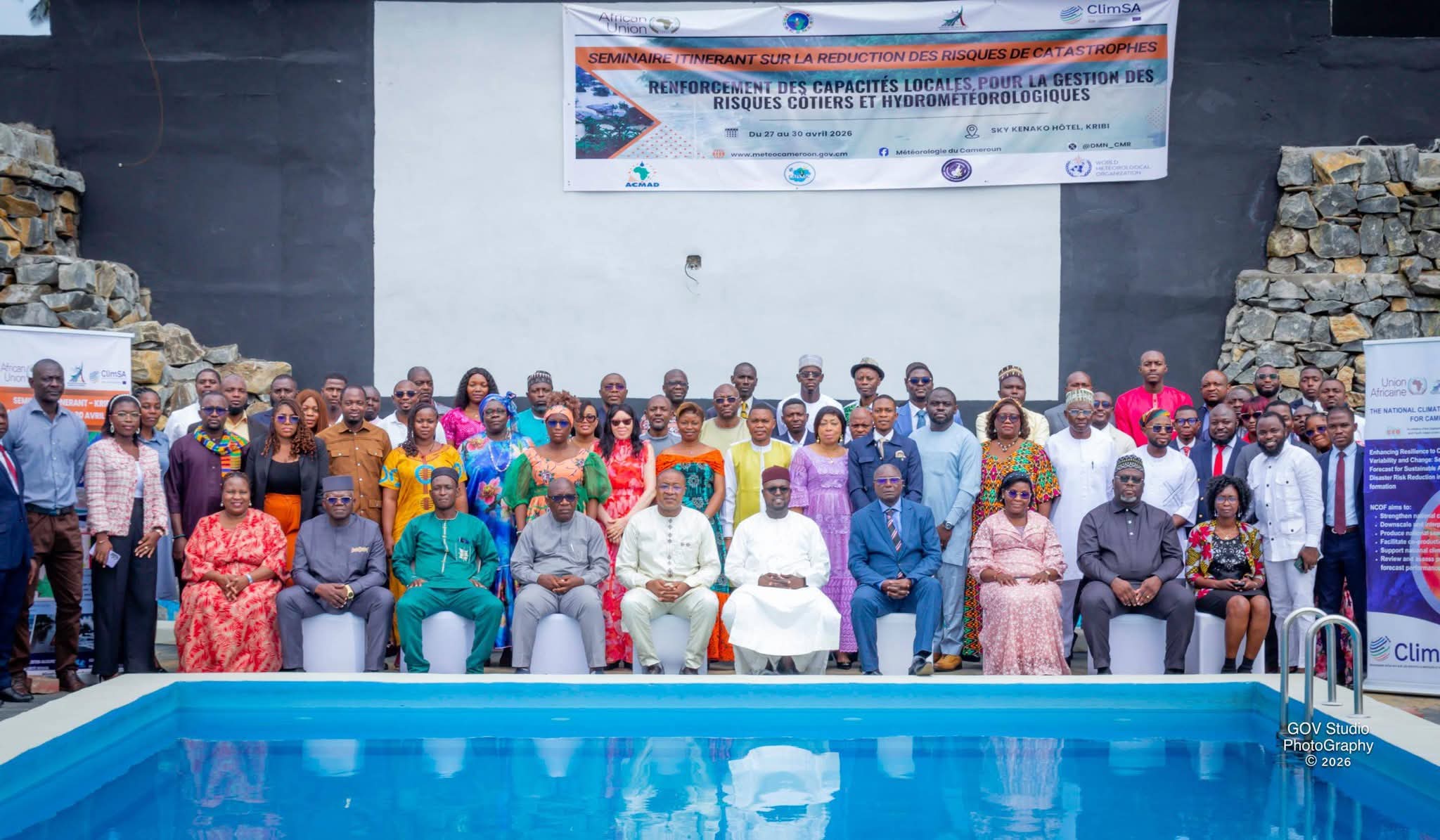
The coastal town of Kribi is currently the focal point for disaster mitigation efforts as it hosts a four-day roving seminar dedicated to strengthening local capacities in managing coastal and hydro-meteorological risks.
Organized by the Department of National Meteorology in partnership with the African Union Commission – AUC, ECCAS, ACMAD, and CAPC-AC, the workshop is centered on the theme: “Strengthening local capacity for coastal and hydro-meteorological risk management.”
The event was officially inaugurated on Monday, April 27, 2026, by Simplice Tchinda Tazo, the Director of National Meteorology, representing the Minister of Transport.
The primary objectives of the seminar are to deepen the understanding of coastal hazards and to fortify early warning systems at the local level. Participants are engaging in technical presentations and practical exercises designed to build capacity for anticipatory action and contingency planning.
A critical goal of these sessions is to ensure that climate information is no longer viewed in isolation but is actively integrated into local development planning to protect both lives and infrastructure.
The selection of Kribi as the venue is strategically significant due to its status as a major coastal hub facing escalating environmental threats. The region is increasingly vulnerable to hydro-meteorological hazards, including intense rainfall, flash floods, and storm surges.
Furthermore, the town faces severe long-term challenges such as coastal erosion and marine submersion, making it an ideal “living lab” for experts and local stakeholders to develop site-specific resilience strategies.
This initiative follows the successful impact of a previous roving seminar held in Limbe in December 2025, which focused on the intersection of meteorology and agriculture with the Cameroon Development Corporation.
This year, the focus has shifted toward the Disaster Risk Reduction – DRR sector. By gathering international experts and local practitioners, the seminar aims to create a robust framework for managing the unique hydro-meteorological risks that define Cameroon’s coastal landscape.