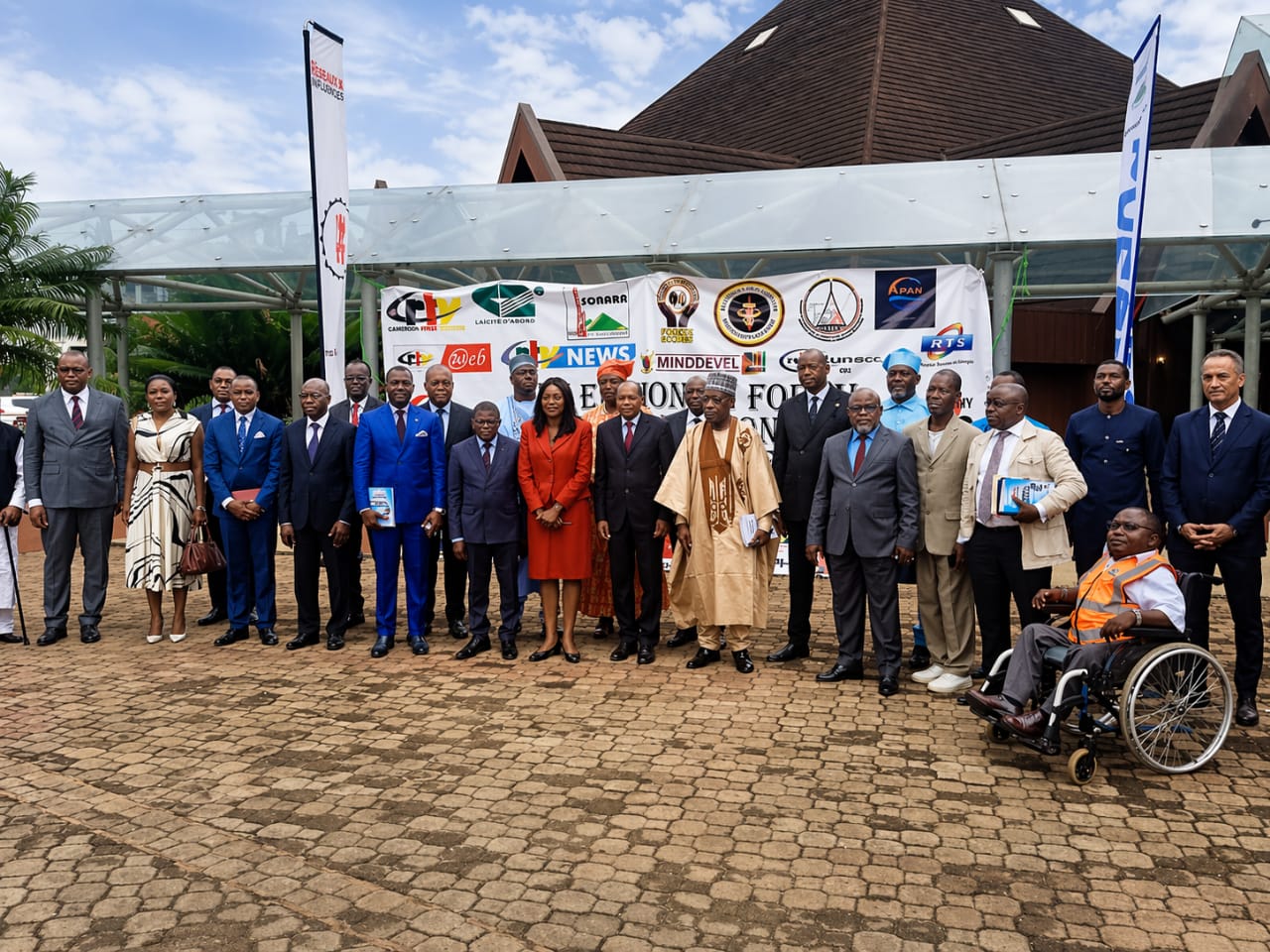
The headquarters of the Economic and Social Council of Cameroon hosted the inaugural National Forum on Economic Issues on April 23, 2024, marking a significant shift toward integrating citizen expertise into public policy.
Spearheaded by renowned CRTV journalist Yvonne Lucrèce Bourgeoise Mebenga, the event brought together government officials and industry leaders to move beyond theoretical television analysis.
The forum aimed to provide actionable insights for the National Development Strategy – SND30, ensuring that economic discourse translates into concrete development levers for Cameroon’s future.
A central highlight of the gathering was the unveiling of a monumental two-volume publication by Mebenga, which distills five years of her program “Questions Économiques.” This work compiles 40 critical interviews across nearly 1,000 pages, covering structural transformation, debt management, and industrialization.
By documenting the insights of 200 experts, the author has created a permanent reference tool for decision-makers, emphasizing economic rigor over political rhetoric to guide the nation’s long-term financial stability.
The forum functioned as a strategic laboratory, identifying four critical pillars necessary to accelerate Cameroon’s emergence by 2035. Participants focused on optimizing the energy mix for industrial sovereignty, strengthening import substitution to compete within the African Continental Free Trade Area – AfCFTA, and empowering decentralized territorial collectivities. Additionally, experts emphasized the urgent need to align human capital development and academic training with the evolving demands of the modern job market.
To ensure these ideas achieve a tangible impact, the findings of the proceedings will be summarized in a formal report submitted directly to the government.
Zacharie Ngoumbe, Secretary General of the Economic and Social Council, noted that the forum successfully transitioned from the “virtual world” of television to a real-world platform for tripartite dialogue between the state, civil society, and the private sector.
This bold initiative underscores a new era where economic expertise is accessible, documented, and driven by a commitment to structural transformation.