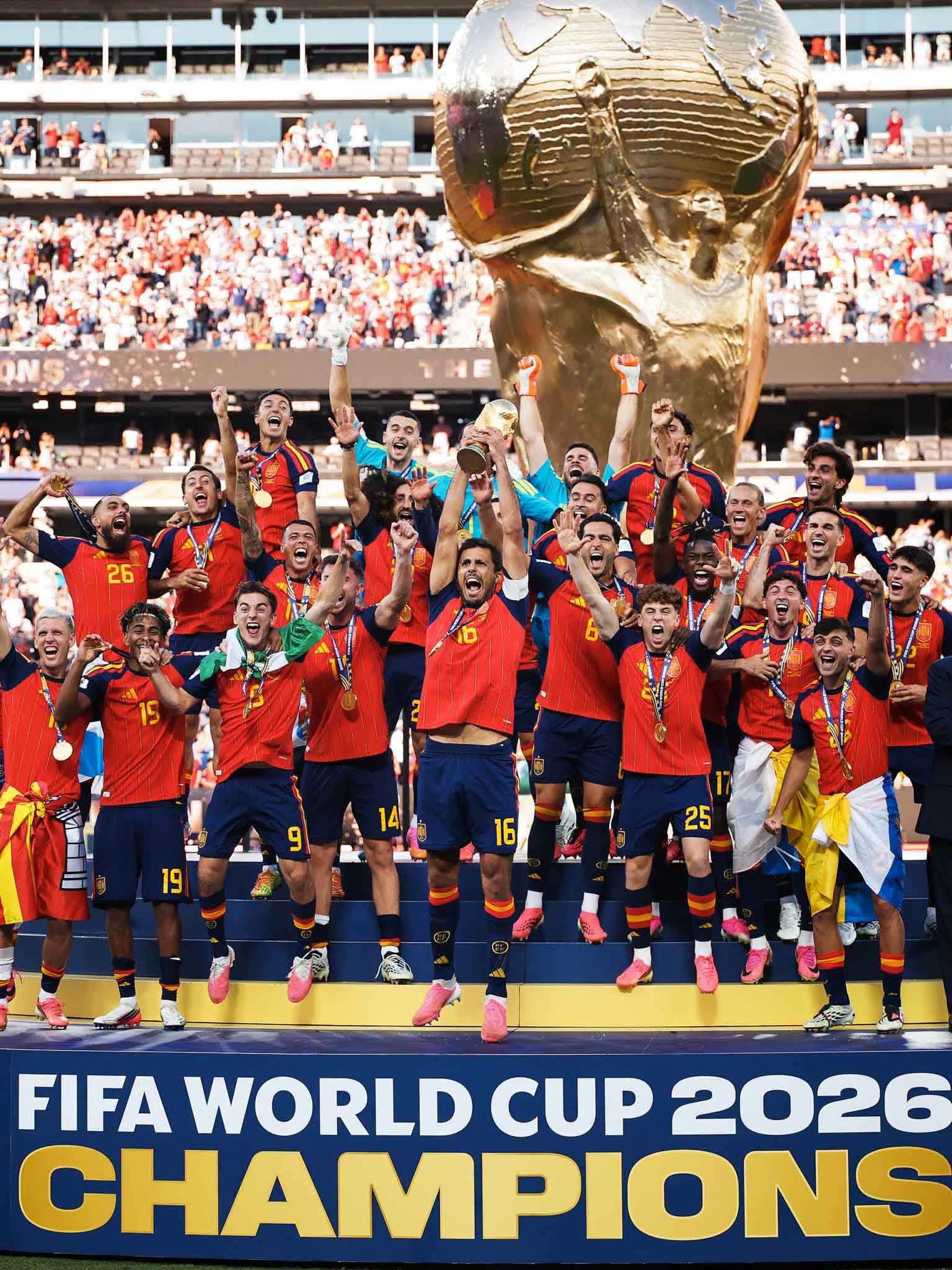
The 2026 edition of the FIFA World Cup rapped up on Sunday July 19, 2026 with Spain emerging victorious and lifting up the trophy. This is thanks to the 1-0 score against its opponent Argentina scored in the extra time of play.
Spain’s 1-0 extra-time victory over Argentina in the World Cup final that took place in the United States of America cemented La Roja’s position at the apex of global football. Adding a second World Cup crown alongside their reigning European Championship, Olympic Games, and Women’s World Cup titles, Spain proved virtually impossible to dismantle.
Driven by a signature suffocating possession game, Luis de la Fuente’s side dictated the match from start to finish, denying Argentina’s star Lionel Messi meaningful touches and preventing the defending champions from establishing any attacking momentum.
The defining moment arrived in the 106th minute, just seconds into the second period of extra time. Lamine Yamal laid the ball off to right-back Pedro Porro, who delivered a curling, back-post cross. Substitute Nico Williams expertly headed the ball down into the dangerous area, allowing Ferran Torres to smash a first-time half-volley past Argentina’s Emiliano Martínez to break the deadlock.
Though Spain lacked traditional, physically intimidating center-backs like Carles Puyol or Gerard Piqué, 19-year-old Pau Cubarsí and Aymeric Laporte relied on positioning and finesse. Supported by goalkeeper Unai Simón’s proactive sweeping outside his penalty area, Spain conceded just one goal across eight entire matches—a new World Cup record. Cubarsí’s composure earned him the tournament’s “Young Player” award, while his draw of a second yellow card on Enzo Fernández in stoppage time forced Argentina to play extra time with 10 men.
In midfield, Ballon d’Or winner Rodri anchored Spain’s tempo with unmatched spatial awareness. Though his tournament line read zero goals and zero assists, his ability to break up opposition movements, anticipate transitions, and retain control under pressure proved irreplaceable. Recognized as the top player of the tournament, Rodri’s presence ensured Argentina was never granted the space needed to threaten the Spanish goal.