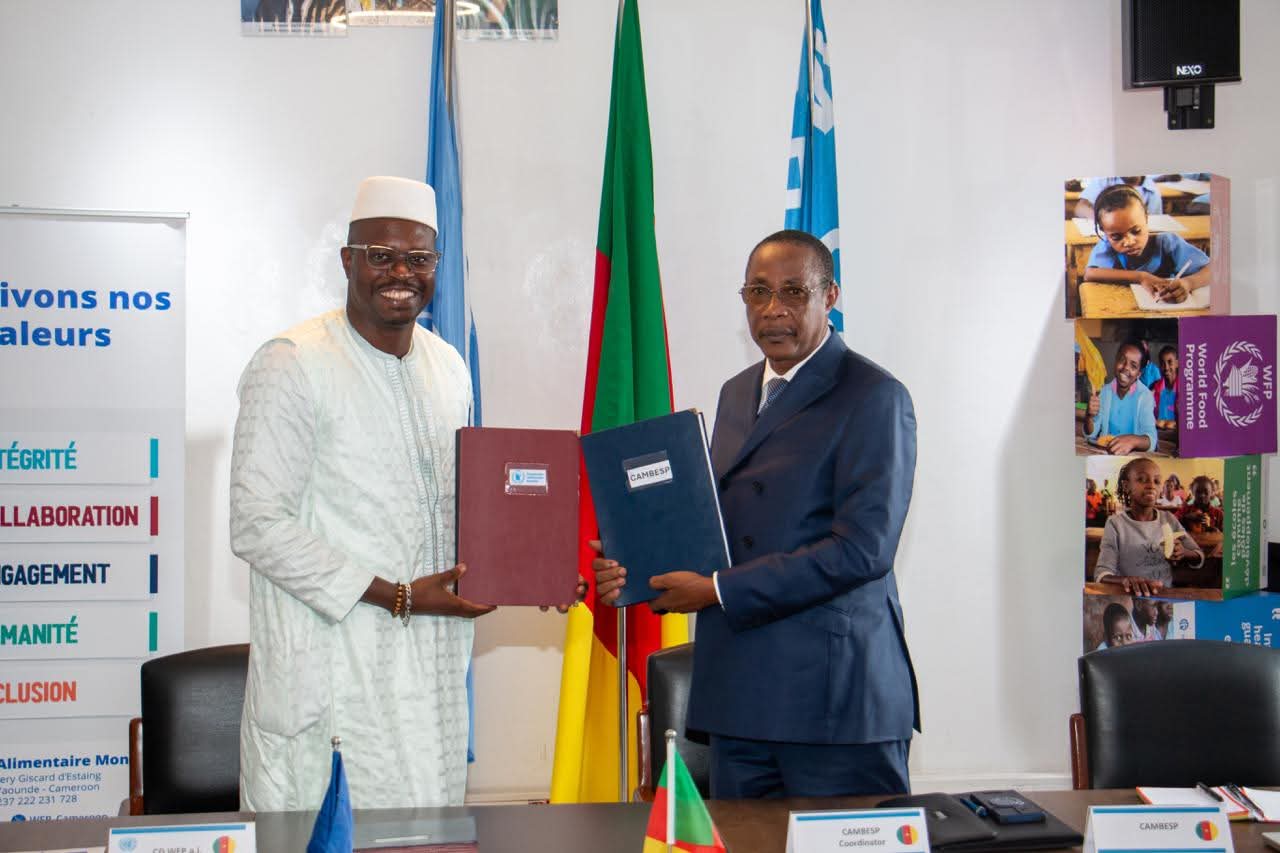
The Government of Cameroon has facilitated a milestone €3.6 million agreement between the World Food Programme – WFP and the Ministry of Basic Education – MINEDUB, through the Cameroon Basic Education Support Project – CAMBESP.
Financed with support from the Global Partnership for Education – GPE and the Islamic Development Bank Group – IsDB, this multi-lateral partnership aims to significantly scale up the national Home-Grown School Feeding – HGSF initiative.
Targeting vulnerable priority zones, the project will run from 2026 to 2029 across the Adamawa, East, and Far North regions. Over this four-year period, the WFP will provide nearly 11,000 school children with daily, wholesome meals.
By addressing basic nutritional needs during school hours, the initiative directly targets critical educational benchmarks—improving primary school enrolment, reducing dropout rates, and creating better cognitive conditions for effective learning.
Beyond classroom success, the home-grown model acts as a vital catalyst for rural economic development. By sourcing food ingredients directly from local agricultural producers, the programme integrates school canteens with local food supply chains. This creates predictable, structured market opportunities for smallholder farmers, boosting household incomes and fortifying regional food security.
Supported by international financing institutions including the Arab Bank for Economic Development in Africa – BADEA, this integrated model demonstrates how cross-sector cooperation can advance sustainable development goals.
By aligning education, agriculture, and social protection, Cameroon continues to build resilient community networks that combat child malnutrition and drive progress toward zero hunger.