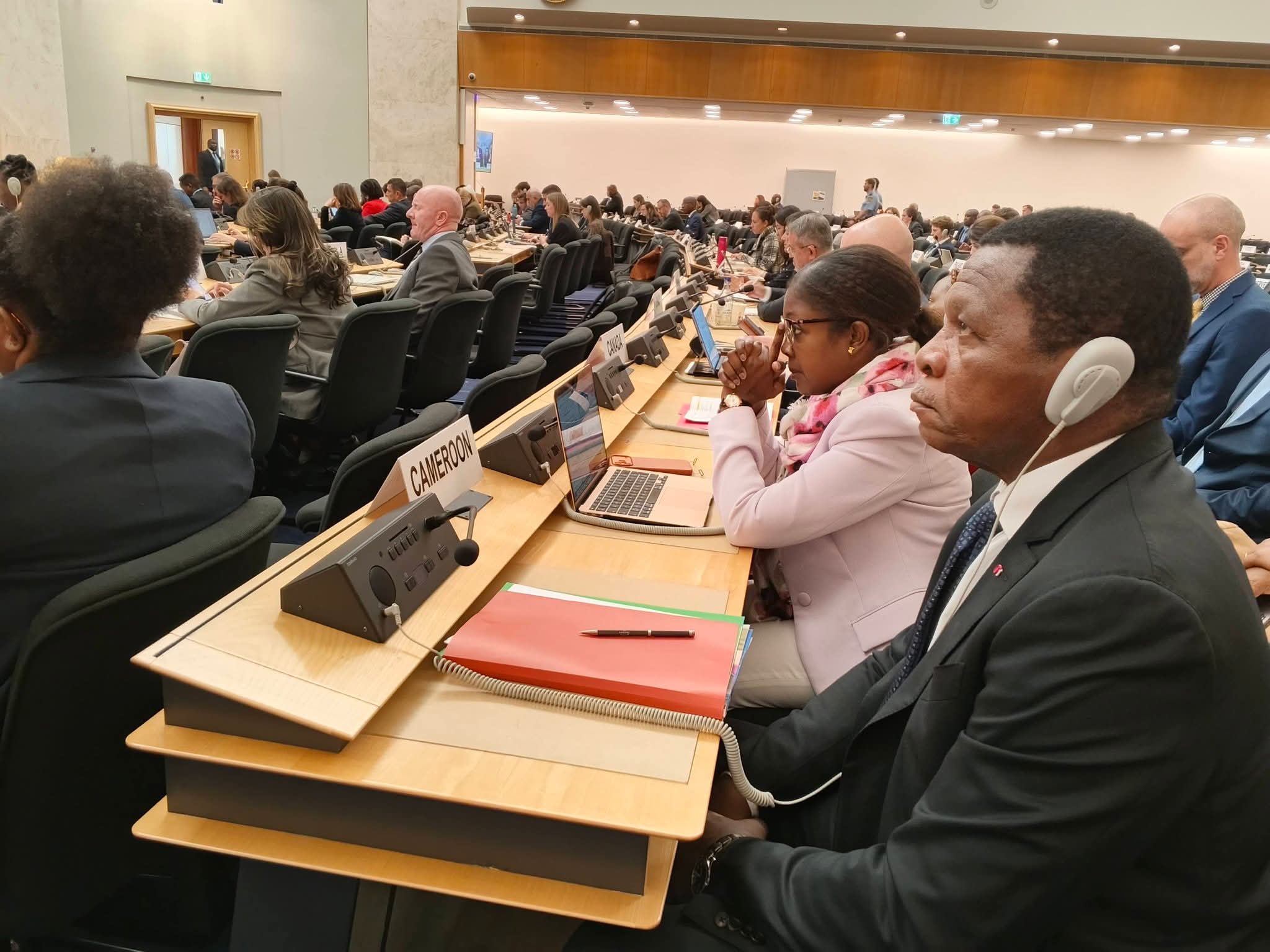
At the opening of the 77th Session of the Executive Committee of the United Nations High Commissioner for Refugees – UNHCR in Geneva, Cameroon’s Minister of Territorial Administration, Atanga Nji Paul, called on the international community to significantly bolster financial support for refugees and host nations.
Representing President Paul Biya at the Palais des Nations, the Minister addressed delegates from over a hundred countries, warning that declining international aid amid mounting humanitarian needs poses a grave threat to global stability and vulnerable populations.
Highlighting Cameroon’s longstanding tradition of peace and hospitality, Minister Atanga Nji noted that the nation currently hosts approximately 500,000 refugees and 20,000 asylum seekers, primarily from neighboring states. While reaffirming Cameroon’s unwavering commitment to implementing the Global Compact on Refugees, he emphasized the growing financial burden placed on host countries. He urged international partners to uphold a more equitable sharing of responsibility to relieve the mounting social and economic pressure on local host communities.
A central theme of the Minister’s address was the critical need for immediate, unencumbered financial assistance to manage emerging crises without bureaucratic delays. Using a vivid metaphor, he stressed that funding for refugee assistance must remain readily accessible and “ready to be signed” during emergencies, warning that bureaucratic obstacles and frozen funds risk guilty negligence in failing to assist endangered populations during critical moments.
Cameroon also reiterated its strong preference for voluntary repatriation in conditions of safety and dignity as the primary sustainable solution for displaced persons when circumstances permit. The Minister referenced historic tripartite agreements established in 2017 with Nigeria, the Republic of Congo, and the UNHCR, underscoring that long-term resolution requires coordinated regional cooperation alongside sustained international backing.
Running from October 12 to 16, 2026, the UNHCR Executive Committee session serves as a crucial platform for world leaders and non-governmental organizations to address global protection challenges.
The message delivered by Cameroon remains clear: safeguarding refugees cannot rest solely on the shoulders of host nations, but demands genuine, action-oriented international solidarity backed by reliable and timely funding.