The Cameroon Water Utilities Corporation – CAMWATER has marked four years of structural reforms aimed at modernizing hydraulic infrastructure, improving employee welfare, and expanding public access to clean drinking water across the country.
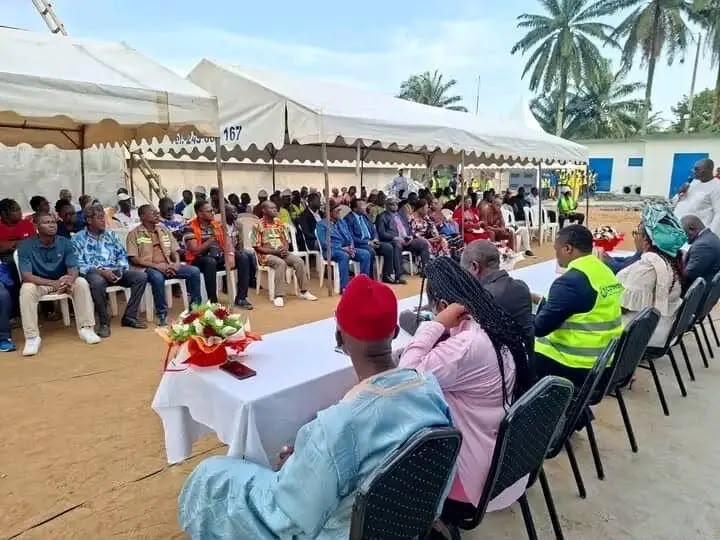
Speaking at a stakeholder review on October 21, 2026, at the Japoma water station in Douala, management met with social partners and consumer groups to evaluate progress and address lingering supply challenges.
Under the leadership of Director General Dr. Blaise Moussa, the state utility presented a comprehensive transformation strategy focused on capacity building, financial restructuring, and enhanced commercial responsiveness.
A major milestone of the ongoing reform program is the resolution of long-standing internal financial obligations, with CAMWATER clearing over FCFA 4.5 billion in social commitments.
This clearing of debts includes the payment of FCFA 391 million in balance end-of-career allowances to 311 retired personnel, alongside significant regularization efforts with the National Social Security Fund – NSSF. By fulfilling these worker entitlements and rebuilding trust with trade unions, the corporation aims to foster a stable work environment capable of sustaining long-term operational performance.
On the industrial front, extensive investments are underway to boost daily production capacity in Cameroon’s major economic hubs. A key project is the expansion and rehabilitation of the Japoma treatment plant in Douala, which is projected to increase output from 55,000 to 123,000 m³ of water per day by the end of 2026.
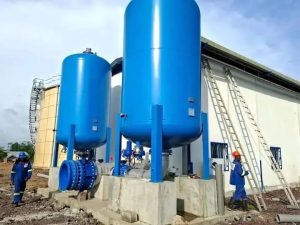
In the national capital, Yaoundé, integration works continue under the Drinking Water Supply Project – PAEPYS, incorporating new pipelines, pumping stations, storage reservoirs, and remote monitoring technology to streamline neighborhood distribution.
Regional urban centers are also seeing physical infrastructure upgrades to address acute water deficits nationwide. Targeted rehabilitation programs covering production equipment, deep drilling, storage tanks, and distribution pipe extensions are actively progressing in cities such as Garoua, Maroua, Dschang, Yabassi, and Garoua-Boulaï. These targeted regional interventions aim to reduce supply interruptions and extend coverage beyond primary metropolitan zones.
To broaden public access to municipal supply networks, CAMWATER has launched a national campaign to establish 200,000 new household and commercial connections. This customer-centric push is supported by the planned rollout of 98 new customer service centers across the country and the deployment of “WATERIS by CAMWATER,” a digital platform designed to streamline connection requests and improve response times for billing and service queries.
While these infrastructural investments and organizational milestones signal clear structural progress, the true test for CAMWATER lies in daily operational reliability.
Consumer associations and public stakeholders continue to emphasize that success will ultimately be judged on the ground, measured by consistent water flow at the tap, reduced outages, fast service turnaround, and affordable access for households across Cameroon.