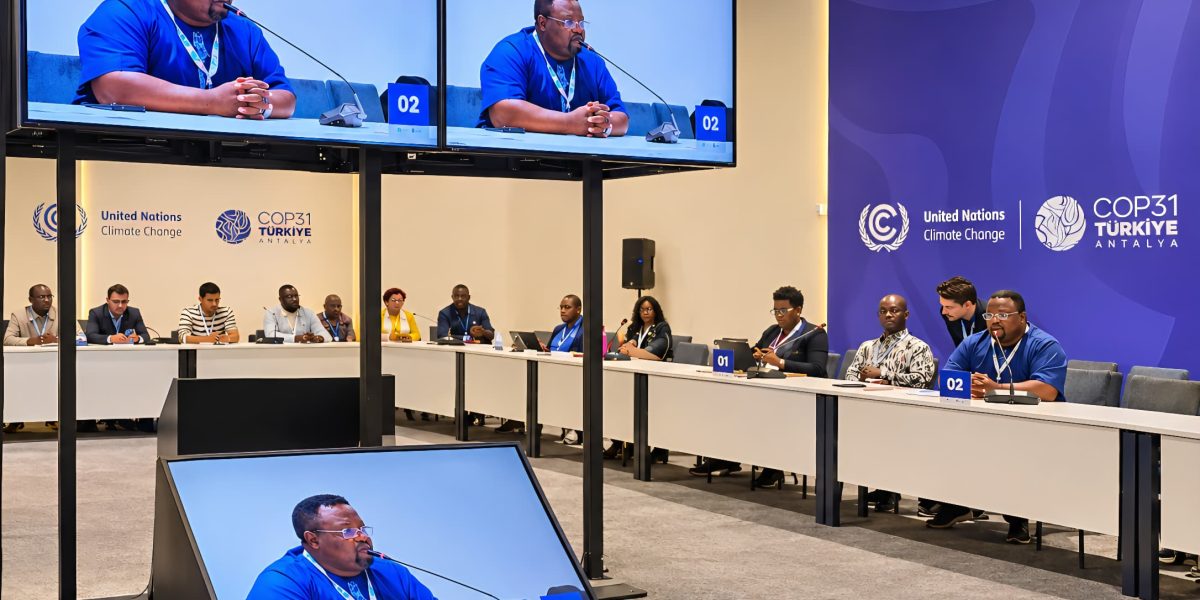
The African Coalition for Sustainable Energy and Access – ACSEA has expressed deep disappointment following the collapse of COP31 negotiations in Antalya, Türkiye, on November 22, 2026, which ended without an overarching political agreement.
According to the coalition, the diplomatic breakdown highlights a widening gap between global climate ambitions and the willingness of wealthy nations to address Africa’s energy and development realities.
COMING UP AFTER THE ADVERTISEMENT
ACSEA warned that failing to reaffirm a transition away from fossil fuels, secure credible financing, or establish a resourced just transition framework leaves the communities least responsible for global warming without the predictable support needed to build climate resilience.
Highlighting a central contradiction in global climate diplomacy, ACSEA noted that millions of Africans still lack basic electricity even as the world debates advanced clean technologies. While supporting a science-based shift away from fossil fuels, the coalition rejected uniform obligations across unequal economies, arguing that historically high-emitting nations must lead emission cuts and provide finance and technology transfer.
ACSEA Executive Director Dr. Augustine B. Njamnshi emphasized that a just energy transition cannot force Africa to abandon traditional development pathways without the means to build cleaner alternatives, stressing that reliable electricity is essential for hospitals, irrigation, schools, and green industrialisation.
The coalition further insisted that Africa’s energy transition must not be financed through unsustainable debt, demanding that developed nations honour Article 9.1 of the Paris Agreement by delivering predictable, accessible, and primarily grant-based public climate finance.
Alongside calls for a well-resourced Just Transition Mechanism, ACSEA rejected reducing the continent to a mere exporter of raw critical minerals. Echoing the urgency of grassroots resilience against extraction and climate inaction, Dr. Melania Chiponda, Executive Director of The SHINE Collab, affirmed on behalf of women that communities remain undeterred and are actively organising.
Looking ahead to COP32 in Addis Ababa, ACSEA outlined five core priorities for negotiating parties, African governments, and development partners. These include elevating energy access and clean cooking as measurable climate priorities, protecting equitable transition pathways tailored to Africa’s industrialisation needs, and fulfilling grant-led public climate finance commitments.
The roadmap also calls for establishing a functional Just Transition Mechanism with worker protections, alongside strengthening African energy sovereignty through regional power markets and inclusive governance involving women, youth, and civil society.
Concluding its statement, ACSEA urged African leaders to approach COP32 with a unified continental energy and climate justice agenda, while maintaining that domestic initiatives cannot replace the financial obligations of developed countries.
The coalition stressed that Africa is not seeking permission to develop, but rather the necessary resources, fairness, and policy space to build a sustainable energy future that serves its people and protects the planet.