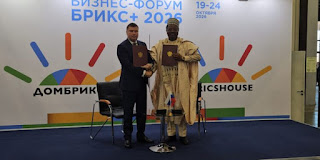
The Cameroonian economic diplomacy landscape is set for a fresh dynamic following the appointment of Prince Théophile Kwendjeu as the permanent representative of the BRICS House in Cameroon.
Unveiled during the Russia-Africa summit, this initiative unfolds within a shifting global order characterized by the realignment of economic partnerships and the rising momentum of South-South cooperation. For Cameroon, where structural transformation hinges on developing local resources and accelerating industrial growth, this platform seeks to bridge domestic entrepreneurs with international partners to drive tangible economic expansion.
Prince Théophile Kwendjeu brings a solid entrepreneurial background and a proven track record in international trade to this new role. His strategic interest in Cameroon-Russia economic ties was highlighted during an interview in October 2024 following his participation in the Asia Expo in Sochi.
Focused heavily on the agropastoral sector, his efforts target critical areas such as dairy production, poultry, horticulture, fertilizers, and modern agricultural equipment. By prioritizing technical partnerships and skills transfer, he aims to boost domestic production capabilities and reduce reliance on external supply chains.
As the permanent representative of the BRICS House, Kwendjeu assumes a pivotal position in facilitating foreign direct investment into key economic sectors. His focal areas encompass infrastructure, energy, agro-industrial processing, technology, and local manufacturing, all vital for sustainable job creation. While this non-governmental platform operates alongside the official intergovernmental BRICS alliance, its success will depend on converting diplomatic dialogue into vetted project pipelines, transparent financing, and measurable local industrial outputs.
Beyond commercial ventures, Prince Théophile Kwendjeu actively integrates social responsibility into his developmental vision. Through initiatives supported by organizations like Living Alternatives for the Ageing – LAFTA, he champions assistance for vulnerable populations, including elderly citizens, refugees, and internally displaced persons.
Furthermore, his philanthropic actions extend to supporting educational institutions and teacher training centers, demonstrating his core belief that sustainable economic growth must be paired with human development and social well-being.
The broader international context underscores the significance of this platform, as the BRICS bloc continues expanding its footprint across emerging markets. With Cameroon having reaffirmed its commitment to multilateralism and sovereign economic cooperation at the 2023 BRICS Summit in Johannesburg, non-governmental bridges like the BRICS House offer direct access to capital and technology from leading Global South economies.
However, navigating this evolving landscape requires structured frameworks capable of turning high-level summits into actionable business ventures.
Ultimately, the true impact of Prince Théophile Kwendjeu’s tenure will be judged by concrete outcomes on the ground rather than titles or diplomatic meetings. The primary challenge lies in structuring bankable local projects, fostering technology transfers, and expanding markets for Cameroonian products.
By effectively linking foreign capital with domestic industrial capacity and social development, the BRICS House in Cameroon has the potential to transform economic opportunities into lasting prosperity for local communities.