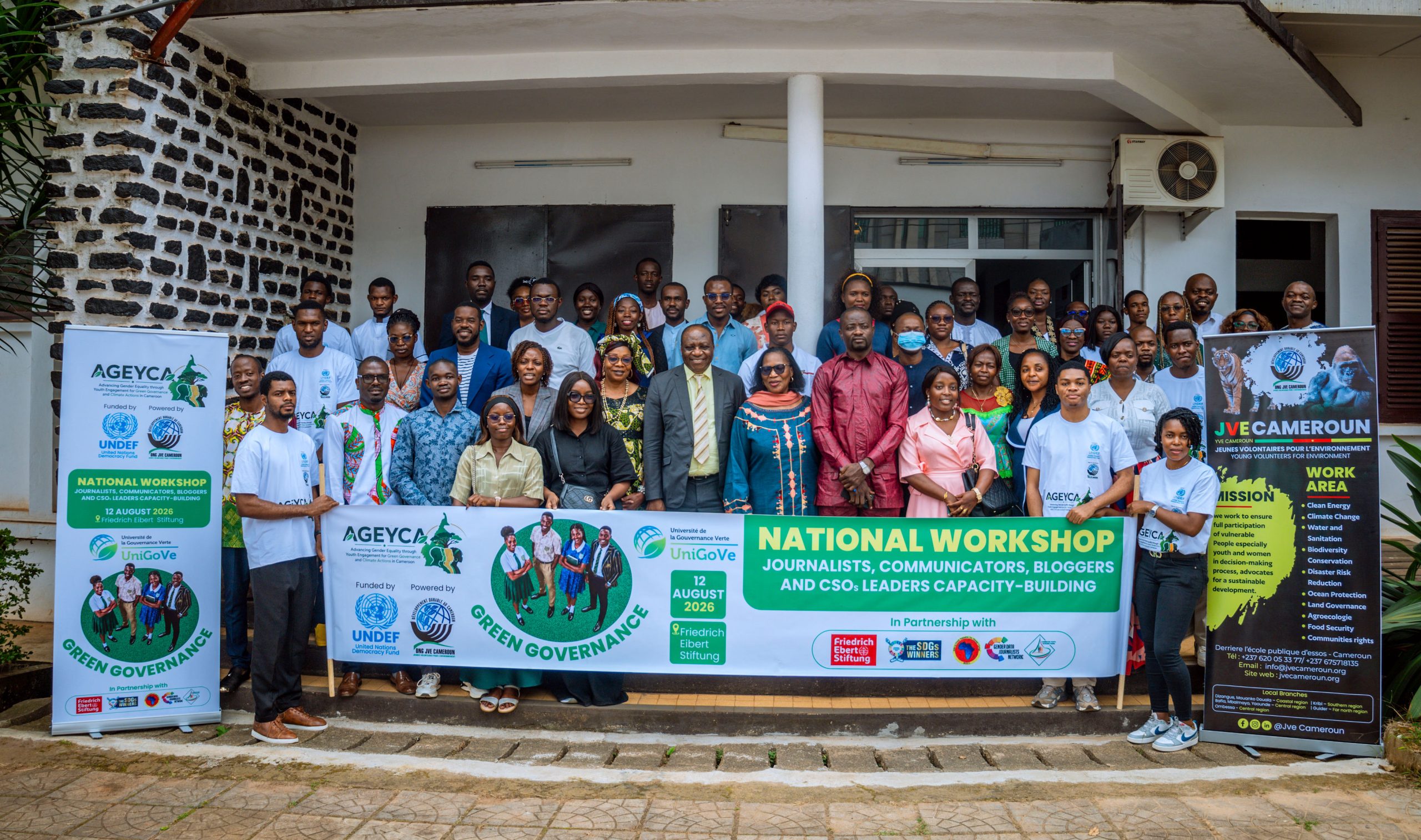
The 2nd edition of the University of Green Governance – UniGove, organized by the Young Volunteer for Environment association best known by the French acronym JVE, officially opened on August 12, 2026, at the Friedrich Ebert Stiftung head office in Yaounde.
Operating under the “Advancing Gender Equality through Youth Engagement for Green Governance and Climate Action in Cameroon” – AGEYCA program, this month-long initiative delivers over 20 modules through a hybrid learning format. The flexible delivery method ensures that 250 young participants nationwide can easily engage with the curriculum online. The official opening drew an enthusiastic audience, eager to learn from a selected panel of distinguished facilitators, scholars, and politicians.
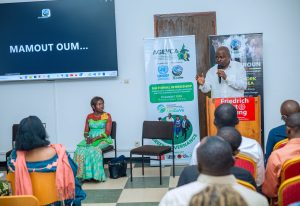
Blondel Silenou, Project Chief of AGEYCA, highlighted the dramatic expansion of the initiative compared to its maiden edition, which hosted 50 participants. By scaling up to mobilize 250 young citizens, the project aims to broaden youth reach and foster direct, active participation within decision-making and policy structures. Silenou emphasized that the primary goal is to empower a new generation to move beyond passive observation and take an active, hands-on role in shaping national environmental policy.
Delivering the inaugural lesson for this second edition, Patrice Bigombe Logo of CERAD stressed that youth-led training is crucial for helping Cameroon meet its local and international climate and biodiversity commitments. Given the nation’s strategic position in the Congo Basin, sustainable governance can establish Cameroon as a model for environmental leadership. However, Logo warned that rapid expansion in mining, logging, and agriculture risks damaging local ecosystems as the country pursues its “Vision 2035” emerging economy goals, making a “green budget setup” essential to integrate safeguards directly into national policy.
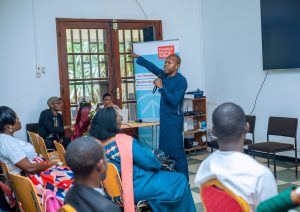
Expanding on the structural reforms required, Dr. Valere Bessala asserted that authentic environmentalism demands a deep shift in civic mindset, ethics, and spatial planning rather than superficial gestures. Critiquing poorly executed mega-projects, such as building the Lom Pangar dam without proper power transport infrastructure, Bessala called for smart spatial strategies like decentralizing administrative power to de-congest major capitals. He argued that true sustainability links physical ecology with human integrity, requiring citizens to practice personal accountability, “depollute” their attitudes, and embrace a “greenness of the spirit”.
Addressing systemic political and socio-economic hurdles, researcher and politician Paul Stephane Menounga addressed how institutional corruption, voter manipulation, and an acute youth underemployment rate of up to 90% paralyze civic progress. He noted that digital distractions and counterproductive mindsets like tribalism further fragment national unity and weaken local governance monitoring. To break this cycle, Menounga urged young citizens to reject short-term bribes, build a national consciousness that transcends ethnic divisions, and actively participate in municipal elections to hold leaders accountable for real social development.
Aboudi Ngono Alain shifted the focus to the broader CEMAC region, analyzing the complex transition from fossil fuels to clean energy. He noted that despite possessing rich mineral reserves like bauxite and gold, developing nations suffer from weak energy sovereignty, raw resource exportation, and persistent transparency failures that leave mining communities in severe poverty. Alain advocated for regional cooperation, modernized infrastructure, and localized mineral processing to transform raw resource wealth into a self-reliant domestic industrial economy.
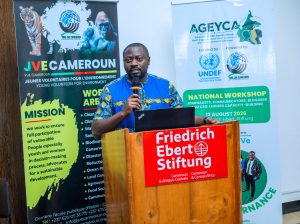
Adding a regional perspective on the global energy transition, Nyassi Lucain from NRGI highlighted the contractual asymmetries and revenue corruption that plague Central Africa despite its low contribution to global carbon emissions. He observed that Central African communities face severe climate impacts, such as prolonged droughts and flooding, while receiving little protection from state-to-state partnership contracts. Lucain argued that institutional gaps can only be bridged through courageous oversight and transparent resource management.
The event wrapped up with Lucain emphasizing on the aspect that the region’s young population is redefining the very definition of green governance. Moving beyond basic gestures like planting trees or collecting waste, young innovators are utilizing agritech, decentralized renewable energy, and civic tech to hold authorities accountable.
Through platforms like UniGove 2026, Cameroon’s youth are reclaiming ecology as a space for technological reconquest, political empowerment, and economic autonomy to secure a sustainable future.