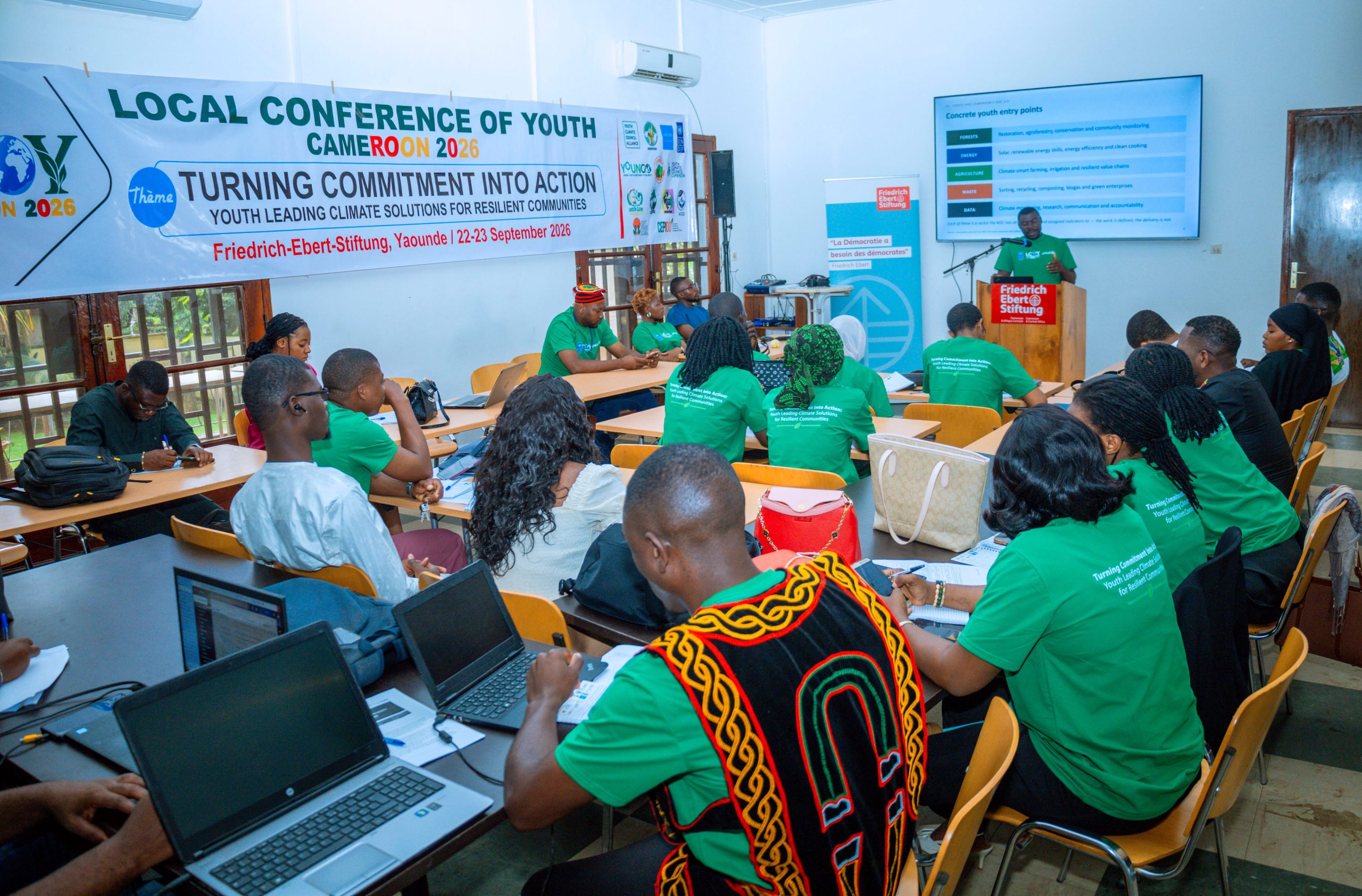
Cameroon’s vibrant youth movement took a massive stride forward as the Local Conference of Youth – LCOY 2026 concluded on September 23, 2026, at the Friedrich Ebert Stiftung office in Yaounde.
The two-day national event brought together dozens of passionate young delegates from across all ten regions of the country to draft the National Youth Statement. This crucial advocacy document will be presented to Cameroonian governmental authorities to ensure the nation’s youth perspective is integrated into the national agenda ahead of the COP31 global climate negotiations scheduled for November 9 to 20, 2026, in Antalya, Turkey.
Organized under the global umbrella of YOUNGO, the official youth constituency of the UNFCCC, and accredited locally through Support Humanitarian Cameroon – SUHUCAM, the conference served as a vital consultation platform. Key themes centered around climate education, digital literacy, establishing a shared institutional architecture, and unlocking climate finance access for youth-led organizations. Participants actively engaged in round-table discussions, plenaries, and specialized focus groups addressing adaptation strategies, energy transitions, and community-level resilience.
Highlighting the transformative nature and smooth execution of the event, organizers and regional delegates reflected on how the gathering united diverse voices while providing essential logistics to remove participation barriers.
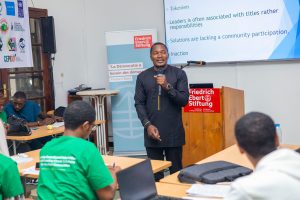
Awat Bertrand Abanyi, a member of the organizing coalition and Founder of Green Globe organization, emphasized the event’s intentional inclusivity, noting that “to make it relatively easy, and to see into it that there was no exclusion, you see we had to bring people who were even disabled in one way or another.” He extended heartfelt appreciation to key partners, stating, “we want to give a big shout-out to our partners: the United Nations Development Programme, we want to give a big shout-out to UNICEF.”
Concurrently, Dr. Ngai Nfor Jude of ECOAID Buea praised the authentic engagement of participants from every region, observing that “everybody actually aired out what is happening, the reality, and that is why we actually came up at the end of the day with a concrete 10 powerful points to send to the authorities.” He further affirmed that the conference signaled a broader paradigm shift, declaring, “we now know that the youth are not beneficiaries, but they are actually actors, main actors when it comes to these climate change activities.”
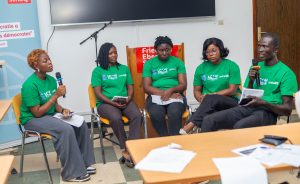
A major focal point throughout the discussions was the imperative for financial empowerment and localized capacity building, particularly for communities hit hardest by environmental degradation. Mang-Egre Léonard, coordinator of the Network of Actors for Sustainable Development (Réseau des Acteurs pour le Développement Durable), highlighted the urgent situation in the Far North region. He noted that masterclasses led by experts from UN entities and government ministries on climate finance and fundraising empowered organizations like his to collaborate and design bankable, resilient projects capable of making a tangible impact on the ground.
Inclusivity extended beyond regional borders to encompass vulnerable social groups, ensuring every section of society had a voice in shaping Cameroon’s climate future. Representatives from indigenous communities, the grassfields, Francophone regions, and persons with disabilities voiced specific community challenges.
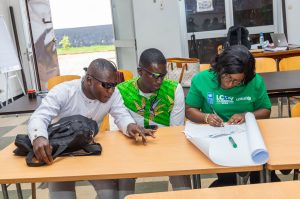
Ebwe-Lobe Samuel, a visually impaired student at IRIC and social entrepreneur, lauded the conference for deepening his understanding of Cameroon’s national development framework (SND30) and Nationally Determined Contributions (NDC 3.0), while advocating for future dedicated climate forums focused tailored specifically to persons with disabilities.
The gathering also challenged conventional views on who can participate in climate action, promoting the idea that environmental stewardship spans across all professional backgrounds. Climate advocate Fatima Mady stressed that climate literacy must extend to non-specialists, arguing that every citizen, from human resource officers and linguists to market vendors in Mokolo, can contribute meaningfully to climate solutions within their own daily spheres, as climate impacts affect everyone universally.
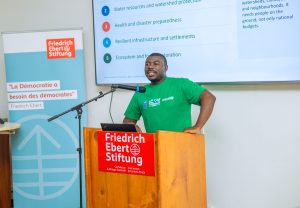
Coordinators like Dr. Ngwa Niba of Support Humanity Cameroon reaffirmed that LCOY 2026 successfully consolidated intellectual resources from across the national territory. By aligning young people’s lived experiences with strategic frameworks, the conference ensured youth input is directly embedded into policy consultations. The consolidated data is currently undergoing final review by delegates before being formally submitted to national ministries to help guide Cameroon’s official delegation at COP31.
Ultimately, LCOY 2026 proved to be an inspiring baseline for unified youth activism in Central Africa. Supported by partners such as UNDP and UNICEF, Cameroonian youth have demonstrated that they are prepared to transition from passive observers to lead negotiators and key drivers of climate resilience in their communities and on the international stage.