
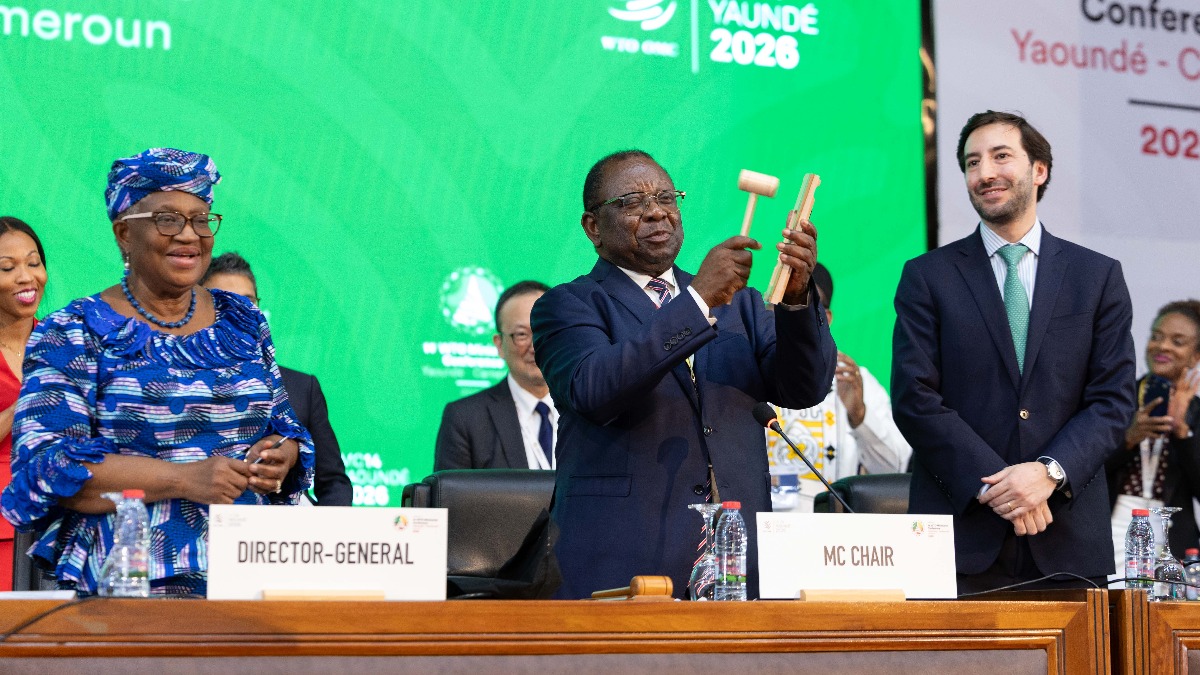
The 14th Ministerial Conference – MC14 of the World Trade Organization reached its historic conclusion in Yaoundé on March 29, 2026, marking a pivotal moment for the evolution of global commerce.
The ceremony was punctuated by the symbolic strike of the gavel by the Conference Chair, Cameroon’s Minister of Trade, Luc Magloire Mbarga Atangana.
This final act followed days of intense deliberations, culminating in the adoption of a landmark outcome document. WTO Director-General Dr. Ngozi Okonjo-Iweala hailed the conference as a resounding success, specifically praising the “new WTO way of working” and the resilience of the teams who navigated complex negotiations to reach a consensus.
A defining feature of MC14 was the vibrant inclusion of diverse voices, particularly those of young leaders and civil society. Against a backdrop of contested economic rules and shifting supply chains, youth delegates seized the platform to advocate for a trading system that favors the next generation.
Emotional Intelligence expert Oluwadamilola Adeola Oladimeji, representing the Temvert Empowerment Foundation, emphasized the necessity of a “human touch” in policy-making.
This sentiment was echoed by regional delegations, such as Nigeria, whose head of delegation, Adamu Mohammed Abdulhamid, expressed deep satisfaction with the inclusive nature of the conclave’s discussions.
The conference also served as a critical battleground for environmental and agricultural reform. Organizations like the World Wide Fund for Nature (WWF), represented by Luca Chinotti, noted a strengthened commitment among member states to integrate sustainability into the core of trade rules.
Simultaneously, civil society actors championed organic agriculture as a primary tool for climate action. Gertrude Kabusimbi Kenyangi highlighted that sustainable farming is not merely an economic activity but a vital environmental protection measure, signaling a shift toward more holistic, “green” trade policies.
Substantive progress was made across several high-stakes agendas, including the Small and Vulnerable Economies package and the G90 priorities. Dr. Okonjo-Iweala highlighted significant “last-minute agreements” on fisheries subsidies and the Investment Facilitation for Development (IFD), alongside the formal launch of the E-Commerce GSI.
These breakthroughs suggest that despite global tensions, the WTO remains a functional forum for addressing modern challenges like digital trade and the overexploitation of marine resources. The adoption of these reforms represents a tangible step toward a more equitable and modernized trading framework.
At the early hours of this March 30, a colorful closing ceremony saw Minister Atangana dressed in traditional attire by delegates from Samoa, symbolizing the spirit of international unity. The massive attendance of over 80 ministers and the successful hosting by Cameroon were lauded as evidence of a revitalized interest in multilateralism.
With the reading of the final declaration, the proceedings concluded in earnest, leaving participants with a sense of accomplishment and a roadmap intended to foster growth across the global trading system for years to come.


