
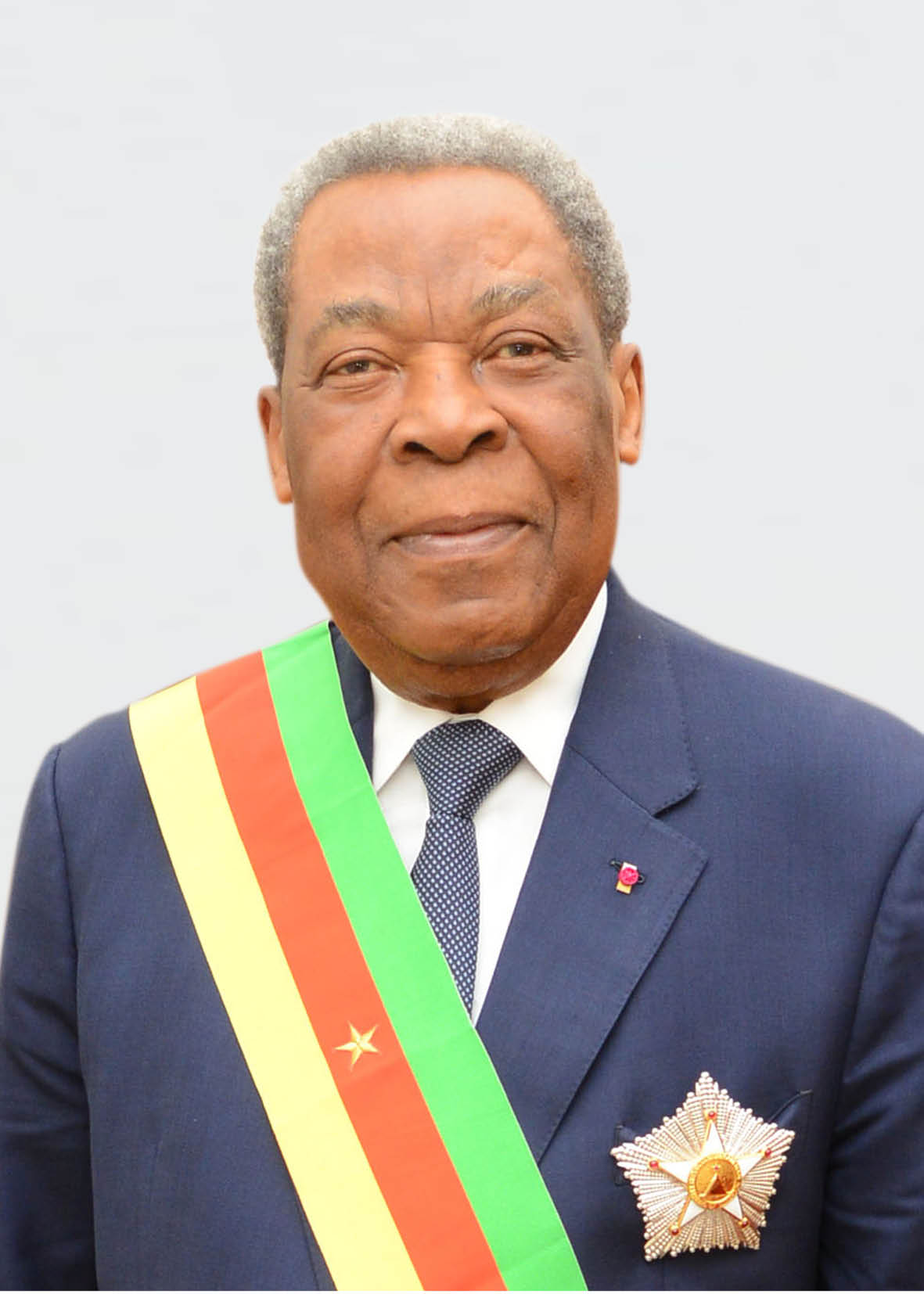
Cameroon, the Parliament especially the Senate are in grief following the passing to eternity of Marcel Niat Njifenji, the venerable former President of the Senate.
He died at the University Hospital Center in Yaounde on April 11, 2026, at the age of 91. A titan of the nation’s political landscape, before his demise, Njifenji had served as the head of the upper house of Parliament, The Senate, since its inception in 2013.
As the constitutional successor to the presidency in the event of a power vacuum, his role was pivotal to the country’s institutional stability. His death marks the conclusion of a long and influential career that spanned the evolution of modern Cameroon.
Born on October 26, 1934, in Bangangté, West region, Njifenji began his professional journey as an engineer specializing in roads and bridges. He rose to national prominence as the Director General of the National Electricity Company – SONEL – at the time, a position he held from 1974 to 1984.
His career faced a dramatic interruption following the 1984 coup attempt against President Paul Biya; despite a lack of evidence linking him to the rebellion, Njifenji was imprisoned for five years. Upon his release in 1989, he was remarkably restored to his leadership at SONEL, signaling a return to the inner circles of trust within the administration.
Throughout the 1990s, Njifenji transitioned into high-level governance, serving as the Minister of Planning and Territorial Administration and later as Deputy Prime Minister for Mines, Water, and Energy. Although he was elected to the National Assembly in 1992, he maintained his focus on the energy sector until the privatization of SONEL in 2001.
He later dedicated himself to local governance, serving as the Mayor of his hometown, Bangangté, from 2002 to 2007, further solidifying his reputation as a dedicated public servant within the ruling Cameroon People’s Democratic Movement – RDPC.
The crowning achievement of his career came in 2013 when President Biya appointed him to the newly established Senate. He was overwhelmingly elected as its first President on June 12, 2013, a mandate he held with consistent support, including a final re-election in March 2024.
Throughout his tenure, he remained a key ally of President Biya and a symbol of the country’s legislative continuity. With his passing, Cameroon loses a seasoned statesman whose life story mirrored the complexities and resilience of the nation’s political history.


