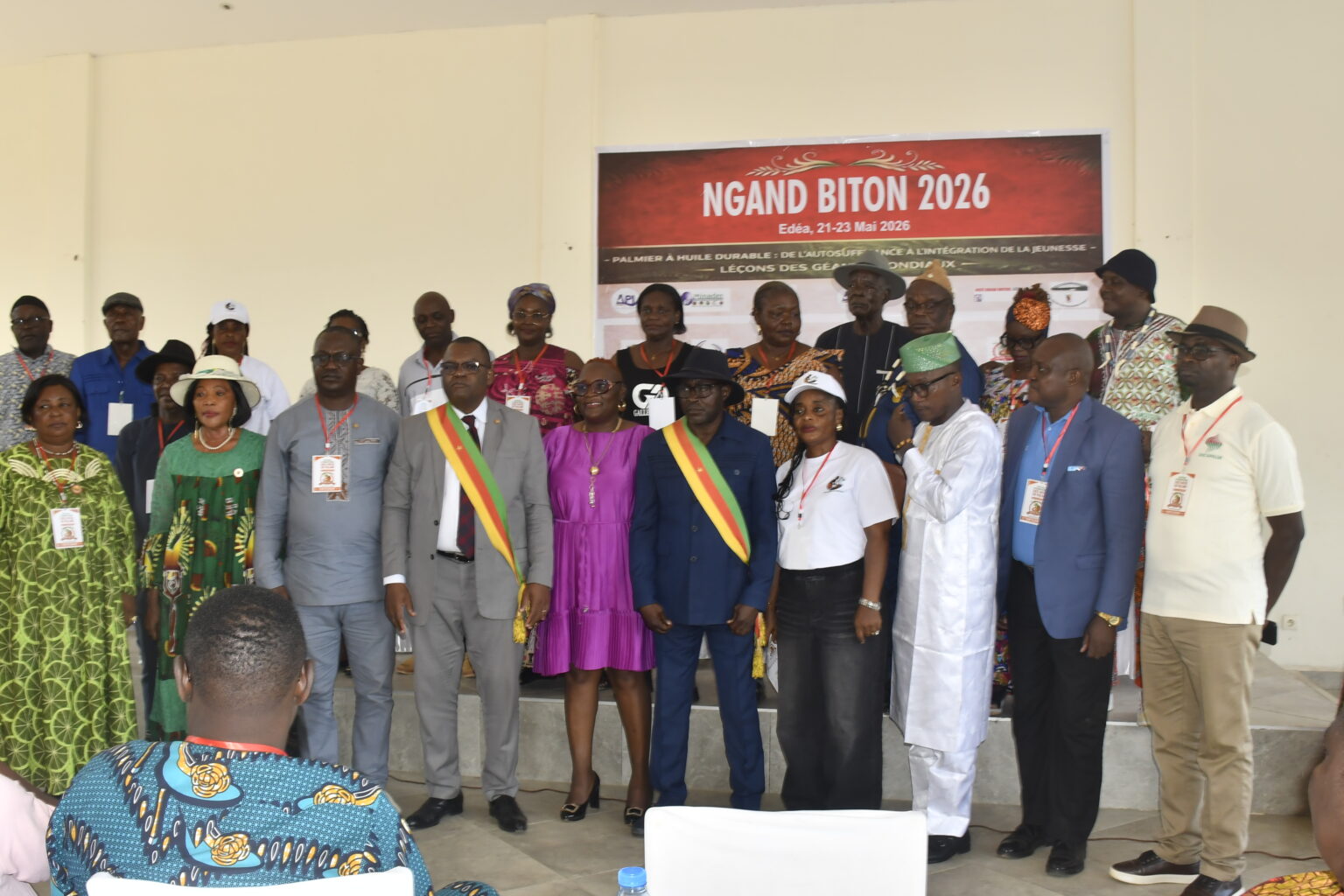
The assembly hall of the Edéa City Hall became the epicenter of Cameroon’s agricultural future on Thursday, May 21, with the official opening of the third edition of the International Palm Nut Festival, Ngand Biton 2026.
This three-day event brings together an enthusiastic crowd of administrative authorities, municipal officials, traditional chiefs, village farmers, and agro-industrial stakeholders. Focused on the core theme of “sustainability, self-sufficiency, and youth integration,” this year’s edition serves a dual purpose by also launching the inaugural Palm Nut Festival—a strategic initiative designed to reposition the oil palm as a vital agricultural resource, cultural heritage, and economic engine for the Sanaga-Maritime region.
The opening day hummed with energy during the official launch ceremony, blending institutional solemnity with local musical interludes and powerful advocacy for smallholder farmers. Bernard Missinga, the Mayor of Édéa I, welcomed attendees by framing the festival as a transformative platform for training, dialogue, and economic opportunity capable of bridging communities and investors.
Amplifying this vision, the festival’s promoter, Samuel Ngembog, directly linked the development of the oil palm sector to national economic sovereignty. He urged the audience toward stronger collective organization, passionately arguing that addressing local financing, processing bottlenecks, and rural isolation is a direct defense of the national economy.
A central element of the festival’s success is the enduring partnership with agro-industrial giant Socapalm, which has supported Ngand Biton since its inception in Eséka in 2023. Through its dedicated PV Project, Socapalm is actively strengthening its close collaboration with village farmers by providing critical technical support.
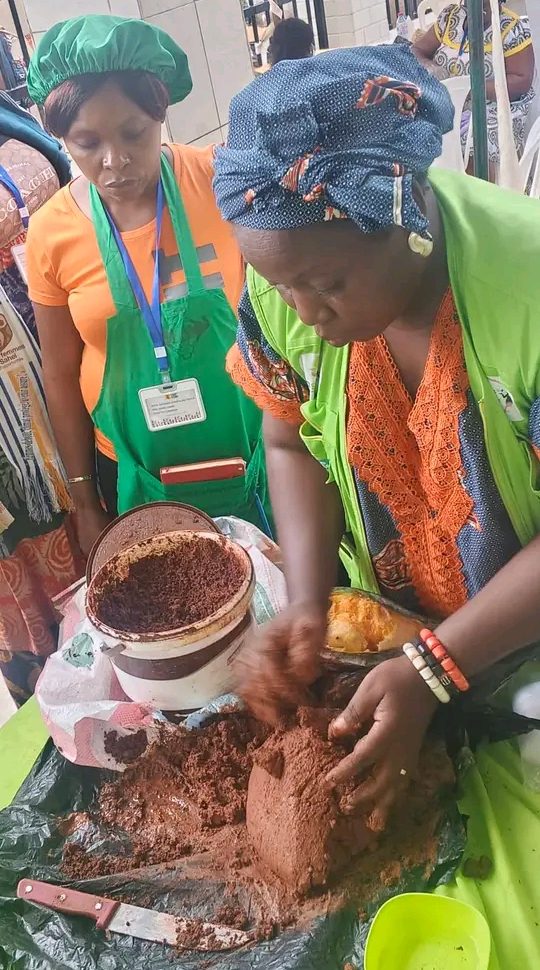
The company, alongside seed specialist Camseeds, dominated the lively exhibition stands where visitors crowded to view detailed displays on oil palm germination, growth cycles, and cultivation costs. This interactive showcase bridged the gap between corporate agribusiness practices and small-scale community farming.
The afternoon session shifted toward structural solutions during an expert-led conference titled “The Problem of Quality Seeds in Cameroon,” presented by Mr. Eyengue from IRAD Édéa. The presentation tackled the deep-seated challenges currently limiting local yields, including a severe national production deficit, aging plantations, and the urgent necessity for high-quality seed distribution.
The subsequent discussions highlighted the critical need for technical modernization if smallholders are to successfully boost their agricultural output and meet rising enterprise demands.
Ultimately, the opening day of Ngand Biton 2026 successfully established a much-needed framework for long-term reflection on the future of Cameroonian agriculture. Beyond the cultural festivities, the palm nut has emerged as a powerful symbol of economic dialogue and collaboration between major agribusinesses, local authorities, and rural producers.
As the festival progresses in Edéa, it is clear that the sustainable alignment of corporate resources and village-level execution will remain the key determinant of economic resilience and agricultural sovereignty across the region.