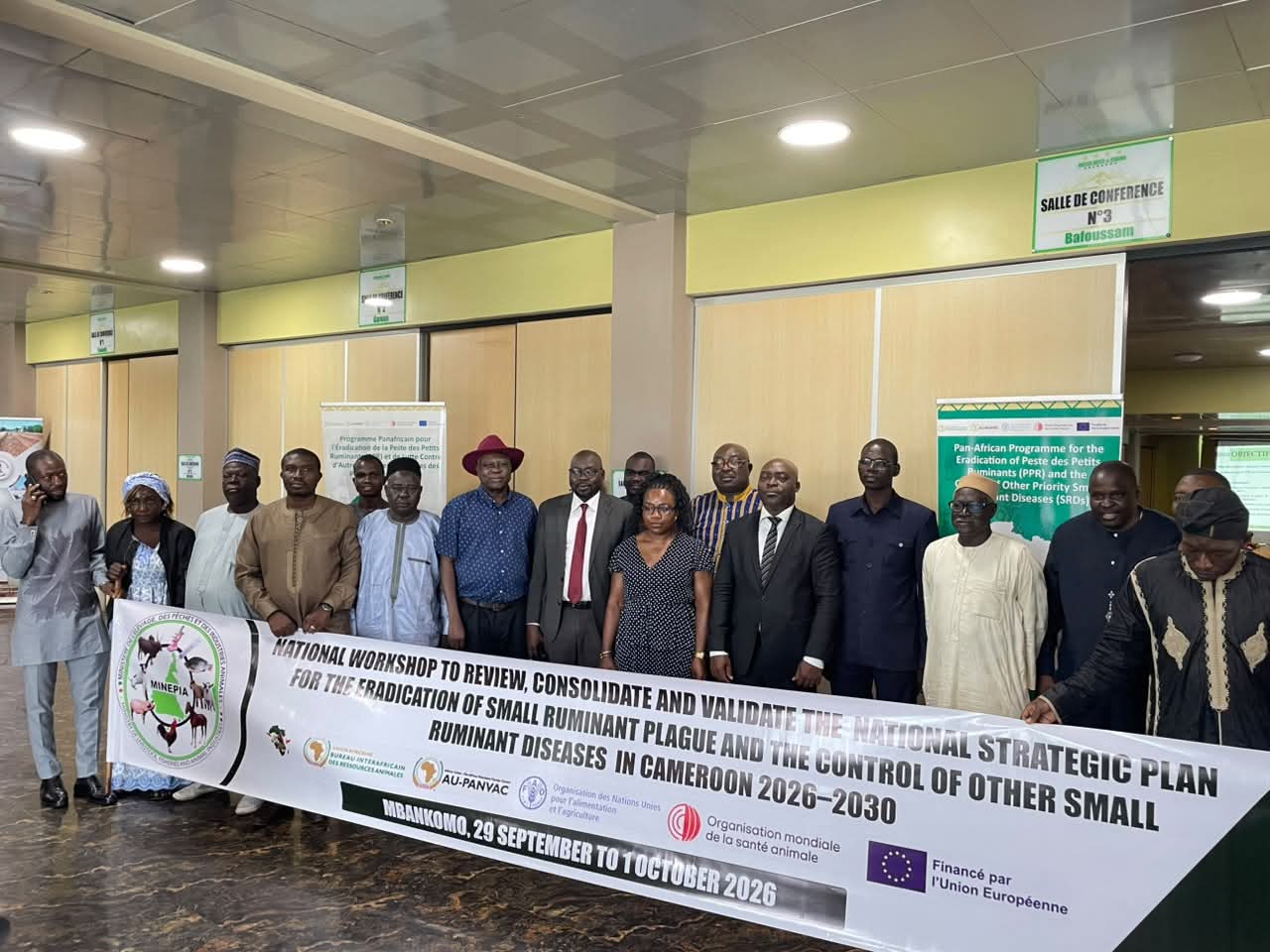
Stakeholders and veterinary experts gathered in Mbankomo, Cameroon, from September 29 to October 1, 2026, for a pivotal three-day workshop aimed at validating the National Strategic Plan for the eradication of peste for small ruminants and the control of other Priority Diseases – PNS-PPR.
Organized under the auspices of the Ministry of Livestock, Fisheries and Animal Industries – MINEPIA, the event brought together key delegates, regional experts, and representatives from international bodies, including the World Organisation for Animal Health – WOAH and the African Union Interafrican Bureau for Animal Resources – AU-IBAR.
The primary focus was establishing a coordinated path toward completely eradicating the highly contagious livestock disease by 2030.Opening the workshop on behalf of the Minister of Livestock, Technical Adviser No. 1, Dr. Mimbang Guy Iréné, reiterated Cameroon’s firm commitment to global livestock health goals.
He highlighted that the three-day consultation served to review and refine Cameroon’s strategic eradication roadmap with direct support from AU-IBAR. Dr. Mimbang emphasized that aligning the national document with broader pan-African and sub-regional frameworks is essential to ensure that field interventions yield measurable results and support long-term agricultural sustainability.
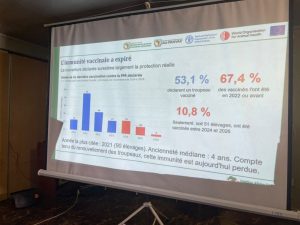
Cameroon has achieved significant milestones in its disease control program, having vaccinated more than 16 million small ruminants over a cumulative three-year period. According to Dr. Ndongo Casimir, regional coordinator for the PPR control program in Central Africa, these extensive efforts have elevated Cameroon to Stage 3 of the progressive control pathway.
Consequently, the Mbankomo workshop provides an opportune moment to evaluate the current epidemiological status and adjust strategic interventions to consolidate these gains.
Despite national progress, transboundary transmission remains the single greatest risk to eradicating the disease within Cameroon’s borders. Dr. Ndongo explained that because Peste des Petits Ruminants easily spreads across borders, uncoordinated efforts in neighboring countries can trigger re-infections in regions that have previously suppressed the virus.
Backed by funding and technical support from the European Union and the African Union, regional authorities are prioritizing a synchronized, cross-border approach so all Central African nations progress together.
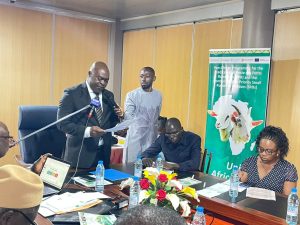
Led by MINEPIA’s Director of Veterinary Services, Dr. Temwa Jonas, the workshop continues with technical presentations and working groups tasked with generating actionable recommendations.
By standardizing surveillance, refining national protocols, and reinforcing cross-border cooperation, Cameroon aims to secure its livestock sector and contribute directly to the global elimination of the disease by 2030.