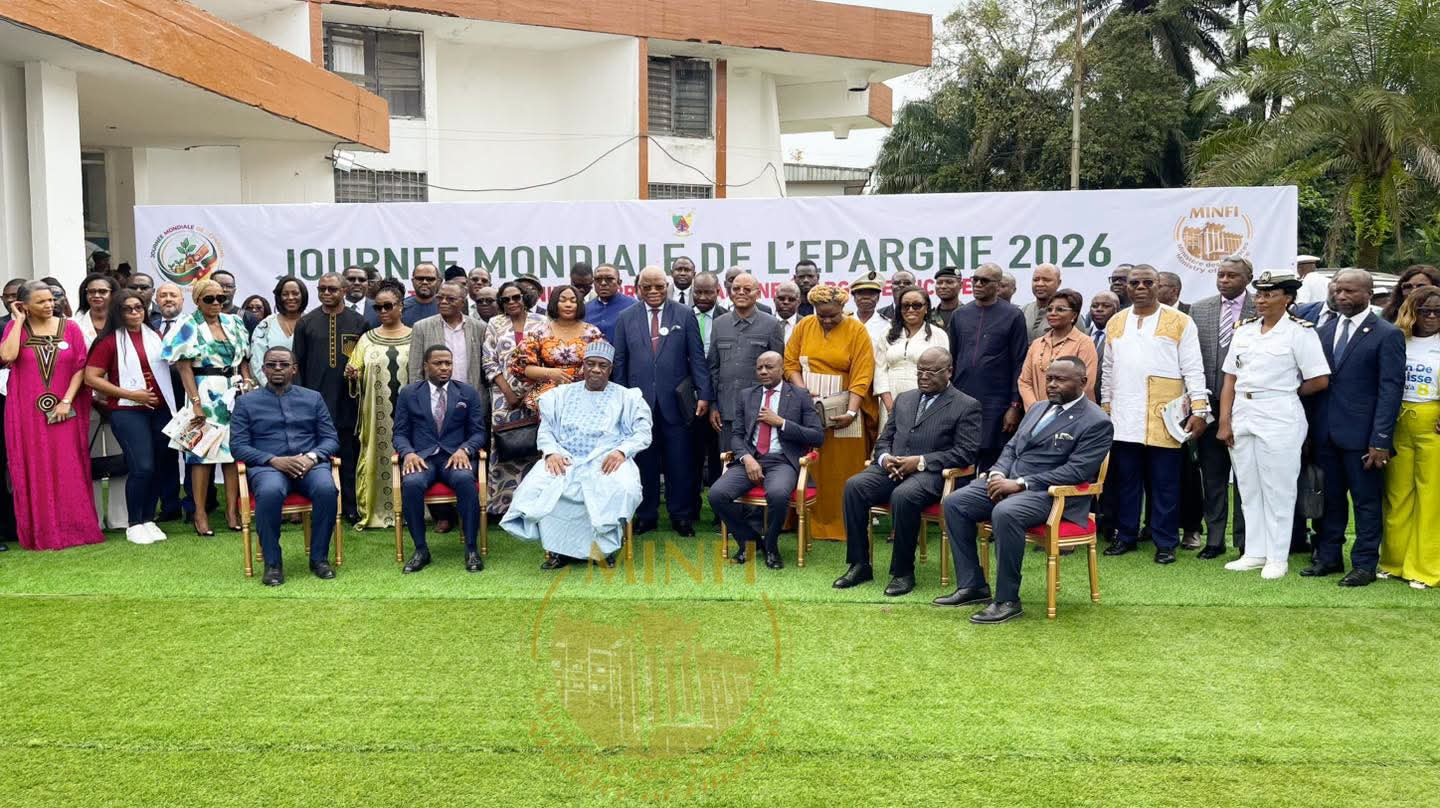
The Cameroonian Ministry of Finance concluded the national celebrations for the 102nd World Savings Day in Douala, highlighting an urgent need to restructure how domestic capital is mobilized.
Chaired by the Minister Delegate to the Minister of Finance, Yaouba Abdoulaye, the gathering brought together policymakers, financial sector leaders, private sector stakeholders, and university students to discuss strategies for converting short-term liquid deposits into productive national investments.
Despite a robust total of 9,148 billion CFA francs held in bank deposits as of late 2025, official data reveals a structural bottleneck: only 17.2% of these funds qualify as stable, long-term capital. This shortfall leaves commercial banks with limited leverage to extend long-term credit for major infrastructure and developmental projects. Addressing this imbalance formed the central focus of the conference under the theme of supporting individual and national growth through effective financial planning.
To chart a path forward, experts at the event examined three strategic pillars, focusing heavily on untapped market segments and modern financial instruments. Discussions highlighted the potential of diaspora remittances, the integration of Islamic financial products, and the deployment of fintech tools to build institutional trust.
Panelists emphasized that leveraging mobile money and digital banking channels is essential to capturing informal capital and integrating underbanked populations into the formal economic framework.

Bridging the gap between formal policy and daily consumer habits was a primary goal of the three-day initiative. Beyond academic and ministerial panels, organizers conducted field-level engagements, including financial literacy workshops with university students and a public awareness caravan through Douala’s bustling Mboppi Market. These grassroots efforts aimed to demystify formal savings products and address consumer protection concerns among traders and local workers.
Ultimately, the event underscored that achieving sustainable economic independence requires shifting national mindsets from simple cash retention to targeted investment.
By strengthening regulatory safeguards and expanding accessible savings vehicles, Cameroon aims to convert idle liquidity into dynamic capital for national development.