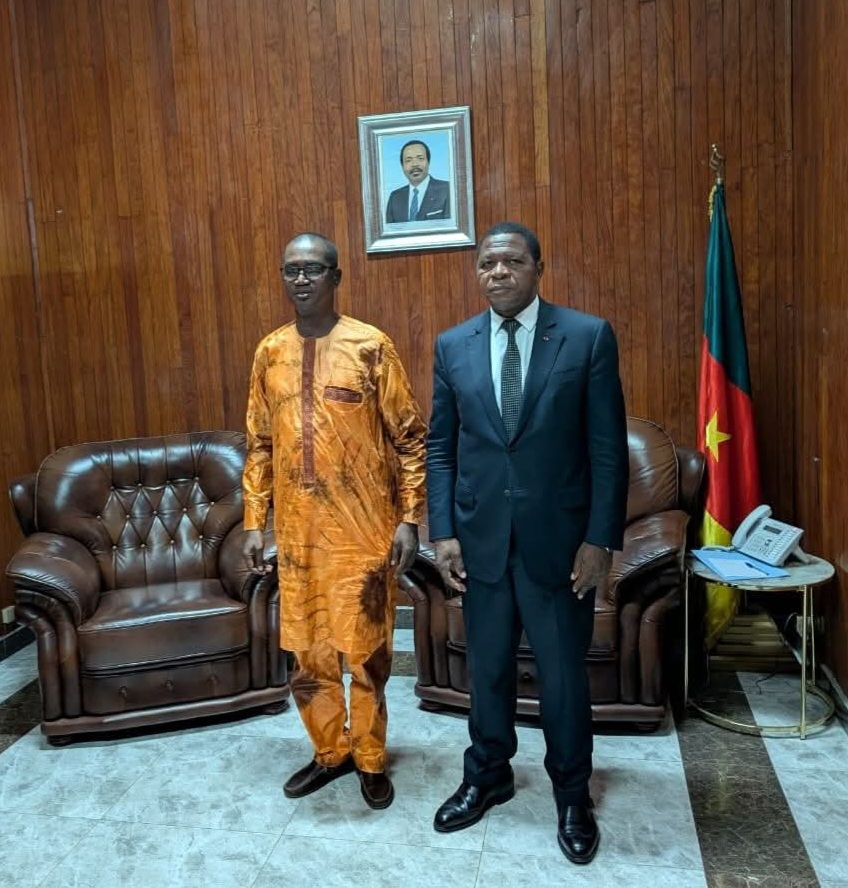
The Minister of Territorial Administration – MINAT, Paul Atanga Nji, on June 10, 2026, granted a high-profile audience to the Country Director of Plan International Cameroon, Mohamed Ibrahima Bah, who was accompanied by his close collaborators.
This courtesy visit served as a platform to review and strengthen the long-standing institutional dialogue between the administrative authorities and the international non-governmental organization. The meeting unfolded in a remarkably cordial atmosphere, deeply rooted in mutual trust and a shared vision for societal progress.
This institutional encounter coincided with a historic milestone, as Plan International Cameroon celebrates 30 years of uninterrupted presence and continuous commitment on Cameroonian soil. For three decades now and counting, the organization has firmly established itself as a cornerstone for local development and a key player in promoting and defending the rights of children, young people, and particularly young girls.
Their extensive operations across the national territory stand as a testament to their tangible, life-changing impact within vulnerable communities.
Discussions between Minister Paul Atanga Nji and the Plan International delegation focused heavily on critical areas of cooperation, including child protection, the funding of youth-driven activities, and the enhancement of community resilience.
At the end of the audience, both parties firmly reaffirmed their determination to consolidate this partnership. By aligning their strategic efforts, MINAT and Plan International aim to better accompany the ongoing development and social cohesion initiatives spearheaded by the state.
In a separate diplomatic engagement on the same day, Minister Paul Atanga Nji received the Resident Representative of the World Health Organization – WHO in Cameroon, Dr. Magaran Monzon Bagayoko. The strategic dialogue was centered on the intersection of peace, development, and public health, with a strong focus on ongoing emergency responses. Dr. Bagayoko seized the opportunity to laud the seamless collaboration and vital support that WHO teams routinely receive from local administrative authorities when deploying health interventions in the field.
A pivotal theme of the MINAT-WHO deliberations was the operationalization of a “humanitarian transition,” a strategic shift wherein the management of emergency response activities will gradually be transferred to national entities. This progressive handover will require a profound, structured collaboration with the Civil Protection Department of MINAT.
Both parties actively reviewed the current challenges facing vulnerable populations and internally displaced persons – IDPs, reaffirming MINAT’s central role in risk management and emergency response coordination.