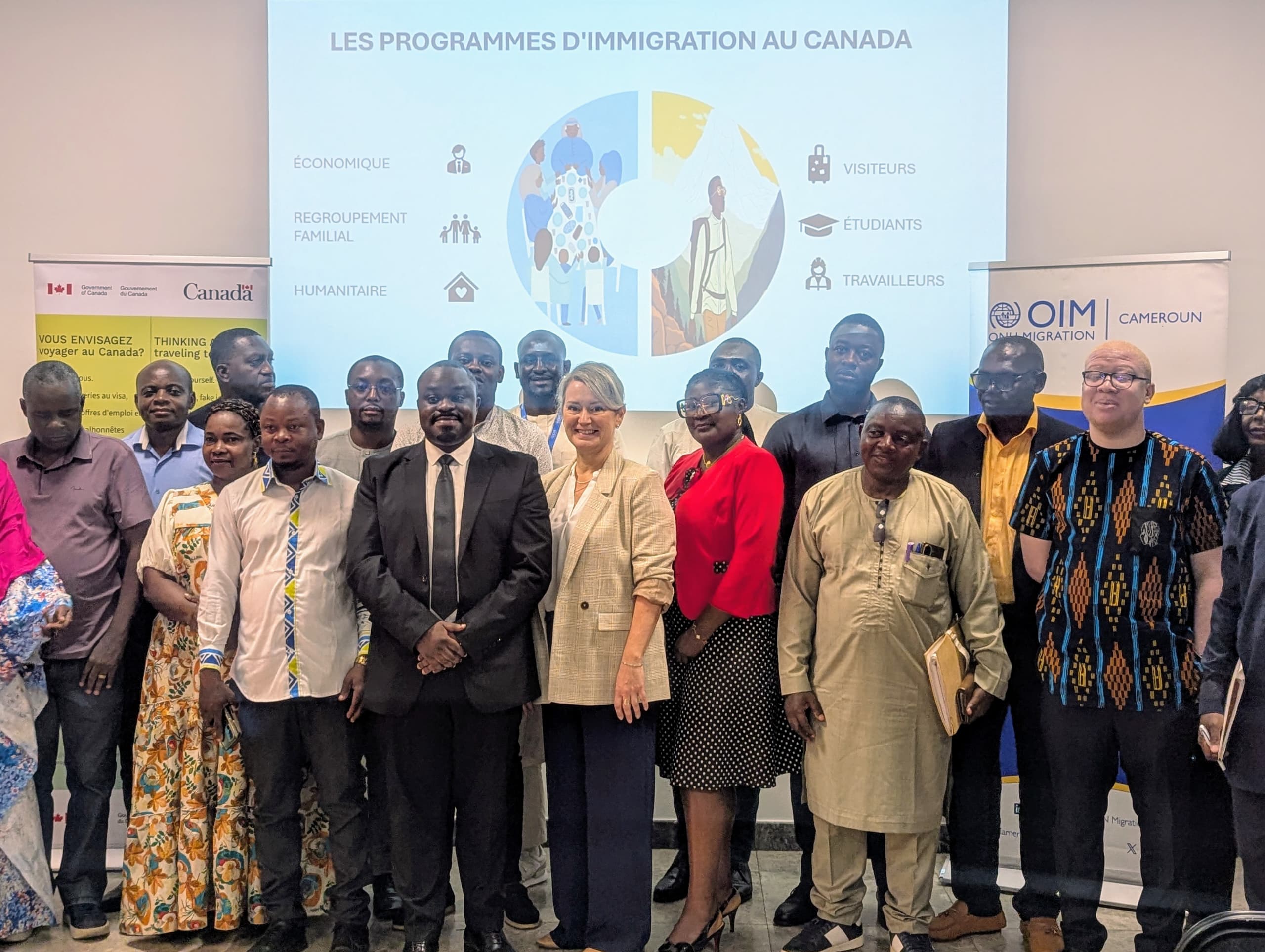
As Cameroon cements its position as the top source country for French-speaking immigration to Canada from Sub-Saharan Africa, a massive surge in sophisticated visa scams has prompted immediate diplomatic intervention. On Tuesday, June 2, 2026, the Canadian High Commission in Cameroon, alongside the International Organisation for Migration – IOM, convened an urgent information session for media professionals at the Starland Hotel in Bastos, Yaounde.
Officiated by High Commission representative Caroline Henry, Nebaneh Tangye from Immigration, Refugees and Citizenship Canada – IRCC, and Birame Ba from the IOM, the briefing—titled “Immigration And The Fight Against Fraud”—aimed to equip journalists with the facts needed to protect a public increasingly targeted by predatory networks.
This unprecedented enthusiasm for migration to Canada is fueled by structural factors, including major outreach events like the Destination Canada forum in Douala and anticipation surrounding the 2026 FIFA World Cup, which Canada is co-hosting. Malicious actors are actively exploiting this momentum by launching fraudulent campaigns that target hopeful Cameroonians looking to use the sporting event to immigrate.
To rob these applicants, predatory networks deploy increasingly sophisticated tactics, including unaccredited agents posing as experts, fake job offers, counterfeit bank statements, cloned government websites, and targeted scams on messaging apps like WhatsApp and Telegram. This rise in fraud coincides with Canada’s aggressive strategic targets to attract qualified Francophone talent, aiming for French-speaking permanent residents to make up 9% of admissions outside Quebec in 2026, and rising to 12% by 2029.
The scale of global misrepresentation is staggering, with newly released figures from the Canadian Immigration Lawyers Association – CILA revealing that fraud cases doubled from 26,000 in 2022 to over 52,000 in the first six months of 2024 alone. To preserve the integrity of its programs, the IRCC office now investigates over 9,000 suspected fraud cases every month and actively conducts field missions, targeted interviews, and verification activities in collaboration with local authorities, employers, and financial institutions.
Diplomatic officials stressed a hard truth: under the Canadian system and the Immigration and Refugee Protection Act – IRPA, the applicant bears absolute, sole responsibility for everything in their file. Even if an illegal intermediary inserts a falsified document without the applicant’s knowledge, the applicant faces the severe penalty of an immediate five-year ban from entering Canada, while the fraudulent representative bears no responsibility.
During the session, officials systematically dismantled several persistent myths that dominate online visa disinformation. They clarified that no agent can ever guarantee a visa, as legally, only regulated IRCC officers hold decision-making power. Furthermore, there is no paid priority processing to speed up internal government timelines, and official Canadian visa fees are paid exclusively through the authorized IRCC portal—meaning any agent demanding payment via Mobile Money, Orange Money, or WhatsApp is operating a scam.
To combat this, the High Commission urged the public to completely bypass unverified intermediaries and check whether an agent is legally registered through the official College of Immigration and Citizenship Consultants portal (college-ic.ca), noting that most agents operating under Canadian flags in Cameroon are doing so illegally.
While Canada remains deeply committed to welcoming Cameroonian talent for its economic and cultural contributions, authorities emphasize that access is only possible through safe, transparent, and legal channels. Legitimate pathways, particularly for temporary work and qualified Francophone workers, remain wide open, but strict procedures must be followed to ensure valid job offers and compliant work permits.
Under updated Canadian laws, crooked representatives face heavy fines of up to $1.5 million. Ultimately, journalists and the public are urged to responsibly use official resources and report ongoing scams directly to ircc.canada.ca/fraude, as denouncing these illicit practices is essential to dismantling fraudulent networks and protecting aspiring migrants.