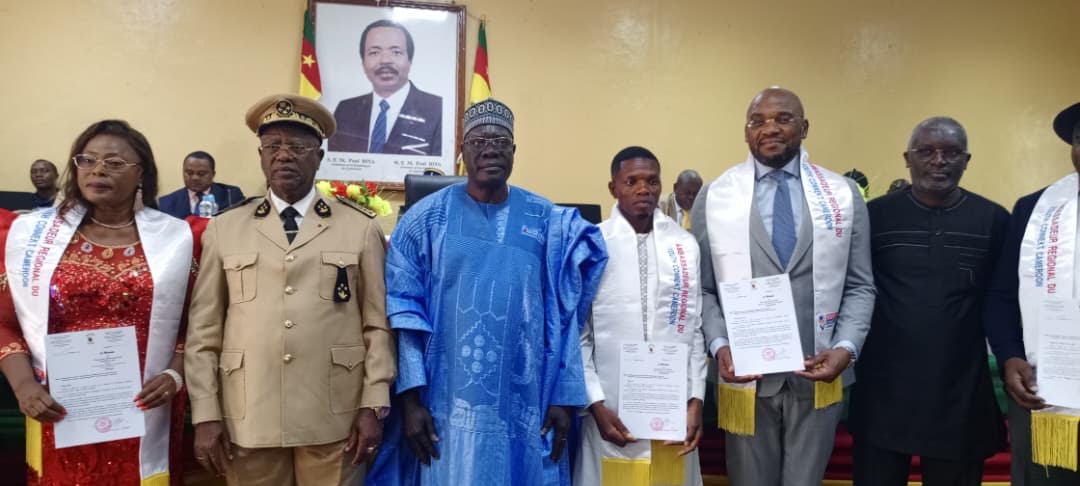
Cameroon’s Minister of Finance, Louis Paul Motaze on July 29, 2026 officially inaugurated a three-day capacity-building seminar in Limbe tailored for 540 Common Law lawyers from the Northwest and Southwest regions.
The workshop has as focus the practical implementation of the 2014 Law on the Dematerialization of Securities, which mandates the conversion of physical, paper-based share certificates into digital entries. Running through July 31, the initiative aims to fully integrate English-speaking legal practitioners into modern corporate governance practices and the national financial framework.
The 2014 legislation aligned Cameroon with OHADA guidelines and global financial standards by transitioning share ownership and transfers from physical certificates to electronic central depository accounts. While civil law notaries in Cameroon’s eight other regions received specialized instruction shortly after the law took effect, Common Law lawyers in the Anglophone regions were excluded. This gap resulted in a severe regional imbalance: out of more than 1,400 public limited companies registered under the electronic system nationwide, only 10 were from the Northwest and Southwest regions combined.
This historical disparity prompted strategic advocacy by the President of the Cameroon Bar Council, Senior Barrister Mbah Eric Mbah, who raised the issue with the Director General of the Cameroon Autonomous Sinking Fund – CAA, Adolphe Noah Ndongo. Sponsored by the CAA, the primary state authority responsible for conserving, supervising, and coordinating all dematerialized securities, the training directly addresses the need for regional equity.
Barrister Mbah expressed deep gratitude to both the Finance Ministry and the CAA leadership for empowering legal professionals in the two regions to effectively serve their business communities.
Delivering the opening address, Minister Motaze emphasized that legal reforms remain incomplete without direct practitioner mastery. “A reform cannot truly be regarded as complete merely because the relevant laws and regulations have been adopted,” Motaze noted, warning that knowing the law without mastering its procedures creates operational error and legal uncertainty.
He stressed that because Anglophone lawyers carry out notarial responsibilities within the Common Law framework, their full command of electronic securities management is essential to protecting business investments and maintaining financial market integrity.
Structured in daily cohorts of 180 participants, the seminar provides comprehensive instruction on regulatory provisions, central depository operations, statutory deadlines, and strategic risk management. Replacing physical paper certificates with electronic records drastically reduces the risk of loss, fraud, and cumbersome notary-managed paper transfers, thereby providing greater legal certainty for corporate investors. The training aims to bridge the knowledge gap so that lawyers can guide business clients through corporate registration and seamless share management.
Although participants warmly embraced the initiative, key legal leaders highlighted lingering structural challenges, particularly the lack of an official English translation of the 2014 statute. Barrister Edward Ewule Lyonga, Vice President of the Bar’s General Assembly, noted that relying solely on the original French text poses an ongoing hurdle for Common Law practitioners.
Nonetheless, keynote speaker Senior Barrister Enow Benjamin reminded attendees that adapting to technological shifts in commercial practice is an urgent duty, positioning the Limbe seminar as a critical step toward economic modernization across Cameroon.