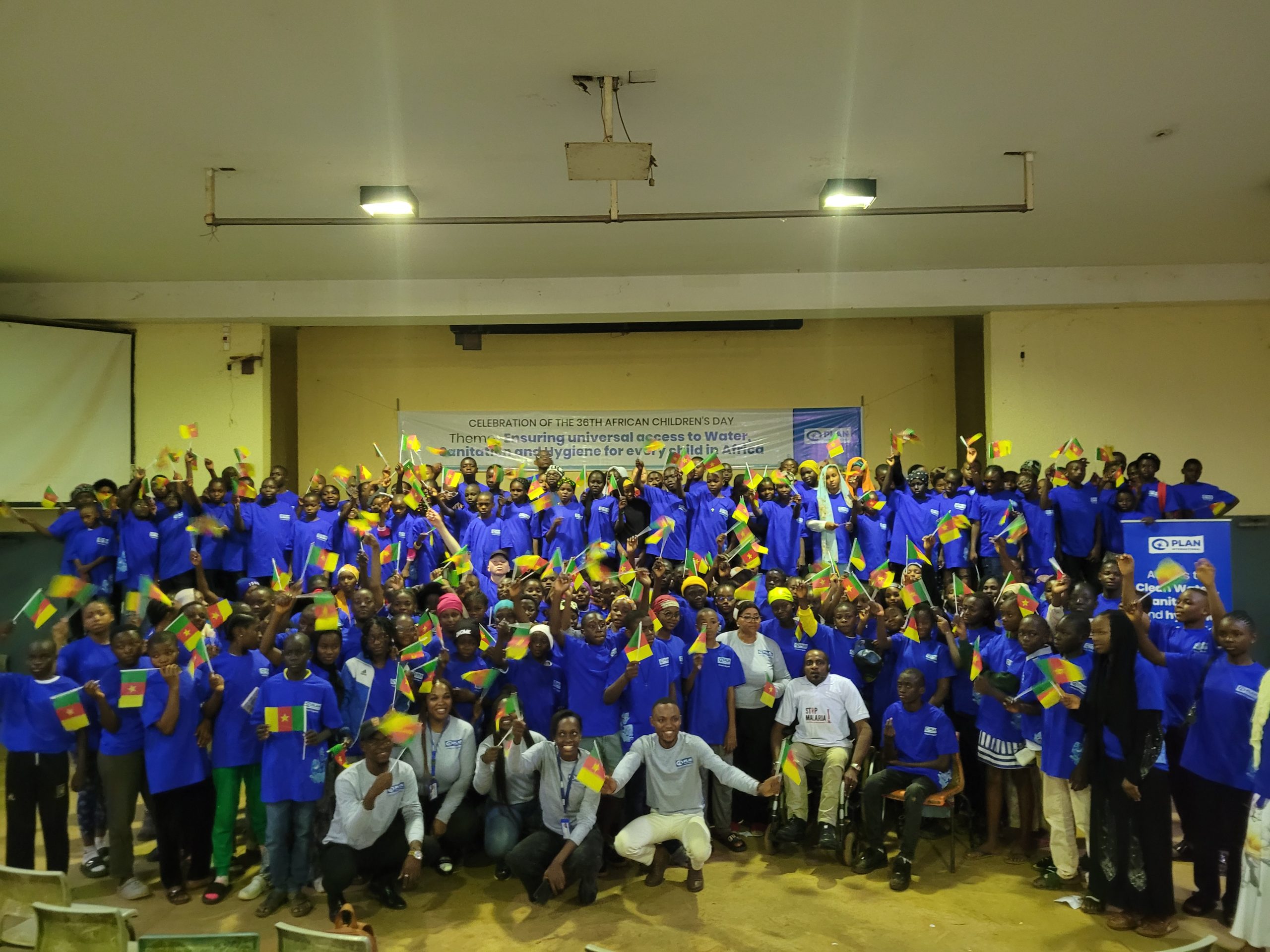
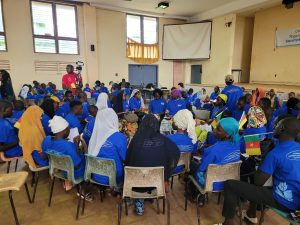
In commemoration of the 2026 Month of the African Child, Plan International Cameroon hosted a participatory advocacy session with Junior Parliamentarians on Saturday, June 20, 2026. This strategic engagement aligns with this year’s continental theme, “Ensuring Universal Access to Water, Sanitation and Hygiene (WASH) for Every Child in Africa.”
By bringing together these young leaders from the 10 regions of the National territory, the initiative aims to strengthen their capacity to advocate for children’s rights especially during the upcoming parliamentary session on June 26, 2026. It sheds a critical light on how lacking basic sanitation directly exposes children to severe protection risks across their respective communities.
The participants expressed the will and desire to engage themselves in actions that will prompt decision makers to take their plea into consideration. Amongst these participants are Honourable Haoua Kingui from the Adamawa region and Sama Eigini Navom from the North West region who took the commitment to participate in the sensitization of their community on the importance of clean water, the good use of latrines, respect of hygiene rules and the maintenance of water points so as to ensure the population has access to clean water.
The activity that took part at the Nkolbisson Technical High School on June 20, 2026 is part of a broader, month-long series of integrated interventions rolled out by Plan International Cameroon throughout June. Coordinated by Beri Gaelle, Child Protection Specialist at Plan International Cameroon, in strict compliance with the African Charter on the Rights and Welfare of the Child – ACRWC—particularly its mandates on health, education, and protection against abuse—the organization is combining child participation, school-based interventions, community engagement, and media advocacy.
Through these platforms, Junior Parliamentarians are analyzing key WASH challenges in schools and communities, subsequently translating their findings into strategic advocacy messages and concrete action plans while taking into consideration the aspect of safeguarding which is primordial in every action to be carried out by Plan and its associates.
A vital component of this initiative is Plan International’s close collaboration with Cameroon’s Ministry of Social Affairs – MINAS. According to Justine Melingui, Nutrition Specialist at Plan International Cameroon, the specialized “IOWASH” project has been instrumental in backing government structures to sensitize young lawmakers.
This partnership ensures that children from various regions—including the North, Far North, Centre, West, and South—are fully equipped to lobby their communities for clean water and functional latrines, creating a unified youth voice against the critical deficit of basic amenities.
Social welfare officers have highly lauded the partnership, especially given today’s constrained funding landscape. Diane Mankefor, a social welfare officer at the Department of Child Protection at MINAS, emphasized that the Children’s Parliament serves as a crucial platform for youth inclusion in national decision-making. She praised Plan International Cameroon for remaining steadfast in its financial and operational commitment to child protection, noting that their educational talks on hygiene and sanitation provide indispensable support to the Ministry’s overarching goals.
The situation is particularly acute in regions like the Northwest, where the daily struggle for water directly threatens child safety. Aziza Joyce, a child protection support officer from the Northwest Regional Delegation of Social Affairs, revealed that children as young as five years old travel isolated, miles-long distances just to fetch water.
This grueling chore leaves them highly vulnerable to horrific dangers, including sexual assault, rape, or going missing entirely. Her delegation recently conducted a comprehensive survey across local communities and institutions, confirming that a vast majority of children still lack access to this fundamental necessity.
Moving forward, stakeholders are dedicated to transforming the parliamentarians’ proposals into tangible realities on the ground. Recognizing that water is a collective responsibility and an absolute necessity for survival, regional delegations plan to work side-by-side with the children to refine their strategic action plans.
With the continued accompaniment and implementation support of Plan International Cameroon, these initiatives aim to effectively curb water scarcity and build safer, healthier environments for children across the Northwest region and the entire nation.
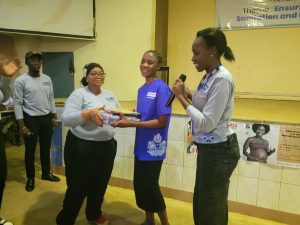
Basic necessities such as books and sanitary pads were given out to the participants as a way of ensuring a safer and sound environment for children’s education.