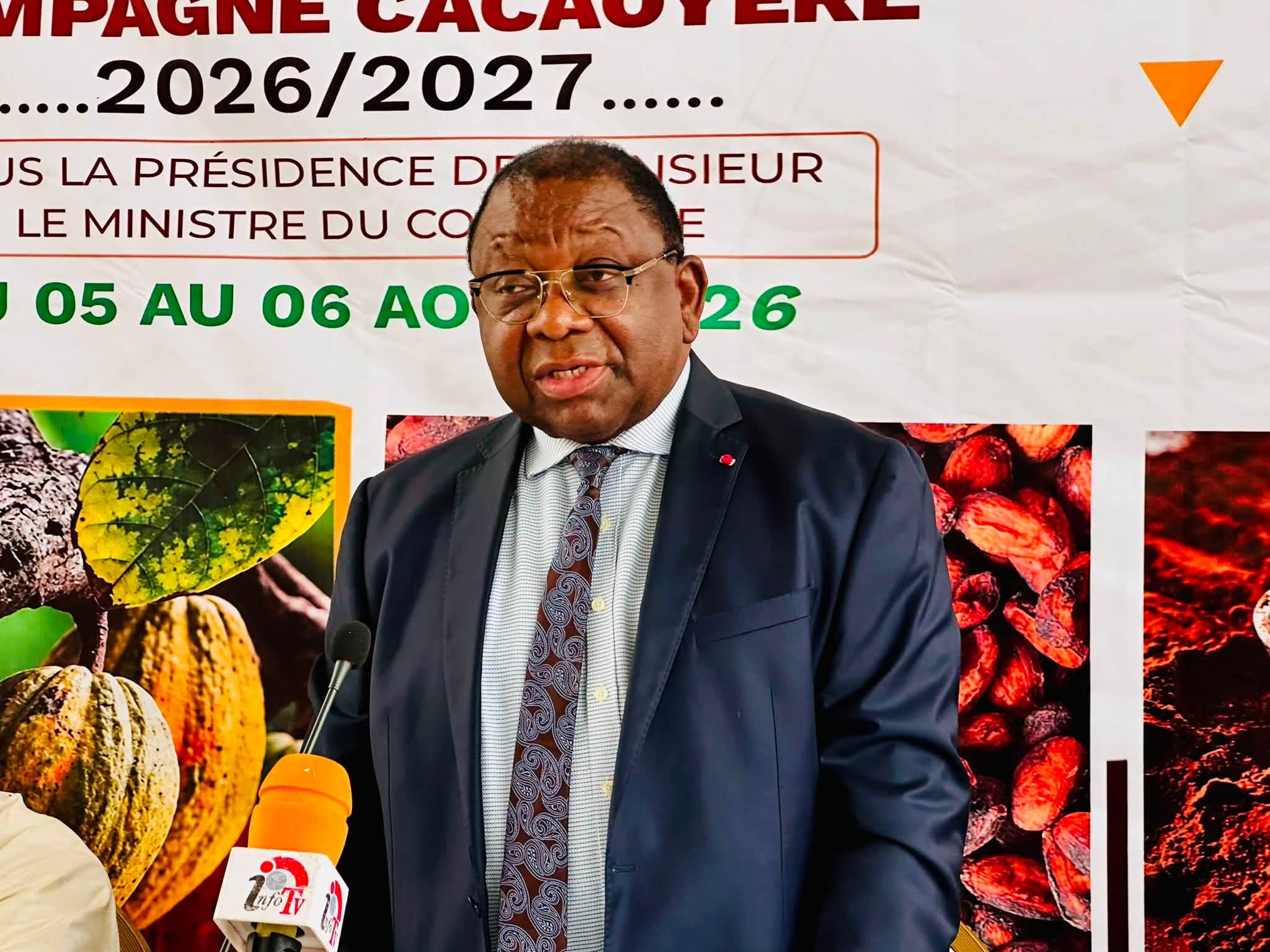
The debate has officially been launched regarding the future of Cameroon’s cocoa industry. Faced with evolving global market dynamics and rising expectations from farmers, the Cameroonian government initiated a national reflection aimed at establishing fairer compensation mechanisms. This initiative culminated in the opening of the Forum on the Compensation of Producers in the Cocoa Sector on Wednesday, August 5, 2026, at the Yaounde City Hall.
Chaired by Minister of Trade Luc Magloire Mbarga Atangana, the opening ceremony convened key leaders, including Minister of Agriculture Gabriel Mbairobe, ONCC General Manager Michael Ndoping, FODECC Administrator Samuel Donatien Nengue, and CICC leadership alongside complete value chain stakeholders.
In his opening address, Minister Mbarga Atangana delivered an uncompromising assessment of wealth distribution within the sector. He emphasized that the widening remuneration gap between primary producers and other actors directly threatens the sustainability of the entire value chain. Highlighting the severity of agricultural precariousness, he noted that under different circumstances, such as in Europe, such economic strain on farmers would trigger widespread social crises. Consequently, he urged all stakeholders to take collective responsibility to re-center the producer at the heart of the national strategy.
Reaffirming government’s commitment to dialogue over unilateral decisions, the Minister called for open collaboration to reach a balanced compromise that safeguards all legitimate interests. Citing author Ernest Hemingway to underscore shared destiny, he stressed that individual interests must yield to a sustainable consensus. A central pillar of this consensus involves deepening local processing, given that Cameroon currently possesses an installed processing capacity of 250,000 tonnes, matching the total commercialized production of the 2025/2026 season, alongside strong demand from neighboring Nigeria’s industrial capacity.
Addressing the paradox of high local capacity alongside continued vulnerability to global market shocks, the Minister questioned the return on state support. He asserted that the government must evaluate the tangible benefits returned by local processing units in exchange for tax and customs concessions. Rejecting any ideological taboo, Mbarga Atangana warned that failing to scrutinize these fiscal arrangements would make stakeholders complicit in the financial ruin of farmers.
Furthermore, he urged transparent dialogue regarding informal cocoa flows across the Nigerian border rather than relying solely on state intervention when crises emerge.
The outcomes and recommendations generated from the forum will form the foundational strategy for the upcoming 2026/2027 cocoa season, scheduled to launch on Thursday, August 6. By addressing structural imbalances and re-evaluating incentives, the government aims to boost overall sector competitiveness while guaranteeing equitable pay for farmers. The forum highlights a decisive attempt to protect the foundational link of a value chain vital to the Cameroonian economy.