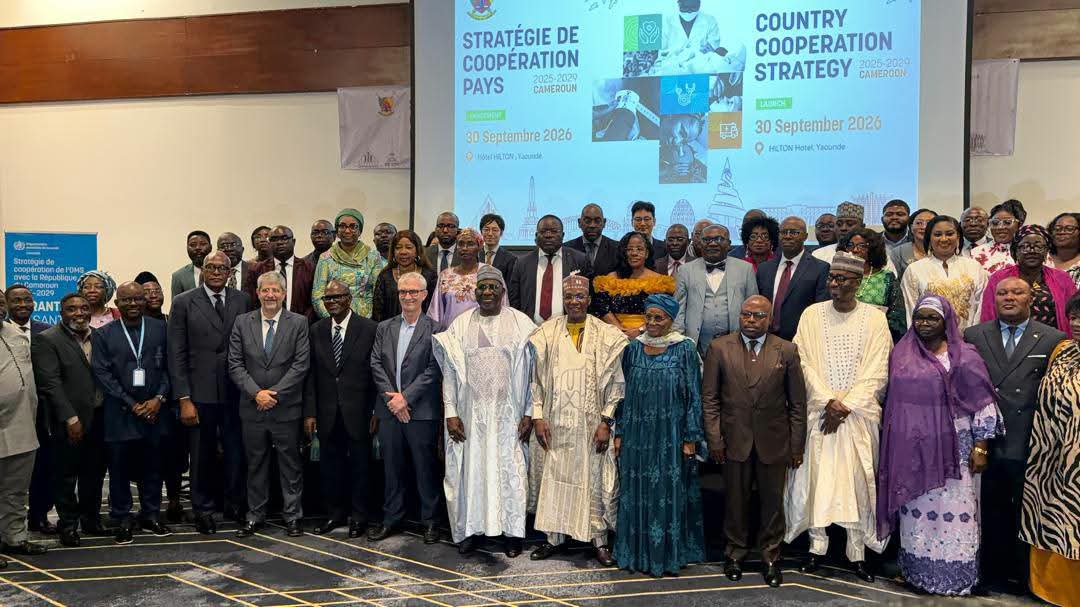
Cameroon’s Minister of Public Health, Dr. Manaouda Malachie, officially presented the 4th Country Cooperation strategy between the World Health Organization and Cameroon on September 30, 2026 in Yaounde.
Designed to guide joint health initiatives through 2029, this strategic roadmap establishes a clear shift from policy framework design to concrete, ground-level action. The strategy prioritizes primary healthcare and community health systems to ensure accessible, equitable, and resilient health services for every citizen across the nation.
The launch follows significant achievements under previous bilateral agreements, which laid a solid foundation for sustainable primary care delivery and enhanced public health infrastructure. Strategic health interventions in recent years successfully vaccinated over 2.8 million individuals against cholera and introduced the malaria vaccine across 42 high-risk health districts. Furthermore, joint efforts fortified the implementation of the National Health Development Plan to expand healthcare access across communities.
Looking ahead, the 2025–2029 strategic roadmap centers on four major interconnected priorities designed to transform the nation’s health sector. These areas focus on strengthening governance and leadership within health management, expanding universal coverage for essential services, improving emergency preparedness to detect and respond to epidemics, and driving broad health promotion initiatives focused on nutrition, disease prevention, and climate change impacts.
During the presentation, Dr. Manaouda Malachie emphasized the crucial need for swift operationalization, stating that a strategy only brings about change when it moves from paper into action.
His declaration underscored the collective drive of the Ministry of Public Health and its international partners to translate executive policy directly into measurable improvements in patient care, community wellness, and disease control across all health districts.
Achieving these targets will require unified execution across multiple sectors of society over the next five years. The Government of Cameroon, the WHO, technical and financial partners, civil society organizations, and local communities will work in close coordination to turn these health priorities into sustainable realities on the ground.