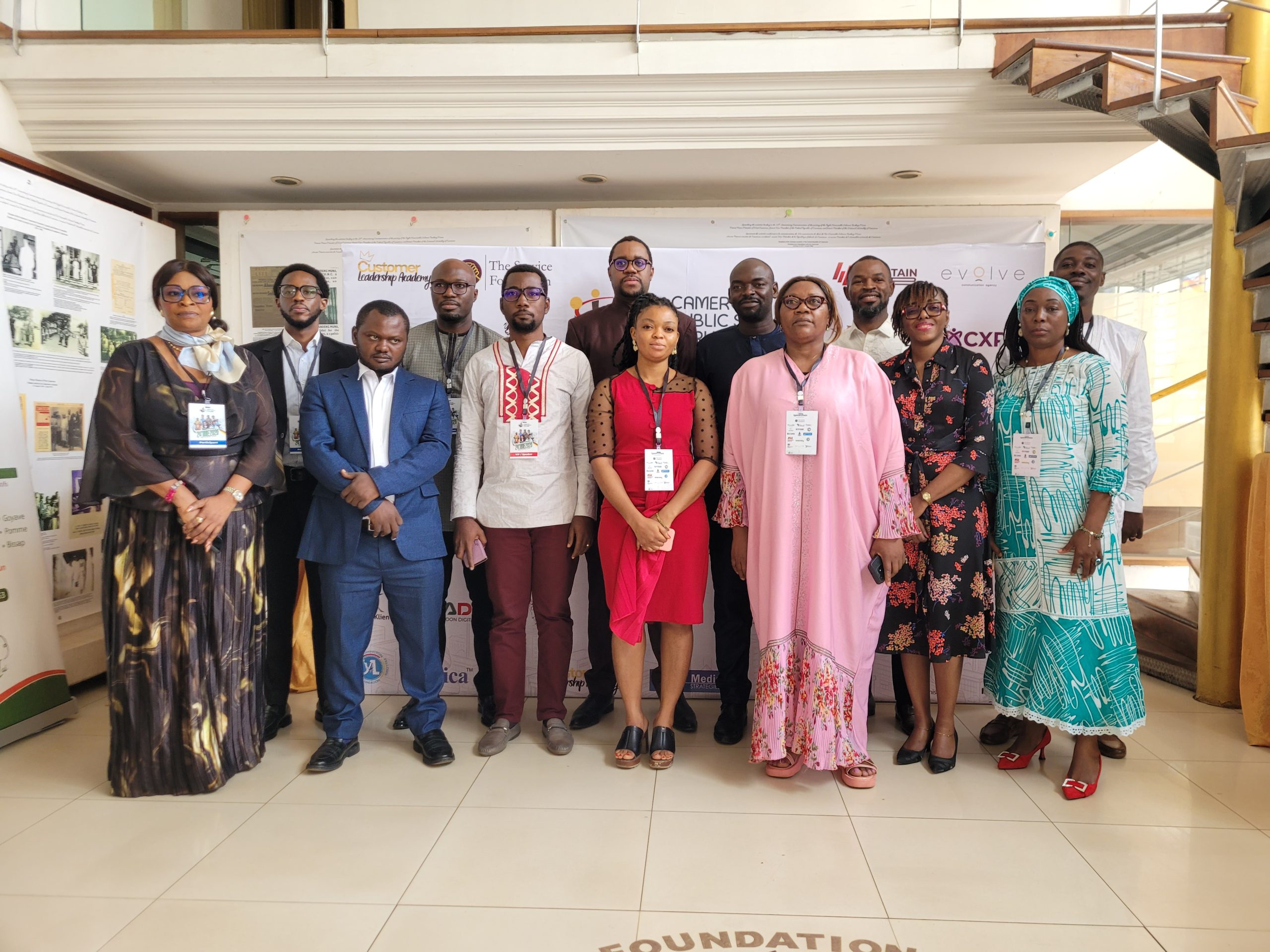
“Transforming Public Institutions: Advancing innovations, participation and inclusion.” This is the theme under which the maiden edition of the Cameroon Public Service forum took place on June 24, 2026, at the Muna Foundation in Yaounde.
Organized by The Service Foundation in commemoration of International Public Service Day, the event that brought together a diverse panoply of professionals, experts, stakeholders, and representatives from various public services and domestic ministries served as a solemn moment to honor the dedicated men and women who serve the state and its citizens, often in quiet anonymity as well as identify the areas to be improved upon for better services.
The forum equally seeked to address critical institutional reforms and the fate of the public service particularly in terms of quality of services rendered, given the fact that Cameroon’s Public Service index stands at 44.73 % with Cameroon ranked 30th of the 52 countries in terms of quality of public service rendered.
In his opening address, George Essama, Founder of The Service Foundation, pointed out the fact that the event’s core focus is to empower public service agents, reinforce their capacities, and cultivate efficient public organizations capable of adapting to global shifts while remaining anchored in core service values.
Representing the frontline of administration, Dinyuy Brandon, a support staff member at the Ministry of State Property, Surveys and Land Tenure, praised the forum for bringing together public sector workers committed to driving meaningful change. Brandon highlighted a growing disparity between an evolving citizenry and an institutional framework that struggles to keep pace. He argued that the primary challenge facing the modern administration is the urgent need to ditch archaic, prehistoric systems and recenter public policy entirely around modern, citizen-driven initiatives.
Expanding on these institutional bottlenecks, academician and public relations expert Pisso Nseke delivered a comprehensive breakdown of the deeper structural challenges currently facing Cameroon’s public sector. Nseke observed that today’s citizens are increasingly educated, hyper-connected, and accustomed to instantaneous digital services, yet administrative procedures remain sluggishly tethered to a bygone era. He asserted that institutional capability cannot outperform the quality of its personnel, meaning that true public sector reform must prioritize substantial human capital investment alongside structural modernization.
To chart a practical path forward, Nseke outlined a series of crucial actions: simplifying administrative complexities, heavily investing in strategic professional development, and accelerating digital transformation so that no citizen is left behind. He argued that the future of Cameroonian governance will not be defined by its resources, but by its agility in placing the citizen at the absolute center of public administration. According to Nseke, the ultimate goal is to move past old administrative habits and engineer responsive, transparent, and highly inclusive institutions.
Offering a valuable regional blueprint, Aliyare Hassan, a Senior Assistant County Commissioner from Kenya’s Ministry of Interior, shared key lessons from the East African nation’s successful public sector overhaul. Hassan explained how Kenya established itself as a regional innovation leader by executing a holistic approach balanced across four pillars: innovation, accountability, participation, and inclusion.
Through centralized “e-citizen” platforms and physical Huduma Centers, Kenya successfully brought scattered government services under one roof—slashing travel costs, eliminating wait times, and drastically reducing daily bureaucratic barriers for its citizens.
The cross-border insights shared at the Muna Foundation underscores a shared continental truth: meaningful public sector transformation is fully achievable when a government actively embraces modern innovation, enforces strict institutional accountability, and transforms its structures to match the needs of its people. As the maiden forum concluded, attendees left with a unified objective to carry these strategies back to their respective departments. The overriding consensus of the day was clear: the transformation of the public sector cannot merely exist in policy documents—it must actively begin with individual public agents taking localized action today.
About the Foundation
Established in 2024, The Service Foundation is an association whose focus is on supporting public service agents and collaborating globally with governments to drive public service improvement.