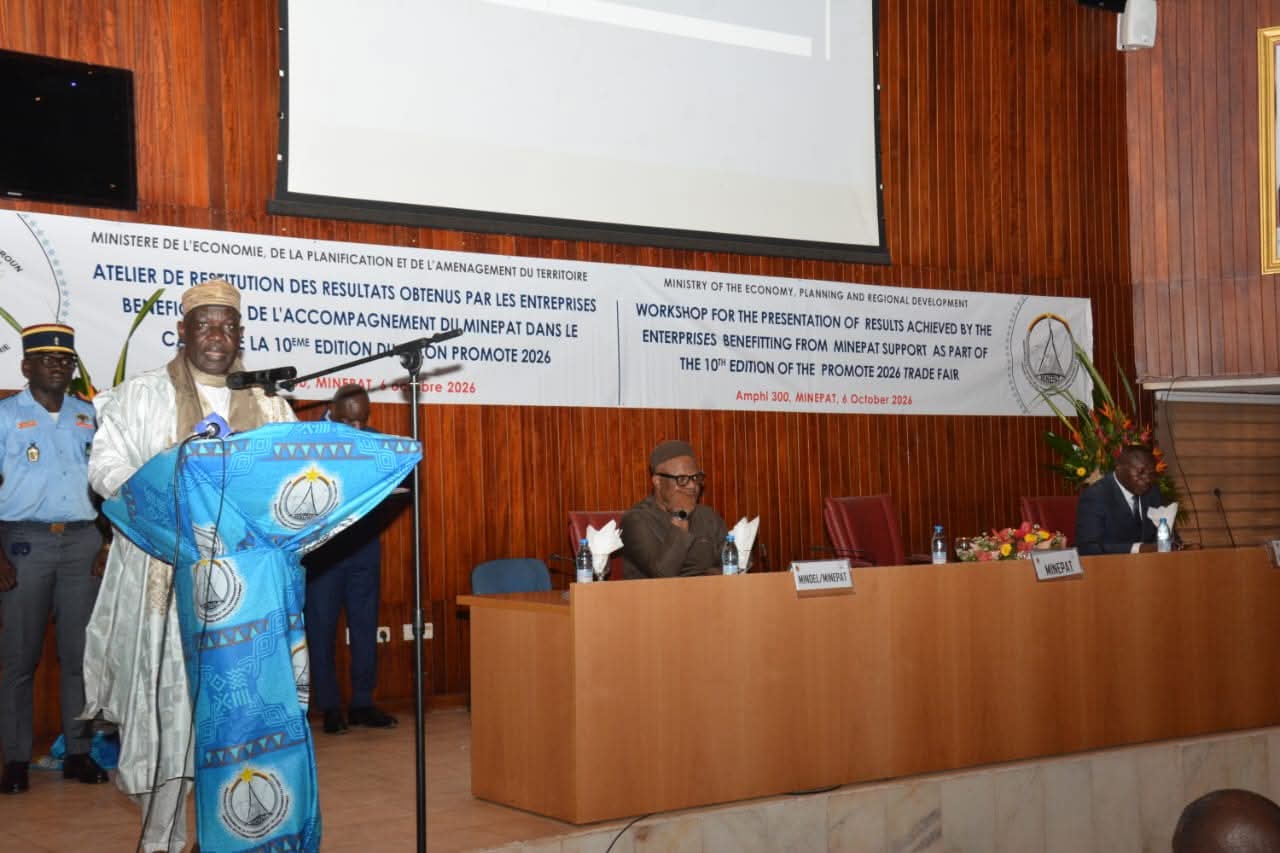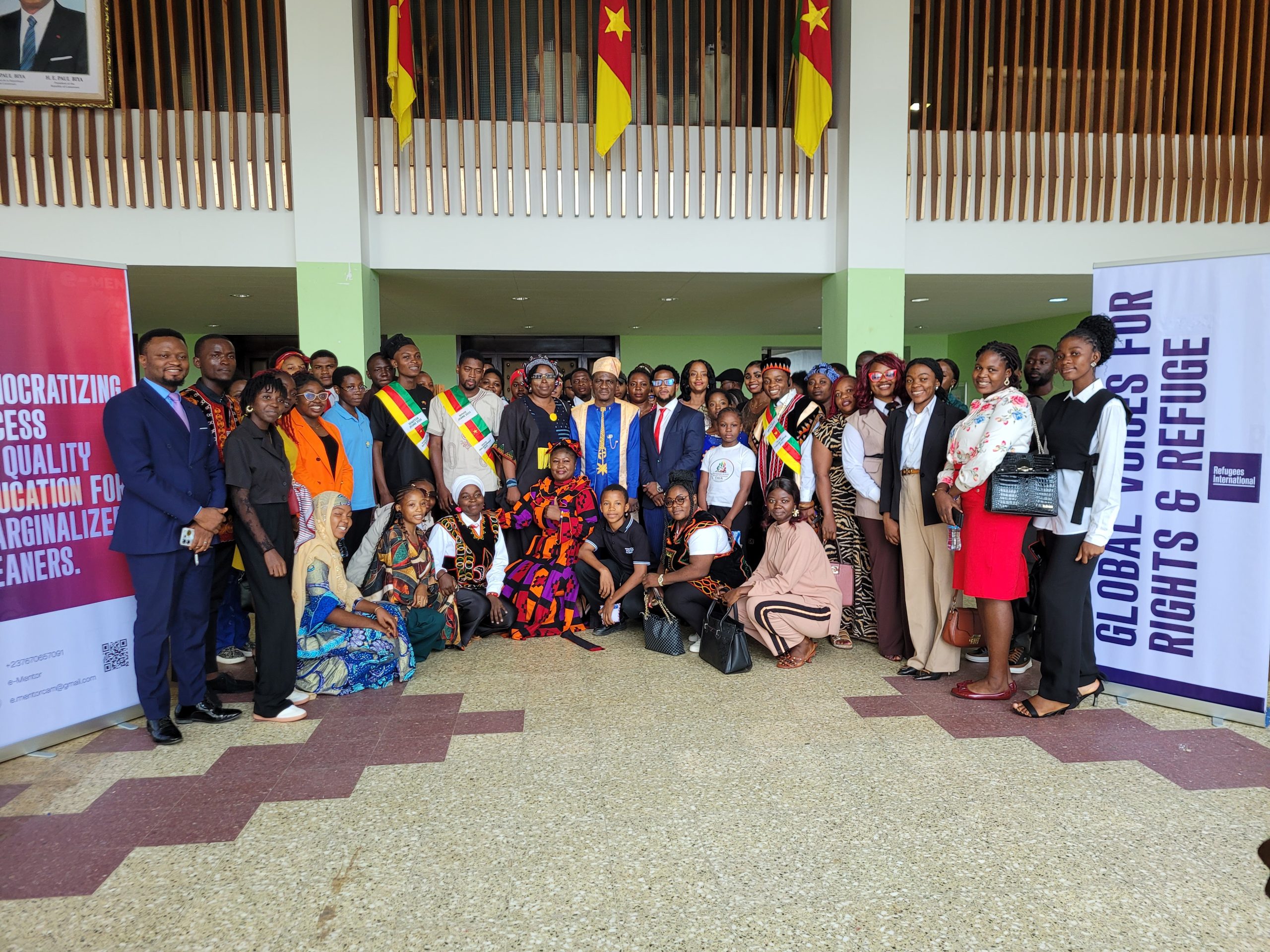
The Congress hall in Yaounde, capital city of Cameroon, became the epicenter of a crucial national conversation on July 13, 2026 as stakeholders gathered for a high-level policy dialogue on the education rights and continuity of Internally Displaced Persons – IDPs in Cameroon.
Organized by the E-Mentor organisation in partnership with Refugees International, the seminar took place under the theme “Leaving No Learner Behind.” In attendance were a good number of heads and representatives of civil society organizations, representatives of public institutions as well as Junior Parliamentarians from the North West, South West and Center regions, all driven by a shared mission to turn the tide on years of educational disruption caused by regional conflicts.
Abongdoh Maluyane Titus, the visionary Founder of E-Mentor, set a collaborative and highly action-oriented tone during his passionate opening address. Highlighting the success of E-Mentor’s programs, which have empowered over 1,500 displaced learners and equipped 170 teachers to achieve a 21% average improvement in STEM outcomes, Titus urged attendees to look beyond statistics to the human stories of recovery.
Reflecting on his journey as a global changemaker and Refugees International Fellow, he insisted that the world is ready to listen to displaced youth, provided we build the right platforms. To ensure the day’s reflections yield lasting results, he announced the adoption of a joint policy statement and the launch of a dedicated technical working group to drive recommendations forward.
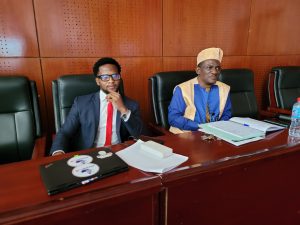
The raw, deeply human toll of displacement was brought to light by Ethel Lehdufe, a participant and the resilient founder of the Holistic Queens movement. Lehdufe shared her traumatizing experience of having her dreams of studying journalism at the University of Buea abruptly halted in Kumbo, forcing her to abandon her home and career plans due to the heat of the crisis. Now a successful communicator, teacher, and coach, she credited her recovery to the mentors who held her hand and actively supported her transition. She made an impassioned plea to stakeholders to support IDPs in building new dreams, emphasizing that survival and adaptation are only possible when communities rally to provide structured, empathetic environments.
Speaking online from Chicago, Dr. Sarah Miller, Senior fellow at Refugees International emphasized that education remains one of the most critically neglected rights for IDPs amid a harsh climate of global funding cuts and rising political obstacles. She explained that continuous learning is not just a basic right, but a vital catalyst that links to self-sufficiency, enabling displaced youth—particularly traumatized girls—to become true assets to their host communities.
Dr. Miller lauded the Yaounde summit for its innovative, creative approach to pushing ministries and civil society toward systemic reform. Finally, she insisted that displaced people are themselves the ultimate experts of their needs, emphasizing that the most impactful solutions are born when organizations actively listen to, value, and design programs around their lived experiences.
Bridging the gap between immediate education and long-term survival, Nso Delphine, second deputy mayor of Mbve Council and founder of Network for Innovation and Sustainable Development – NESODEV, showcased the powerful role of grassroots economic empowerment. Since its registration in 2022, NESODEV has trained over 500 vulnerable individuals, with a deliberate focus on young women, girls, and people with disabilities. Delphine explained that true educational continuity depends heavily on supporting parents and youth through entrepreneurship and income-generating activities. By funding small-scale business plans and offering follow-up mentoring, NESODEV helps families secure the financial independence required to keep their children in school.
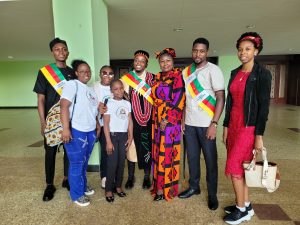
The critical issue of legal identity as a major barrier to education was championed by Ndzi Divine Njamshi, the Senior Program Officer for NEWSETA. Beyond training over 400 young Cameroonians in leadership and peacebuilding, NEWSETA played a monumental role in restoring basic rights to the invisible. In 2022, through a UN Women-funded project, the organization registered and secured free birth certificates for 300 IDPs in Yaoundé, Douala, and Garoua, while actively helping others obtain national identity cards. Njamshi highlighted that securing these legal papers is a vital step toward dignity, as it officially unlocks access to formal school enrollment and state examinations.
Representing the state, Logmo I de Semnjock Léonard, the Deputy Director of Civic Education in Non-Formal Settings at the Ministry of Youth Affairs and Civic Education – MINJEC, delivered a sobering reality check. Drawing from OCHA’s 2025 figures, he pointed out that over 969,000 people remain displaced in Cameroon, leaving close to 488,000 children without access to functional schooling.
In a significant policy shift, Léonard declared MINJEC’s support in transitioning from a purely humanitarian framing of IDP education to a robust, rights-based approach. He committed the ministry to active membership in the new technical working group, pledging to leverage MINJEC’s network of 440 multi-purpose youth centers to offer non-formal education and livelihood training.
The seminar concluded on a note of tangible resilience, highlighted by the lived experiences of internally displaced persons who continue to fight for an improved standard of life. Thanks to the practical vocational training provided by NESODEV, many displaced youths have successfully pivoted into the production and commercialization of liquid soaps, bleach, detergents, and natural fruit juices to secure their livelihoods.
By blending the civil leadership of organizations like E-Mentor and NEWSETA, the grassroots training of NESODEV, Therapeutic Action Initiative Association – TAIA and the policy commitments of MINJEC, the high-level dialogue in Yaoundé established a concrete roadmap to ensure that displaced learners are not only supported in the classroom but empowered to thrive beyond it.