The Minister of Communication, René Emmanuel Sadi, has called on media practitioners to exercise press freedom with a heightened sense of civic responsibility and ethical mindfulness.
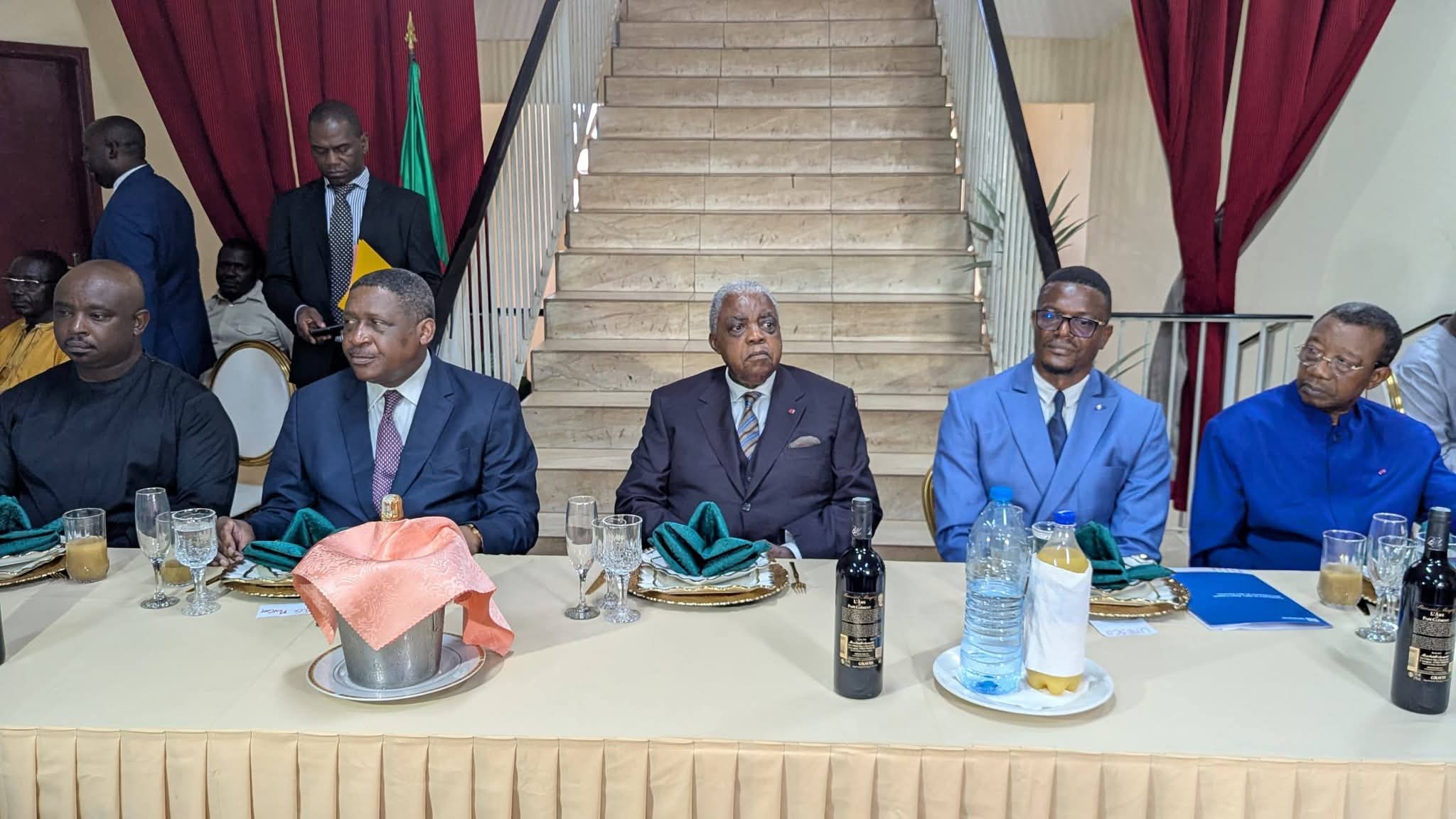
He was speaking at a press lunch on May 3, 2026, to commemorate the 23rd edition of World Press Freedom Day. The Minister described press freedom as an irreversible democratic achievement. He urged journalists to align their work with the goals of national peace and socioeconomic development, framing the media as a vital partner in the country’s progress and a guardian of social stability.
The event that took place at the Ministry of Communication also featured a practical commitment to grassroots media development, as Minister Sadi distributed essential broadcast materials to ten community radio stations across five regions.
In his address, he emphasized that the nobility of the journalism vocation can only be preserved through the restoration of professional conduct. He cautioned that true freedom is inseparable from accountability, asserting that journalists must place social responsibility at the heart of their reporting to fulfill their roles effectively.
In a poignant contrast to the Minister’s administrative discourse, Jude Viban, National President of the Cameroon Association of English-Speaking Journalists, CAMASEJ, delivered a sobering address on the precarious state of the profession.
Using the allegorical story of a journalist named “Peace,” Viban illustrated a decade-long career marred by unpaid labor, lack of job security, and systemic exploitation. He highlighted a grim reality where newsroom decisions are often dictated by financial survival rather than editorial merit, leaving even highly qualified professionals in a cycle of poverty.
Viban’s narrative further exposed a culture of professional indignity, including the influence of “brown envelopes” and the prevalence of workplace harassment. He detailed how “Peace” faced gender-based discrimination and was denied “juicy” assignments for refusing the advances of superiors.
This environment, he argued, forces journalists to struggle with meagre, inconsistent salaries—sometimes as low as 60,000 CFA—leaving them without social protection or the means to afford basic healthcare, a situation that has left the real-life “Peace” critically ill and without care.
Concluding the event, the CAMASEJ President emphasized that such hardships are not isolated incidents but reflect the lived reality of many journalists across Cameroon. He argued that press freedom remains fragile and the public’s right to credible information is weakened when newsrooms are driven by survival rather than ethics.
Viban called for urgent, collective action to address these systemic economic pressures, noting that full-fledged press freedom can only be enjoyed when journalists are empowered to work with dignity and security.