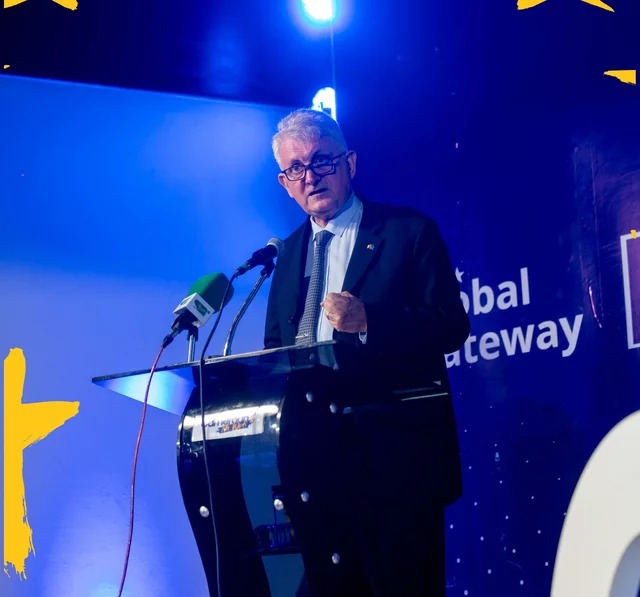
During a ceremony marking Europe Day at the Yaoundé Hilton Hotel, the European Union Ambassador to Cameroon, Jean-Marc Chataigner, reiterated the EU’s commitment to supporting lasting peace, stabilization, and emergency humanitarian relief via ECHO in the conflict-ridden North West and South West regions.
While commending government initiatives aimed at restoring peace, the Ambassador emphasized that the EU stands firmly for open societies rooted in the rule of law, institutional transparency, and the respect for fundamental human rights.
Additionally, the EU continues to provide funding to the African Union to assist Cameroon in combatting external security threats, particularly the violence perpetrated by the terrorist group Boko Haram in the Far North region.
Despite these diplomatic assurances, local perspective criticizes the EU’s current approach as an inadequate “fish-giving” strategy that focuses heavily on basic humanitarian aid rather than enforcing structural changes. For years, former and current EU diplomats have consistently advocated for a negotiated political solution that respects Cameroon’s unity and diversity.
Peace advocates, including globally-acclaimed peace crusader Sir Dr. Nfor Nfor Bamnjo Nico Halle, have persistently recommended an inclusive, sincere dialogue grounded in truth, reconciliation, forgiveness, and reparation as the only viable mechanism to truly silence the guns.
Critics argue that the regime in place, alongside beneficiaries of the ongoing instability, actively resists structured dialogue—such as past Swiss-led mediation initiatives—leaving the region trapped in an eight-year cycle of violence.
Since 2017, the English-speaking regions have been devastated by severe atrocities, including extra-judicial killings, kidnappings, sexual violence, and the burning of entire villages. This protracted crisis has not only devastated local populations but has also created a severe influx of asylum seekers and refugees, presenting ongoing challenges for both neighboring territories and EU member countries.
Consequently, there is a growing demand for the European Union to move beyond mere rhetoric and implement the same assertive, restrictive measures it has deployed in other African nations like Mali, Libya, and Zimbabwe. In those geopolitical contexts, the EU actively imposed arms embargoes, asset freezes, and travel bans against individuals and entities undermining democratic tenets and human rights.
To effectively halt the atrocities in the Anglophone regions, critics insist the EU must act without fear or favor by implementing targeted sanctions against those fueling the conflict, rather than relying solely on symbolic calls for dialogue.