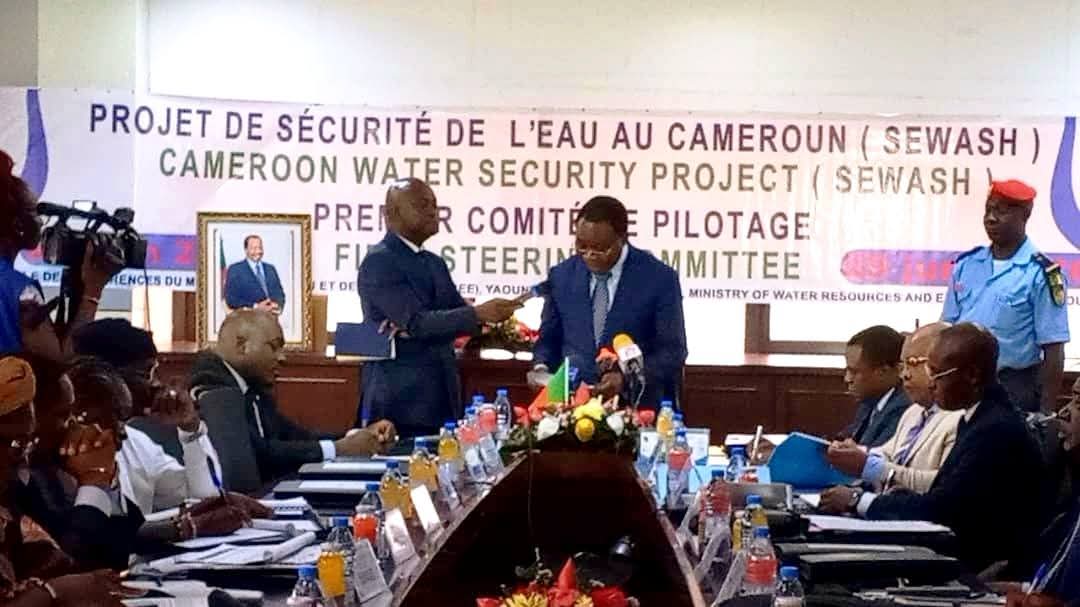
Cameroon has officially entered a transformative era for its utility infrastructure with the operational launch of the Cameroon Water Security Project, known as SEWASH. On June 29, 2026, the Minister of Water and Energy, Gaston Eloundou Essomba, chaired the inaugural session of the project’s Steering Committee – COPIL in Yaounde.
Backed by a massive budget of €184.9 million, this strategic program is designed to permanently overhaul the water and sanitation landscape across multiple regions of the country, marking a monumental milestone in the nation’s water resource security policy.
The extensive program represents a highly coordinated, multi-stakeholder partnership between the Government of Cameroon and the World Bank, funded through IDA credit No. 7785-CM. The first phase of the initiative spans from 2025 to 2030, during which it will focus heavily on bolstering the country’s institutional capabilities, integrating modern water resource management practices, and creating long-term access to clean drinking water and public sanitation services. The launching event brought together prominent figures including the Director General of CAMWATER, Dr. Blaise Moussa, as well as several World Bank delegates and technical execution experts.
During this initial launch, the steering committee finalized vital governance structures by reviewing and validating essential planning frameworks, including the Annual Work Plan and Budget – PTBA and the Procurement Plan – PPM. In his opening remarks, Minister Eloundou Essomba stressed that success relies heavily on rigorous transparency, seamless institutional coordination, and an unyielding commitment to delivering concrete results to local citizens.
Technical presentations led by project coordinators subsequently detailed the progress made since the project’s initial phase kicked off, setting clear expectations for the upcoming months.
On a practical level, SEWASH will directly impact millions of Cameroonians through immediate structural investments. The first phase includes the development of 103 solar-powered mini-water supply networks across the Adamawa, North, and Far North regions, featuring productive boreholes, distribution pipelines, and community standpipes. To drastically improve public hygiene and curb waterborne illnesses, the project will also finance the construction of 2,900 institutional ecological latrines in public spaces such as schools, health clinics, markets, and places of worship.
Looking toward the future, the project aims to establish an enduring baseline of sustainability that goes far beyond physical infrastructure. Funding will be channeled into critical strategic studies, such as the Master Plan for Rural Drinking Water Supply and assessments for fecal sludge treatment plants. By strengthening local sector governance and promoting climate change resilience, the SEWASH framework serves as Cameroon’s accelerated pathway toward achieving Sustainable Development Goal 6 (SDG 6), ensuring universal access to clean water and equitable sanitation for all.