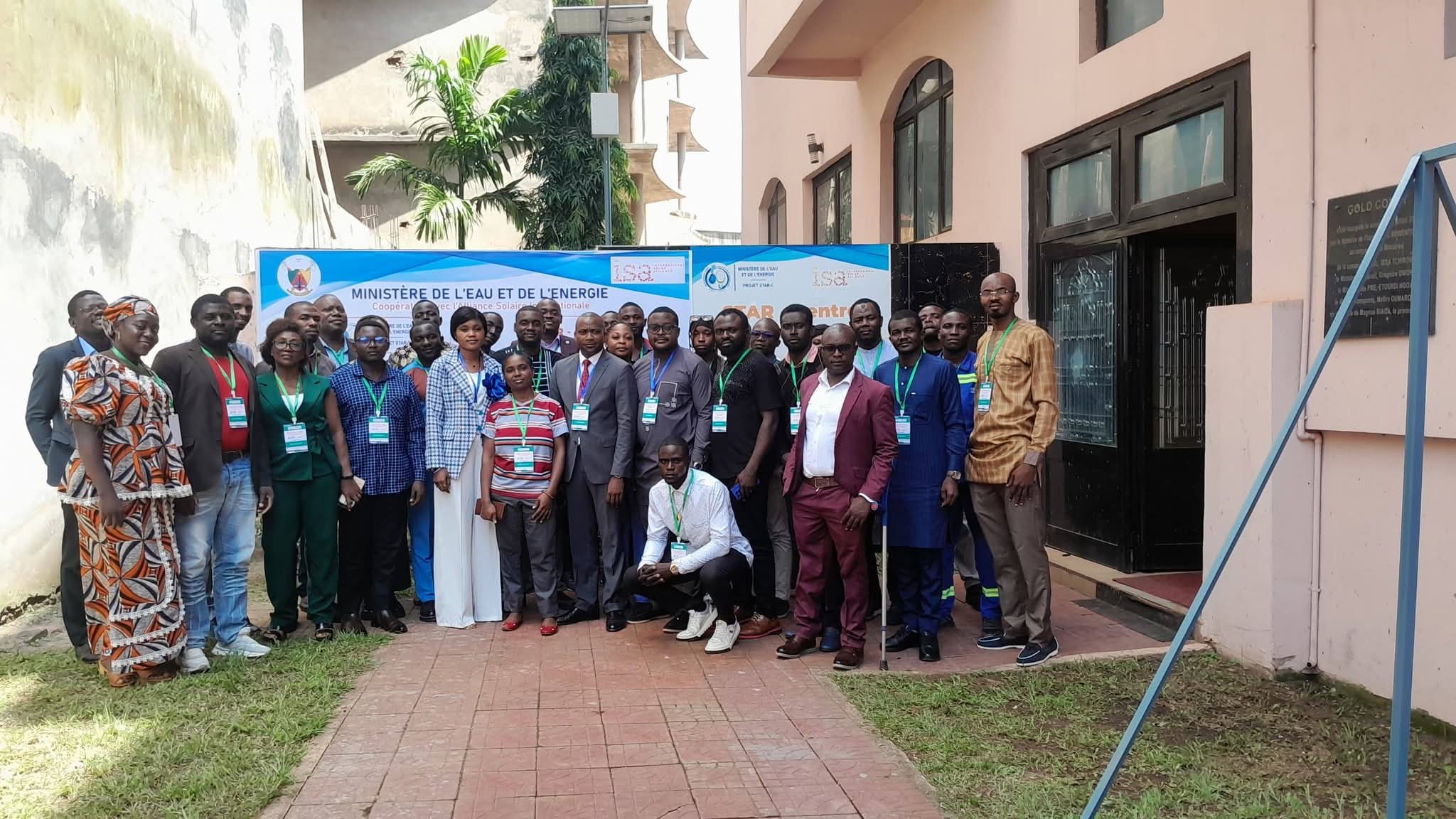
The Cameroon Ministry of Water and Energy – MINEE has officially launched an intensive training program at the Solar Technology Application Resource Centre – STAR-C in Yaounde, running from May 11 to 15, 2026.
The initiative, spearheaded by Minister Gaston Eloundou Essomba in collaboration with the International Solar Alliance – ISA, aims to equip 30 carefully selected technicians with specialized skills in photovoltaic technology.
By leveraging the advanced technical facilities at STAR-C, the program represents a critical step in the government’s strategy to localize energy expertise and modernize the national grid through sustainable partnerships.
The curriculum is specifically designed to address the practical challenges of solar adoption, focusing on the installation of standalone photovoltaic systems, rigorous maintenance protocols, and international safety standards. Out of a pool of applicants that included engineers, researchers, and educators, the selection process prioritized candidates capable of driving immediate impact in the field.
Notably, the ministry placed a strong emphasis on gender inclusivity, actively encouraging female professionals to participate in order to bridge the representation gap within the renewable energy workforce.
This training surge is a pivotal component of Cameroon’s broader energy policy, which seeks to decentralize power access and reduce reliance on traditional fuel sources. By fostering a high-level pool of national experts, the government intends to accelerate the deployment of solar solutions in underserved rural and peri-urban areas.
The initiative not only addresses the immediate technical needs of the sector but also ensures that the infrastructure installed across the country is managed by a workforce capable of maintaining long-term operational efficiency.
Ultimately, the collaboration between MINEE and the ISA serves as a catalyst for Cameroon’s energy transition amidst rising national demand. By investing in human capital, the state is laying the groundwork for a resilient and self-sufficient energy ecosystem that can meet the challenges of modern economic growth.
As these 30 technicians complete their certification, they become the vanguard of a cleaner, more accessible power landscape, supporting the country’s commitment to sustainable development and climate-conscious infrastructure.