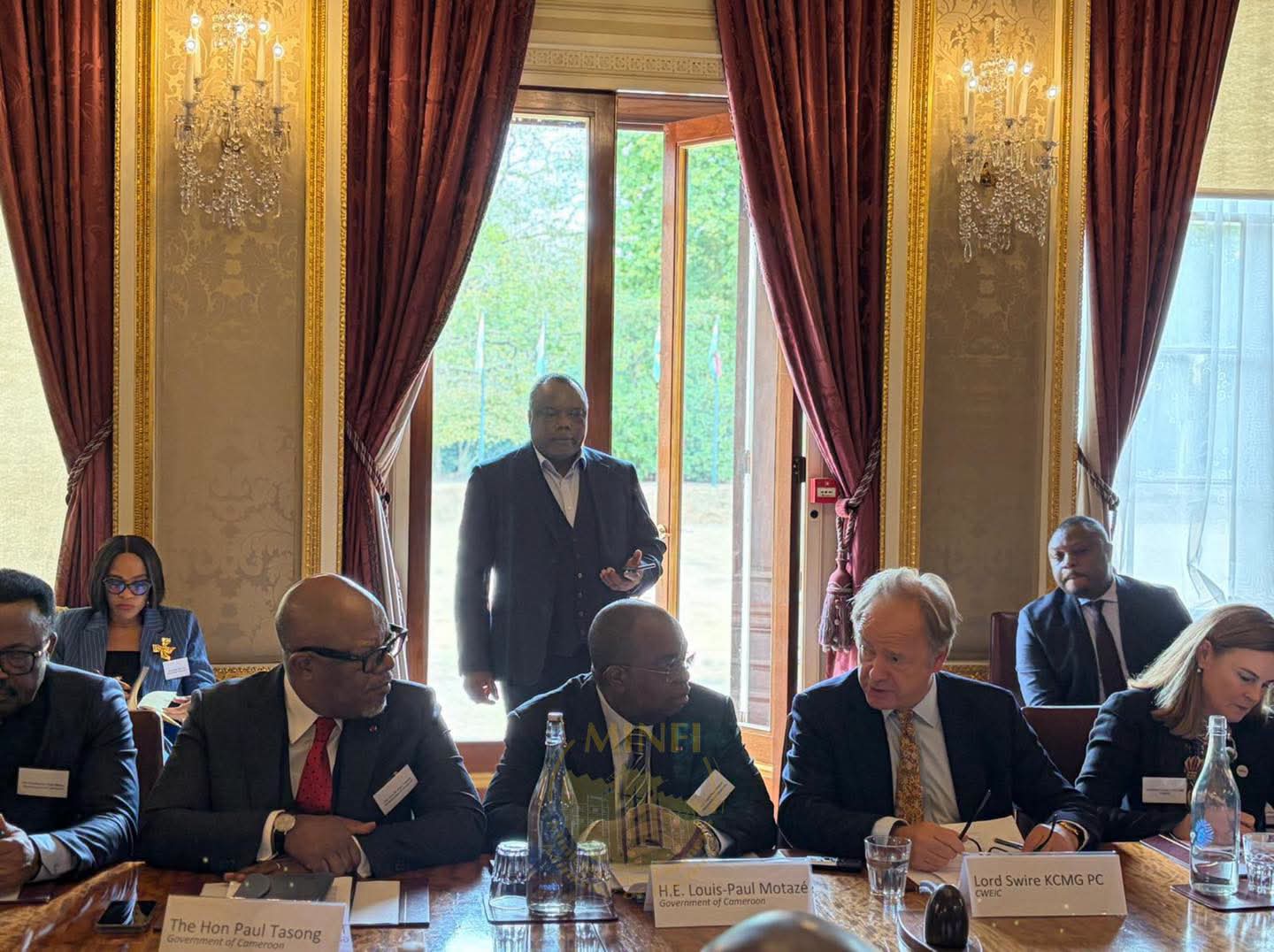
On September 9 and 10, 2026, Cameroon spearheaded a high-level Market sounding – Road show at Marlborough House in London to showcase its economic potential to international investors.
Organized in collaboration with the Commonwealth Enterprise and Investment Council – CWEIC, the event aimed to unlock fresh capital streams and explore innovative funding mechanisms for the country’s National Development Strategy – NDS30. The delegation emphasized structured, long-term partnerships designed to support sustainable economic growth across key national industries.
Opening the proceedings, Minister of Finance Louis Paul MOTAZE articulated a clear shift in Cameroon’s fiscal strategy, stressing that the priority is not merely increasing debt, but securing smarter development capital. The minister highlighted the necessity of sustainable funding models, advocating for greater reliance on risk-sharing mechanisms, blended finance, and credit guarantees.
This approach aims to safeguard national debt sustainability while attracting non-sovereign and private sector resources to fund critical infrastructure and economic reforms.
The delegation presented robust macroeconomic indicators to build investor confidence, noting a 3.5% economic growth rate in 2025 alongside a nominal GDP of CFAF 34,474 billion. Significantly, non-oil activities accounted for nearly 98% of overall economic performance, signaling structural diversification.
Furthermore, with public debt standing at 43.7% of GDP at the end of 2025—well below the 70% regional CEMAC ceiling—Cameroon demonstrated substantial fiscal headroom as it seeks to mobilize 45% of its CFAF 88,000–89,000 billion NDS30 investment target from private and international partners.
Investments were invited across a wide spectrum of high-potential sectors, including transport infrastructure, mining, agro-industry, manufacturing, digital systems, and urban development. Energy infrastructure took center stage, bolstered by more than 12 GW of hydropower potential, the operational status of the Nachtigal plant, and ongoing developments at Kikot. These physical assets were presented alongside a climate-tagged budget expenditure of CFAF 406 billion for 2026, positioning clean energy and environmental sustainability as core pillars of Cameroon’s investment appeal.
Underpinning these sectoral opportunities is Cameroon’s growing focus on green and sustainable finance. Following the adoption of its sustainable financing framework in 2024, the nation is actively structuring green, social, and sustainability bonds, alongside carbon finance projects tied to the Congo Basin’s ecological capital.
By transitioning from general promotion to constructing bankable, high-impact projects, Cameroon aims to secure the right capital at the right cost to drive its long-term economic transformation.